Family-School Conflict Is Rising in France — What the Mediator's Data Shows, and What Schools Can Change
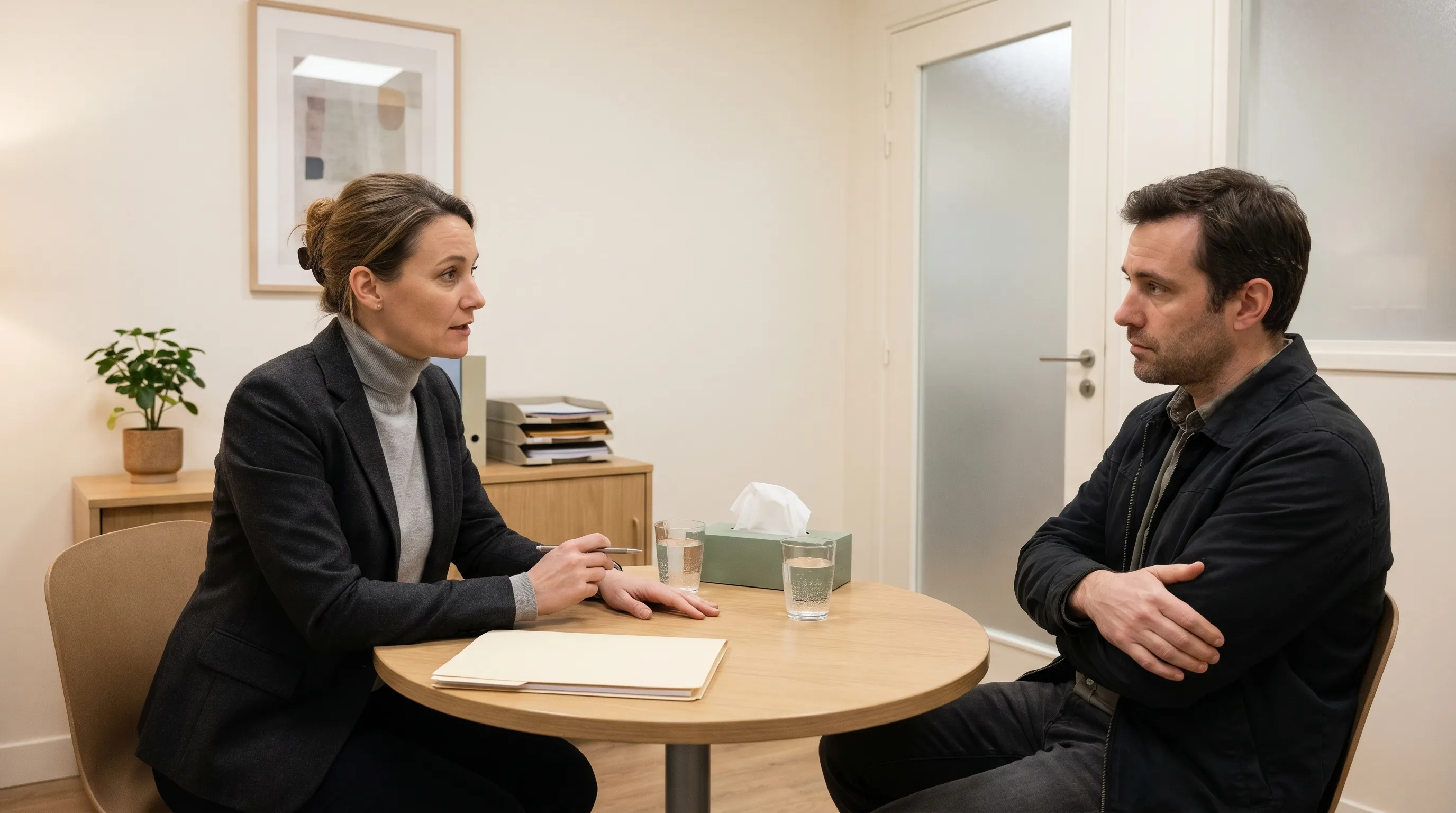
France’s national education mediator received formal complaints at a rate that rose approximately 12% in 2023, following a 6% jump in 2022 — and her 2024 report documents continued acceleration. School-life conflicts have risen steeply in five years. Staff across the country are reporting increased verbal and physical aggression from families. And primary schools appear to be carrying the steepest climb.
These are not anecdotes. They come from the official annual report of the Médiatrice de l’Éducation nationale et de l’Enseignement supérieur, published in 2025 and covering the 2024 year. This is not a warning about dangerous parents — it is a signal about a solvable design problem. If you run a school in France, Belgium, Morocco, or anywhere families are navigating large institutional systems, this data is relevant to how you manage the family relationship.
What the Mediator’s Case Files Actually Show
The headline on aggression is striking, but the case-file data tells a more precise story about where conflicts originate.
If you want to see where your own school stands, our free family-school partnership self-assessment gives you a benchmark in a few minutes.
79% of formal complaints are contestations of an administrative or hierarchical decision. Not accusations of teacher misconduct. Not safety concerns. Families contesting decisions — scheduling, assessments, disciplinary measures, orientation choices — that were made without sufficient explanation or transparency. (This figure is confirmed in the 2023 annual report; whether it held precisely for 2024 is not independently verifiable from available sources, but the structural pattern is consistent across both report years.)
The mediator’s editorial diagnosis, documented across multiple report years and reflected in her case-file summaries, describes families and staff encountering administrative complexity and misunderstandings, amplified by the dematerialization of procedures — a dynamic she has linked to disengagement, a loss of confidence in the system, and in some cases escalation into aggressive behaviors.
Her headline recommendations across report years have consistently included: simplify administrative procedures (for example, a one-page plain-language summary of the orientation process, sent at the start of the year), treat individual situations with more humanity, and prioritize communication with families.
This is also reflected in what families themselves are requesting: the 2023 report identified a “besoin croissant d’écoute, d’explication et de considération” (a growing need for listening, explanation, and consideration). The 2024 report is understood to echo this emphasis on transparency, consistent with the pattern.
A final data point that matters: when a mediator does intervene, conflicts frequently end in partial or full resolution. The complaints are not intractable. They respond to human engagement.
Communication Failure as Architecture Failure
It would be easy to read the above as “parents are frustrated” and leave it there. The more useful framing is structural: many of these complaints may have reached the mediator precisely because no adequate channel existed at the school level to absorb the friction early. Schools that want to close this gap would need to build explicit earlier-stage channels — not simply improve goodwill.
The OECD’s 2024 policy brief on parent engagement in early childhood education draws on TALIS Starting Strong data across nine countries to make a related point: “communication is a key form of engagement with parents and guardians, the frequency of which tends to be positively related to the quality of care.” But the same brief notes that informal channels alone — drop-off conversations, corridor exchanges — “can end up being focused on immediate concerns and provide limited opportunities for mutual learning, and may need to be supplemented by other, more formal communication channels.” In practice, fewer than 50% of centres in almost all surveyed countries combined frequent informal and formal communication.
The structural failure the OECD identifies is not goodwill — it is architecture. Schools that rely on informal contact for meaningful decisions leave families without a traceable channel when something goes wrong. The frustration that eventually reaches a mediator may often trace back to a family that tried to ask a question and got no clear answer, or that learned about a consequential decision too late to respond.
In practice, a communication architecture that reduces this risk looks like:
- A structured decision-notification channel: When a school makes a decision that affects a specific student (orientation, a repeated year, a disciplinary sanction), a written explanation is sent through the school’s documented messaging system — not verbally at a hallway crossing. Channel: in-app direct message. Length: 150–250 words. Trigger: within 24 hours of any formal decision. Sample content: the decision, the reasoning in plain language, the formal recourse available to the family, and a named contact for questions.
- A standing parent inquiry channel: Families know that written questions receive a written response within a stated window (five working days is a common standard). This does not require more staff hours — it requires the expectation to be set explicitly. In practice, this looks like a pinned message at the start of every school year: “For questions about decisions, use the school’s messaging system. You will receive a response within five working days.” Channel: school platform announcement thread, pinned through June. Visible to all enrolled families.
- Proactive explanation before a difficult decision lands: When an orientation recommendation or disciplinary hearing is upcoming, a brief message alerts the family in advance — giving them time to prepare a response rather than reacting after the fact. Channel: in-app notification. Trigger: two weeks before any formal decision meeting. Length: three sentences.
Parental Frustration Is Not the Only Factor
The mediator’s findings deserve honest context. The rise in family-school friction does not exist in a vacuum.
The OECD’s 2025 report on trust in public institutions draws on the 2023 OECD Trust Survey to show that in many countries, people are now more likely to distrust than trust their government — and this erosion of institutional trust is concentrated among younger and less educated populations. Schools are not insulated from that broader dynamic. Some of the frustration families bring to the school door is arriving pre-loaded from a general loss of confidence in public institutions that schools cannot fully reverse by themselves. For school administrators, this is context, not excuse — it means that communication architecture must absorb some distrust that arrives pre-formed, not just distrust generated by the school itself.
A French parliamentary inquiry published in July 2025 adds relevant context: the Keloua Hachi commission identified significant gaps in the school system’s own practices — weak “signalement” culture, insufficient transparency in handling serious incidents, and a need for the state to recognize its responsibility for institutional failures. The commission’s primary focus was on protecting children from violence and abuse within institutions, not on parental anger specifically; but its findings reinforce that institutional opacity is a documented structural problem, not simply a perception.
It is also worth noting the DEPP SIVIS survey from February 2026, which tracks serious incidents in French schools: 14 incidents per 1,000 students in secondary schools, 4 per 1,000 in primary schools, slightly declining from the previous year. 92% of serious incidents in secondary schools are perpetrated by students, not families. In primary schools, family-perpetrated incidents represent 30% of cases — a meaningful figure, but one that underlines where the actual risk is concentrated. The broader picture is not a wave of violent parents; it is an accelerating number of administrative disputes that escalate because they lack adequate early-resolution channels.
The Program Evidence: La Mallette des Parents Shows Structured Communication Works
France does have a documented example of communication architecture producing measurable outcomes. La Mallette des parents, a structured parent-dialogue program originating in the académie de Créteil, operated in approximately forty middle schools in its first year (2008–2009), primarily in Priority Education Zones, before expanding to 1,300 collèges nationally in 2010. An independent evaluation by the Paris School of Economics found that the program — which structured three facilitated discussion meetings between schools and parents of incoming sixth-grade students — improved student behavior, reduced absences, reduced exclusions, and produced peer-effect benefits for non-participating students’ children as well.
One honest caveat is worth stating directly: this evidence is pre-2024 (the program ran in its structured facilitated form through the 2010s, then transitioned to a national digital resource accessible to parents from 2018 onward; the PSE evaluation covers its first phase). A criticism from researcher Séverine Kakpo (Paris 8) also notes that the program is unlikely to reduce educational inequalities. La Mallette des parents is not a template to copy wholesale; it is evidence that structured, repeated, facilitated communication between schools and families tends to produce better outcomes than ad hoc contact — and that schools which design for this systematically may see results.
No more recent equivalent intervention study was found for France. The mediator’s own evidence is descriptive, not experimental. The “it’s fixable” claim rests on what the mediator’s case files tell us about where conflicts start (administrative opacity, absent channels) combined with the older but structurally sound intervention evidence. That is a reasonable basis for action, provided administrators treat it as a hypothesis to test rather than a guarantee.
What School Administrators Can Do Before September
The mediator’s data points to four concrete changes that fall within a school administrator’s operational control — no ministry approval required. The structural pattern the mediator documents applies beyond France: wherever families navigate institutional decisions without adequate explanation or traceable channels, the same escalation dynamic emerges.
1. Build an explicit decision-response protocol. When a formal decision affecting a student is made, the family receives a written explanation within 24 hours through a documented channel. The explanation names the decision, the reason, the formal recourse available, and a contact for questions. This single change addresses the pattern behind the majority of formal complaints — contestations of administrative decisions that likely escalated because the initial communication was absent or inadequate.
2. Set a formal inquiry response standard and publish it. Post the standard at the start of the year, in the language(s) families use. “Written questions about decisions will receive a written response within five working days.” This removes the ambiguity that fuels distrust. A family that knows when to expect an answer may be less likely to escalate — and research on family engagement consistently links communication predictability to reduced conflict.
3. Move consequential communications to a traceable channel. Verbal hallway explanations of significant decisions are not a channel. A message sent through the school’s documented platform, with read confirmation, creates a record both sides can refer to — and removes the “no one told me” dynamic that appears repeatedly in mediator case narratives. In practice: a message sent the same day as any formal decision, through the school platform, flagged as requiring acknowledgment, before 6 pm. Channel: in-app direct message. Trigger: same day as decision. Length: 100–150 words.
4. Schedule proactive outreach before difficult moments. Orientation hearings, disciplinary reviews, and retention decisions are foreseeable. A brief advance message to the family — explaining what is coming, when, and how they can participate — converts a surprise into a managed process. Families who feel prepared are less likely to arrive angry.
In practice, step 4 looks like this: a school using a structured messaging platform sends the family a message two weeks before an orientation committee meeting. Channel: in-app direct message, flagged as requiring acknowledgment. Length: three sentences. Content: “Léa’s orientation for lycée will be reviewed by the committee on June 24. You are invited to submit your preferences and any supporting documents by June 17. Here is the form.” This replaces a letter that arrives after the decision is made.
The Operational Requirement Is Clear
The mediator’s report does not ask schools to fix family dissatisfaction in general. It documents a specific, measurable failure: families reaching a formal national escalation channel because the school system — at the local level — gave them no adequate earlier stop. Administrative decisions without clear written explanations. Complex procedures that families could not navigate. A growing sense that questions go unanswered.
These are design failures. And design failures are fixable. The data from 2024 is stark enough that waiting until the problem gets louder is no longer a defensible position. The question for school administrators is not whether to act on this — it is how fast.
The most reliable way to implement traceable, multilingual notification and inquiry channels is through a platform built for this purpose rather than retrofitting email or paper workflows. For schools looking for a structured way to implement the traceable, bilingual or trilingual notification and inquiry channels the mediator’s recommendations point to, BeeNet is one implementation path — purpose-built for French, Arabic, and English communication across the school-family relationship. Request a demo to see how the channels described here work in practice.
References
-
Médiatrice de l’Éducation nationale et de l’Enseignement supérieur. Rapport annuel 2024 — “Construire la confiance”. Ministère de l’Éducation nationale, 2025. https://www.education.gouv.fr/sites/default/files/2025-07/rapport-de-la-m-diatrice-de-l-ducation-nationale-et-de-l-enseignement-sup-rieur-2024—441501.pdf
-
Rigot, Clémentine. “Rapport de la médiatrice de l’Éducation nationale : un accroissement de l’agressivité dans les relations entre les familles et l’école.” L’Étudiant / EducPros, 18 July 2024. https://www.letudiant.fr/educpros/actualite/rapport-de-la-mediatrice-de-leducation-nationale-un-accroissement-de-lagressivite-dans-les-relations-entre-les-familles-et-lecole.html
-
OECD. Engaging Parents and Guardians in Early Childhood Education and Care Centres. Starting Strong Policy Brief No. 110. November 2024. https://www.oecd.org/content/dam/oecd/en/publications/reports/2024/11/engaging-parents-and-guardians-in-early-childhood-education-and-care-centres_398b306a/d05dd1cf-en.pdf
-
OECD. The Common Thread: Building Trust through Education. Trends Shaping Education Spotlight No. 21. October 2025. https://www.oecd.org/content/dam/oecd/en/publications/reports/2025/10/building-trust-through-education_c7a9db9f/967fa34d-en.pdf
-
Gani, Djéhanne. “Violences en milieu scolaire : les recommandations du rapport parlementaire.” Le Café pédagogique, 2 July 2025. https://www.cafepedagogique.net/2025/07/02/violences-en-milieu-scolaire-les-recommandations-du-rapport-parlementaires/
-
Rakotobe, Muriella. Note d’Information DEPP n°26-03 — Les signalements d’incidents graves dans les écoles et établissements publics et privés sous contrat en 2024-2025. DEPP, Ministère de l’Éducation nationale, February 2026. https://www.education.gouv.fr/depp/les-signalements-d-incidents-graves-dans-les-ecoles-et-etablissements-publics-et-prives-sous-contrat-469379
-
Wikipédia. “La Mallette des parents.” https://fr.wikipedia.org/wiki/La_Mallette_des_parents



Ready to Transform Your School Communication?
Start saving time and increasing parent engagement with BeeNet.
Request Demo