France's Bullying Complaint Gap - Why "Contact the School" Isn't a System
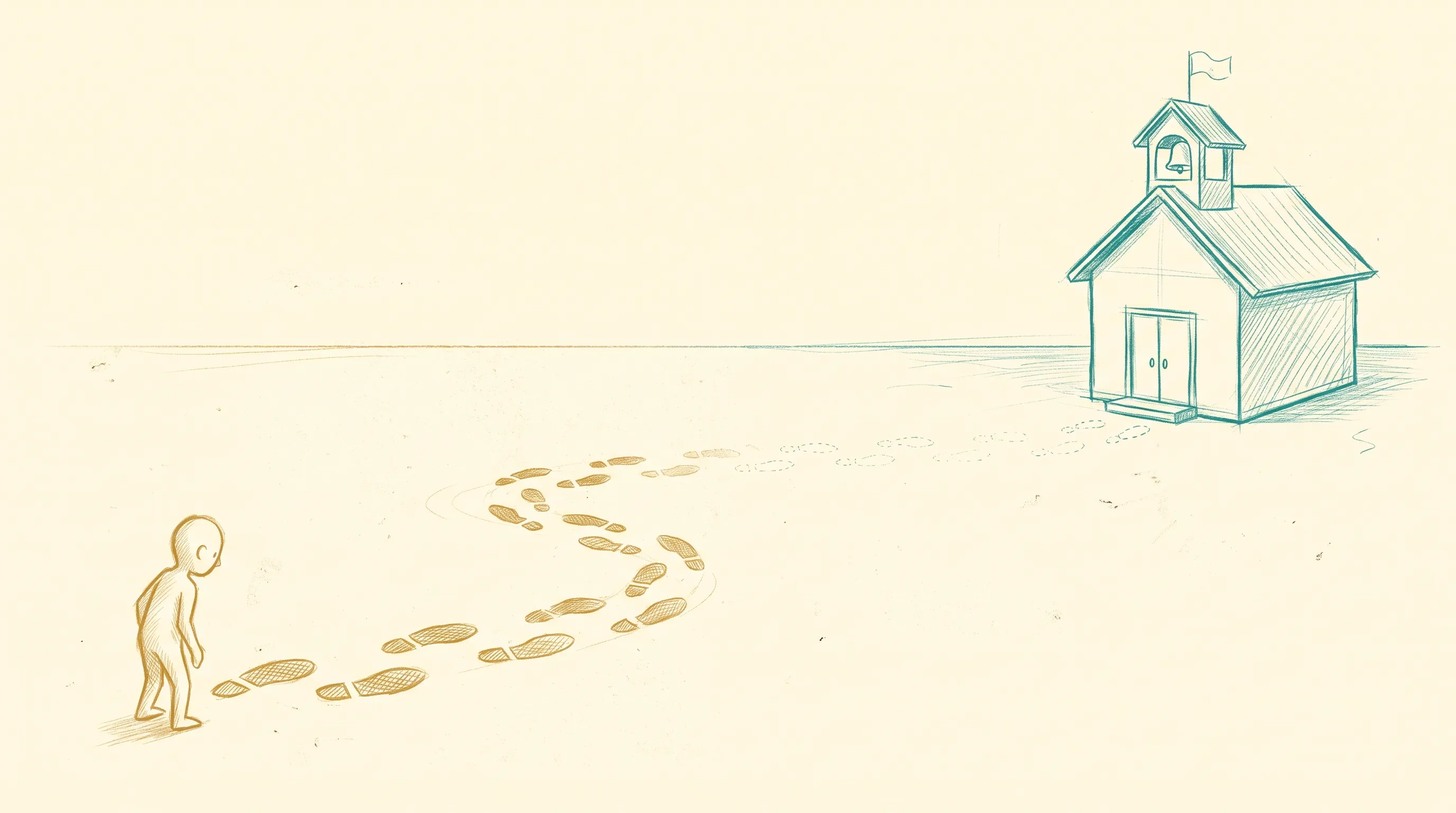
When a French parent suspects their child has been bullied or treated unfairly at school, the government has one clear instruction: contact the school’s management. It is the first line of official guidance from Service Public, France’s national government information service, for parents of bullying victims. It is also, according to new survey data, exactly what parents already do on their own — long before anyone tells them to.
The problem is that “contact the school” is not a system. It is a phone call, a hallway conversation, a note passed at pickup. And a new national survey shows just how much weight that undocumented first step is being asked to carry.
What the Défenseur des Droits survey actually found
France’s Défenseur des Droits — the national Rights Ombudsman — published the fourth volume of its “Access to Rights” survey in May 2026, focused specifically on bullying and discrimination in schools. Ipsos conducted the fieldwork between October 2024 and January 2025, interviewing 5,030 respondents by phone, including 1,692 parents of children aged 6 to 23, in interviews averaging 37 minutes (Défenseur des Droits, Défenseur des Droits — Volume 4).
The headline numbers are stark. One parent in three (35%) reports that at least one of their children has been bullied by peers. Roughly a third (32%) report their child experienced unequal treatment at school (Défenseur des Droits, Euronews). These are self-reported perceptions gathered through a survey, not independently verified incident counts — so they describe how parents experience their child’s school life, not a confirmed tally of substantiated cases.
What happens next is the part that matters for administrators. When parents perceive unequal treatment, 71% respond by contacting the school directly. For harassment, the pattern is different but still school-centered: only 53% even discuss it with anyone, and just 41% contact the school (Défenseur des Droits). Formal recourse is the exception, not the rule: only 16% of unequal-treatment cases and just 7% of harassment cases result in any administrative or legal action, even though roughly 70% of parents citing unequal treatment attribute it to a legally prohibited criterion — meaning most of these parents point to a factor the law itself prohibits as discriminatory, yet still never file anything (Aleteia).
There’s a second, quieter finding buried in the same survey: among parents who do pursue institutional or legal recourse, 86% do so only for their children’s cases, not their own (Défenseur des Droits). Parents plainly will escalate when it’s their kid. The survey doesn’t test why parents escalate less often for themselves, but one plausible reading — consistent with the rest of the data on how little formal follow-through occurs — is that the path from “I called the school” to “this is now a record” barely exists, which would make escalation feel like starting from zero each time rather than apathy on the parent’s part.
The channel that isn’t a channel
Here is the structural gap: government guidance and parent behavior point to the exact same destination — the school — but neither one specifies what happens once you arrive there. Contacting the school is the default response for a majority of rights concerns, yet nothing in the process turns that contact into a timestamped, retrievable, escalatable record. A phone call to the front office and a five-minute chat with a teacher at drop-off carry the same evidentiary weight: none.
This is not a gap in French law or French schools specifically — it is a gap in the infrastructure sitting between “parent has a concern” and “concern is documented.” A parent who calls the school about repeated name-calling has, procedurally, done everything the government website told them to do. But if that call isn’t logged anywhere retrievable, the school has no record to point to when the same parent calls again in three weeks, no timeline to show a Rights Ombudsman inquiry, and no way to demonstrate a pattern of response if the situation escalates.
France does have one formal, trackable channel for bullying: the 3018 national helpline, which the government relaunched in 2023 with backing from Prime Minister Élisabeth Borne, who described the goal as helping “detect all cases of harassment and offer all victims and their families a clear and well-defined path forward” (e-Enfance). It remained active as of the government’s November 2025 guidance update (Service Public). But 3018 sits outside the school-contact interaction entirely — it’s a separate crisis line, not something woven into the routine exchange between a parent and a teacher or administrator. No published data shows how often parents actually use it versus defaulting straight to the school, and the survey results suggest most don’t reach for it first. The channel that’s trackable isn’t the one parents use by default; the one they use by default isn’t trackable.
What a trackable first step actually looks like
None of this requires new legislation or a new national hotline. It requires the routine “contact the school” interaction — the one 71% of parents already default to — to leave a trace. A few concrete versions of what that looks like in practice:
- A logged intake, not a hallway conversation. When a parent messages the school about a concern — through a parent-communication app, a web form, or even a structured email alias — the message is timestamped and attached to the child’s record, so a second contact three weeks later is visibly a pattern, not a fresh start.
- A short acknowledgment loop. A two-line automated confirmation (“We’ve received your message about [child’s name] and a staff member will follow up by [date]”) turns a one-way phone call into a paper trail with an expected response window, without adding staff workload.
- A recurring safety-and-climate check-in. A monthly, opt-in two-question pulse survey sent to parents via app notification (“Has your child mentioned any issues with classmates or staff this month? Yes/No + optional comment”) surfaces concerns before they reach the 71%-contact-the-school stage, and gives administrators an aggregate view they currently don’t have.
- A visible escalation path. If a first contact doesn’t resolve the issue within an agreed window, a defined second step — say, a request routed automatically to a designated safeguarding lead, typically an existing role (vice principal, counselor, or head of pastoral care) rather than a new hire — replaces the informal “call again and hope” pattern that currently governs most follow-ups.
None of these examples require new legal authority. They require the same “contact the school” step parents already take by default to run through a system that keeps a record of it.
A documented channel isn’t the whole fix
It’s worth being precise about what this data can and can’t explain. A separate, genuinely experimental study — a randomized controlled trial run by J-PAL researchers across 306 French schools between 2013 and 2015 — found that bullying-prevention programs succeed or fail largely based on mediator experience, not the presence of a reporting channel. Experienced mediators (age 25+) cut verbal harassment among sixth-grade boys by 46% in middle schools, while brief, low-dosage interventions showed no effect and were sometimes counterproductive in primary schools (J-PAL). That finding concerns program design and staffing, not documentation infrastructure — so a school could build a perfectly trackable complaint channel and still see poor outcomes if its prevention staff are inexperienced or under-resourced. Communication systems and intervention quality are separate problems that both need solving.
Why this matters beyond France
The Défenseur des Droits data is French, but the underlying dynamic — parents defaulting to informal contact with school staff over formal complaint mechanisms — is not a uniquely French phenomenon, and it maps onto how BeeNet’s own markets across Europe, the Gulf, and North Africa operate, including schools specifically. Wherever that dynamic holds, the same structural problem applies — a parent doing exactly what they’re supposed to do, and the school having no durable record of it. The size of the gap — and the right fix for it — will vary by country and by school. What doesn’t vary is the basic shape of the problem: an informal default channel carrying formal-complaint-level stakes.
Turning the default channel into a documented one
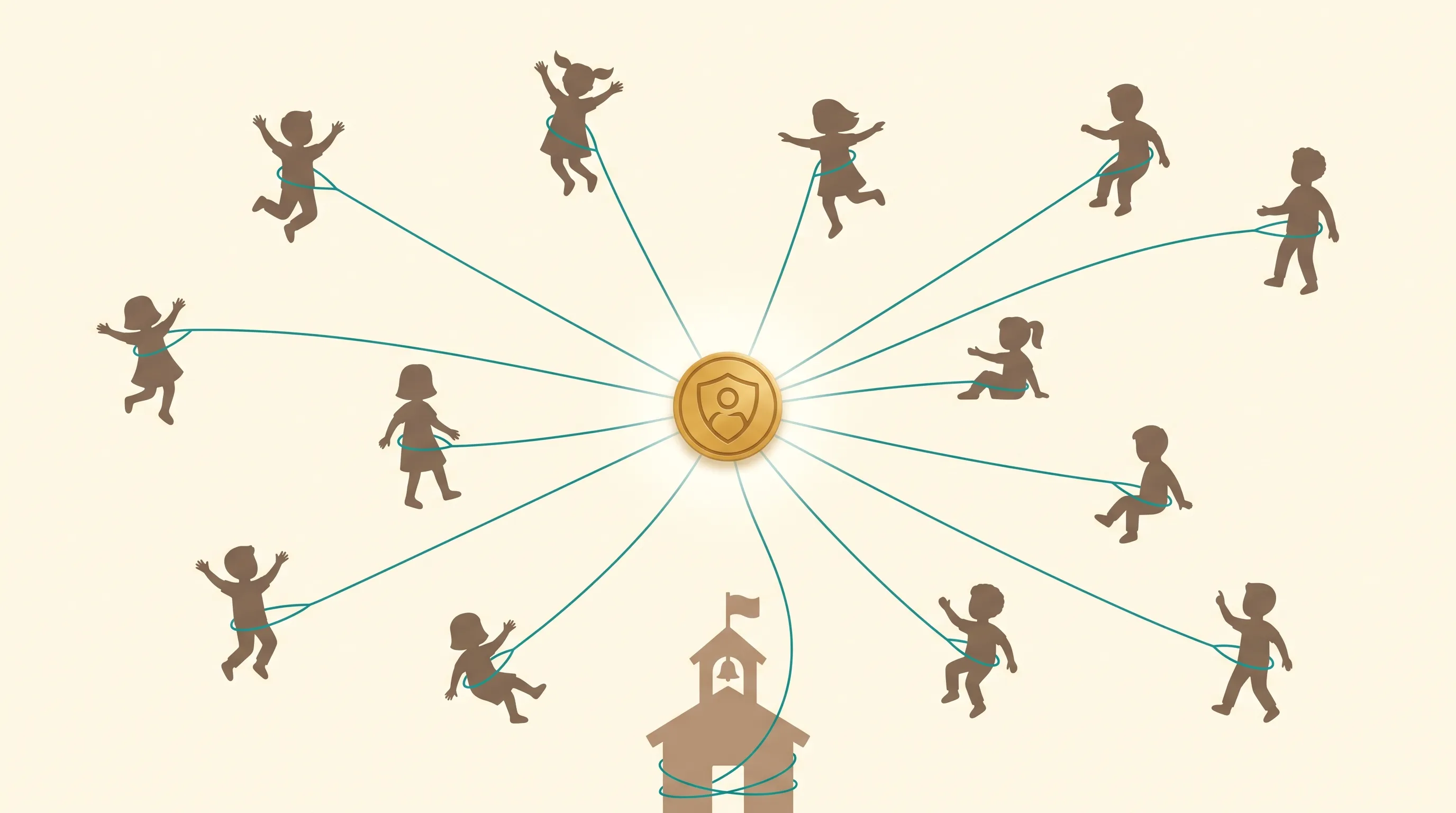
The operational requirement here is narrow: whatever channel parents already default to for raising a concern needs to produce a timestamped, retrievable record — not a new complaint process, just a paper trail behind the one that already exists in practice. A parent-communication platform is one implementation path for that requirement — logging every parent-initiated message, attaching it to a student record, and giving administrators a searchable history without asking parents to learn a new system.
BeeNet’s messaging and safety tools were built around that same idea: the goal isn’t adding a new form to fill out, it’s making sure the conversation parents already have with the school doesn’t disappear the moment it ends.
If you want to see how that works for a school, sports club, or daycare, book a demo or check current pricing.
The gap the Défenseur des Droits found isn’t a French problem or an enforcement problem — it’s a documentation problem, and documentation problems have documented solutions. The question for most schools isn’t whether their informal contact channel needs a paper trail behind it. It’s when they’ll build one.
References
- Défenseur des Droits. “Harcèlement, traitement inégalitaire et discriminations à l’école : Un parent sur trois déclare que son enfant en a été victime.” 2026. https://www.defenseurdesdroits.fr/harcelement-traitement-inegalitaire-et-discriminations-lecole-un-parent-sur-trois-declare-que-son
- Reynier, Vincent. “France: Plus d’un tiers des parents signalent que leur enfant a été harcelé à l’école.” Euronews, 2026. https://fr.euronews.com/my-europe/2026/05/07/plus-dun-tiers-des-parents-signalent-que-leur-enfant-a-deja-fait-lobjet-de-harcelement-sco
- Marchais, Laura (with AFP). “Harcèlement, discriminations : l’inquiétude grandissante des parents face à l’école.” Aleteia, 2026. https://fr.aleteia.org/2026/05/07/harcelement-discriminations-linquietude-grandissante-des-parents-face-a-lecole/
- Défenseur des Droits. “Enquête sur l’accès aux droits - 2e édition - Volume 4 : Harcèlement et discriminations en milieu scolaire, Perceptions et réactions des parents - mai 2026.” 2026. https://www.defenseurdesdroits.fr/enquete-sur-lacces-aux-droits-2e-edition-volume-4-harcelement-et-discriminations-en-milieu-scolaire
- Défenseur des Droits. “Enquête sur l’accès aux droits sur les atteintes aux droits des enfants perçues par les parents : que retenir ?” 2026. https://www.defenseurdesdroits.fr/enquete-sur-lacces-aux-droits-sur-les-atteintes-aux-droits-des-enfants-percues-par-les-parents-que
- Algan, Yann, Nina Guyon, and Elise Huillery. “Reducing School Violence and Harassment in France.” J-PAL, 2015. https://www.povertyactionlab.org/evaluation/reducing-school-violence-and-harassment-france
- e-Enfance Association. “3018 becomes the national helpline number for bullying at school and cyberbullying.” 2023. https://e-enfance.org/en/3018-becomes-the-national-helpline-number-for-bullying-at-school-and-cyberbullying/
- Service Public (French Government Official Information Service). “Harcèlement scolaire au collège et au lycée.” Last updated November 4, 2025. https://www.service-public.gouv.fr/particuliers/actualites/A16879?lang=en

Ready to Transform Your School Communication?
Start saving time and increasing parent engagement with BeeNet.
Request Demo