Why Migrant Families Don't Engage With Schools — And What the Research Says Schools Get Wrong
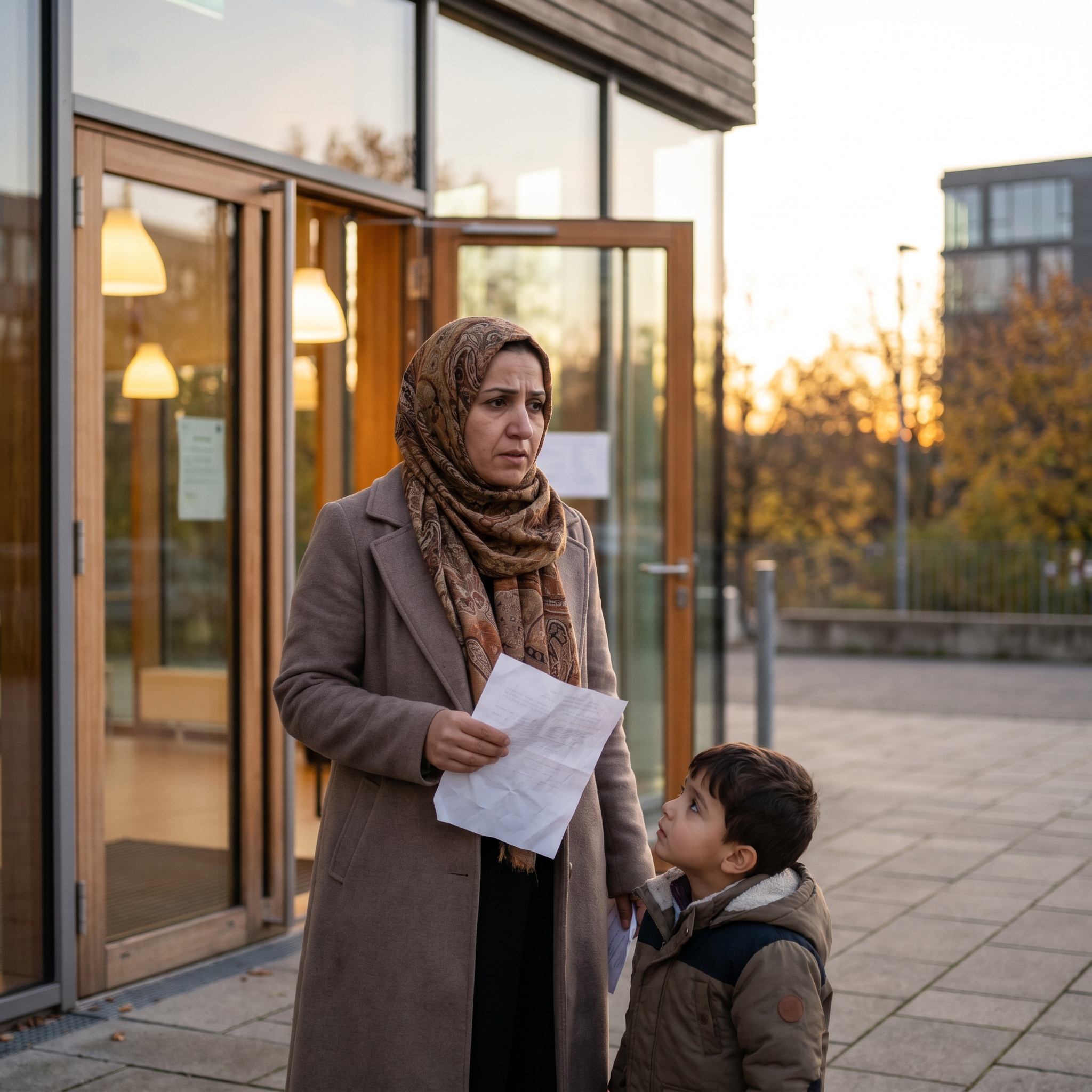
When migrant parents are absent from school events, miss parent-teacher meetings, or return forms late, school staff often explain it as cultural difference or misaligned values. The research disagrees — consistently, across four continents.
A growing body of peer-reviewed evidence across European, Latin American, and MENA educational contexts makes a different argument: the engagement gap between migrant families and native-born families is a communication engineering problem, not a values problem. Schools that treat it as a communication problem — and fix it — see engagement rates close significantly. Schools that treat it as a cultural problem do not improve, because they are solving the wrong thing.
This matters for school administrators not as an abstract point of equity, but as a practical operational question. If your engagement strategies are designed around the wrong diagnosis, they will continue to fail. Here is what the research actually shows.
The Misdiagnosis and Its Cost
The dominant mental model in many schools treats migrant parent disengagement as a supply problem: these families simply do not prioritize engagement in the way local families do. The implication is that the school’s role is to persuade, inform, or motivate families to care more.
This framing has been directly tested and found to be incorrect.
A 2025 study published in Frontiers in Psychology examined 347 immigrant parents enrolled in Chilean early education centers and found that engagement disparities were driven not by family attitudes but by institutional responsiveness. Parents who perceived that their school lacked culturally tailored approaches were 3.79 times more likely to show minimal involvement. The variable that predicted disengagement was not the families’ commitment — it was the school’s behavior.
The same study found a striking paradox: schools with the highest proportions of immigrant families showed lower parental engagement than schools with fewer immigrant families. If cultural attitudes were the driver, the pattern would be consistent across school compositions. Instead, it reversed. Concentration without adaptation backfires. The more immigrant families a school has, the more critical structural responsiveness becomes — and the more damaging it is when that responsiveness is absent.
This is the misdiagnosis in statistical form: schools interpreting as indifference what is, in fact, an institutional failure to adapt.
Language Is Not the Whole Barrier — But It Is Most of It
When school administrators do identify a structural element to low migrant engagement, they typically point to language. They are correct to do so — but the language barrier is larger and more precisely measurable than most appreciate.
Research from the Mid-Atlantic Equity Consortium quantifies this with unusual clarity. Only 64% of Latino and Asian parents attend school events compared to 82% of White parents — a gap that is already significant. But disaggregate by language proficiency within immigrant communities and the gap sharpens: families with no English-speaking parent show 50% participation versus 78% when both parents speak the host-country language. That is a 28-percentage-point gap attributable to language proficiency alone, within a population that is culturally comparable in every other way. The 28-percentage-point gap attributable to language proficiency is not a demographic destiny — it is the cost of an untranslated school system that families cannot navigate.
The implication is direct: the engagement gap is not primarily a cultural or motivational gap. It is a language-access gap. And a language-access gap has a known remedy: multilingual staff, bilingual liaisons, and translated communications.
This finding from a US-based study maps precisely onto European contexts. Research from Slovenian schools documented that while Slovenian policy explicitly recognizes the importance of migrant family involvement, schools routinely fail to implement it in practice. Language barriers, unfamiliarity with the host education system, and socioeconomic constraints — not family values — prevent meaningful engagement. The Slovenian study also documented a pattern that administrators across France, Belgium, and the broader MENA diaspora communities in Europe will recognize: in the absence of school-provided translation, children become the family’s interpreters and navigators of the school system.
Child Interpreters Are a Sign of Institutional Failure, Not Family Limitation
The child-as-interpreter dynamic is one of the clearest indicators that a school has failed to address its structural communication barriers — and one of the most damaging.
Research from EdResearch for Action frames this directly as a systemic failure: when schools lack adequate translation services, immigrant-origin students are pressed into service as family interpreters. This compounds academic stress on the students who already face the greatest adjustment challenges — students who are also disproportionately concentrated in under-resourced schools and assigned this role without choice.
The Slovenian qualitative research reinforces this. Migrant youth described family as “everything to me” and “life to me” — not indifferent, not uninvested, but central to their emotional stability. The families were present and committed. The schools were not providing the infrastructure to make that commitment visible or actionable within institutional structures.
A 2021 systematic review in Adolescent Research Review extended this analysis globally, showing that children’s behavioral agency in migration contexts is “place-specific” — meaning it is shaped by the conditions the receiving institution creates. Migrant children demonstrate high agency through language brokering and family navigation. Schools that recognize and scaffold this agency, rather than framing it as an inconvenient workaround, create conditions where family engagement increases. The capability is present. The school’s role is to provide the channel.
The Logistics Problem Schools Overlook
Beyond language, there is a second structural dimension that research documents but administrators rarely address: basic logistics.
A 2026 systematic review in Frontiers in Education analyzed school practices for newly arrived migrant students across multiple national education systems and found that family engagement strategies frequently fail for reasons that have nothing to do with family attitude. School meetings require parents to attend at times that conflict with shift work or second jobs. There is no childcare provision. There is no meal. The review notes explicitly: “Regular meetings can include participatory activities, such as providing meals and babysitting to strengthen family participation, yet logistical barriers often limit attendance.”
The absence of these provisions is not a neutral oversight. Migrant families — who are disproportionately represented in low-income, shift-working households across France, Belgium, Morocco, and Gulf migrant labor contexts — face attendance barriers that middle-class native families simply do not. Schools that schedule parent evenings at 6pm and provide no childcare have not made a culturally neutral decision. They have made a structurally exclusive one.
The same review found that teachers frequently rely on “improvised strategies due to limited professional development in intercultural education.” Family engagement for migrant families is, in most schools, ad-hoc rather than systematic. It depends on which teacher happens to have personal initiative or intercultural experience — rather than on school-wide protocols that apply consistently.
What Systematic Schools Do Differently
The research identifies a concrete set of practices that correlate with normalized engagement rates:
- Multilingual communication systems: Written and verbal communications provided in families’ home languages, not via child-mediated translation (e.g., SMS notices sent in Arabic and French, not only posted on the school board in the host language)
- Parent leadership initiatives: Structures that give migrant families decision-making roles, not just attendance at events (e.g., migrant parent representatives on school councils with a defined voice in activity planning)
- Accessible scheduling and logistics: Meeting times, childcare provisions, and formats that remove practical barriers (e.g., evening sessions moved to 4:30pm with on-site childcare, or short async video updates families can watch when available)
- Bilingual staff or liaisons: Dedicated roles whose function is bridge-building between families and institutional processes (e.g., a part-time family liaison who speaks Arabic and French and contacts families directly rather than through the child)
The Migration Policy Institute’s 2025 analysis synthesizes this across international contexts: “Schools and universities that implement structured family communication systems and multilingual support services show significantly higher student retention and engagement rates.” The language is unambiguous — structured and multilingual are the operative conditions. Ad-hoc and monolingual are not equivalent substitutes.
Schools Design Activities Without Migrant Families — Then Count Their Absence as Disengagement
There is a third dimension to the structural barrier that is harder to measure but equally well-documented: schools actively exclude migrant families from the conversations where their participation would be most meaningful, then interpret their absence from superficial engagement as evidence of low interest.
A 2025 study in Frontiers in Education examining Moroccan Muslim families in Spanish schools found that none of the mothers interviewed had ever been consulted when the school was designing or organizing cultural or religious activities. They were contacted about academic concerns. They were not invited into the design process. The study describes the prevailing institutional approach as a “pedagogy of indifference” — cultural backgrounds receive nominal attention through surface-level activities (“typical dishes from their country”) rather than meaningful engagement with identity and belonging.
The significance here is not symbolic. When families are excluded from shaping what inclusion looks like at their child’s school, they receive a clear institutional signal about their role: observer, not participant. Their subsequent disengagement from events that were designed without them is rational, not indicative of cultural indifference.
The same pattern is visible at the policy level. Research from Slovenian schools found that despite policy documents explicitly naming parents as essential to migrant integration, the implementation gap was near-total. Policies affirm family engagement. School practice ignores it. The gap between what education systems say about migrant families and what they actually do for them is one of the most consistent findings in the research.
The Normalization Point
The practical implication of this evidence base is precise: engagement gaps between migrant and native-born families are not inevitable features of population diversity. They are predictable outputs of specific institutional design failures. Change the design, and the gaps close significantly.
Schools that implement structured multilingual communication — consistent, accessible, translated, and delivered through channels families actually use — see engagement close significantly. The 28-percentage-point gap attributable to language proficiency is not a demographic destiny. It is the cost of an untranslated school system that families cannot navigate.
For school administrators, the operational question is not how to motivate migrant families. It is how to remove the barriers that prevent already-motivated families from being able to show that motivation in ways the school can recognize and measure.
That begins with communication: what language it is in, what channel it travels through, what frequency it arrives at, and whether the family has any realistic way to act on it. For schools looking to address this structurally, how BeeNet supports multilingual family communication illustrates what a systematic approach looks like in practice.
BeeNet helps schools communicate with migrant and multilingual families in French, Arabic, and English — through the channels families already use, without adding workload to teachers. Request a demo.
References
-
Bilbao, M., Guglielmetti-Serrano, F., Mera-Lemp, M. J., Pizarro, J. J., Fernandez, D., & Martínez-Zelaya, G. (2025). Parental involvement of immigrant parents in early educational centers and its relationship with intercultural sensitivity. Frontiers in Psychology, 16, 1568532. https://pmc.ncbi.nlm.nih.gov/articles/PMC12078292/
-
Medarić, Z., Gornik, B., & Sedmak, M. (2022). What about the family? The role and meaning of family in the integration of migrant children: Evidence from Slovenian schools. Frontiers in Education, 7. https://www.frontiersin.org/journals/education/articles/10.3389/feduc.2022.1003759/full
-
Basterra, M. del R., & Schlanger, P. (2023). Engaging Immigrant and English Learner Families in their Children’s Learning. Mid-Atlantic Equity Consortium. https://maec.org/resource/engaging-immigrant-and-english-learner-families/
-
Sattin-Bajaj, C., & Strom, A. (2024). Promoting School Success for Immigrant-Origin Students. EdResearch for Action Brief No. 9. https://edresearchforaction.org/research-briefs/promoting-school-success-for-immigrant-origin-students/
-
Torres-Zaragoza, L. (2025). Moroccan Muslim students’ cultural and religious diversity recognition in Spanish schools. Frontiers in Education. https://www.frontiersin.org/journals/education/articles/10.3389/feduc.2025.1649446/full
-
Ginicolo, M. de F., Silva Dias, T., & Neves, T. (2026). School practices for newly arrived migrant students: a systematic review of policy enactment. Frontiers in Education, 10. https://www.frontiersin.org/journals/education/articles/10.3389/feduc.2025.1736754/full
-
Deng, Z., Xing, J., Katz, I., & Li, B. (2021). Children’s Behavioral Agency within Families in the Context of Migration: A Systematic Review. Adolescent Research Review. https://pmc.ncbi.nlm.nih.gov/articles/PMC8493537/
-
Migration Policy Institute. (2025). International Student Mobility: A Post-Pandemic Reset or a New Normal? https://www.migrationpolicy.org/sites/default/files/publications/TCM-international-students-2025_final.pdf
Ready to Transform Your School Communication?
Start saving time and increasing parent engagement with BeeNet.
Request Demo