The School Counsellor's Blindspot: Why Parent Communication Is the Missing Layer in Student Mental Health
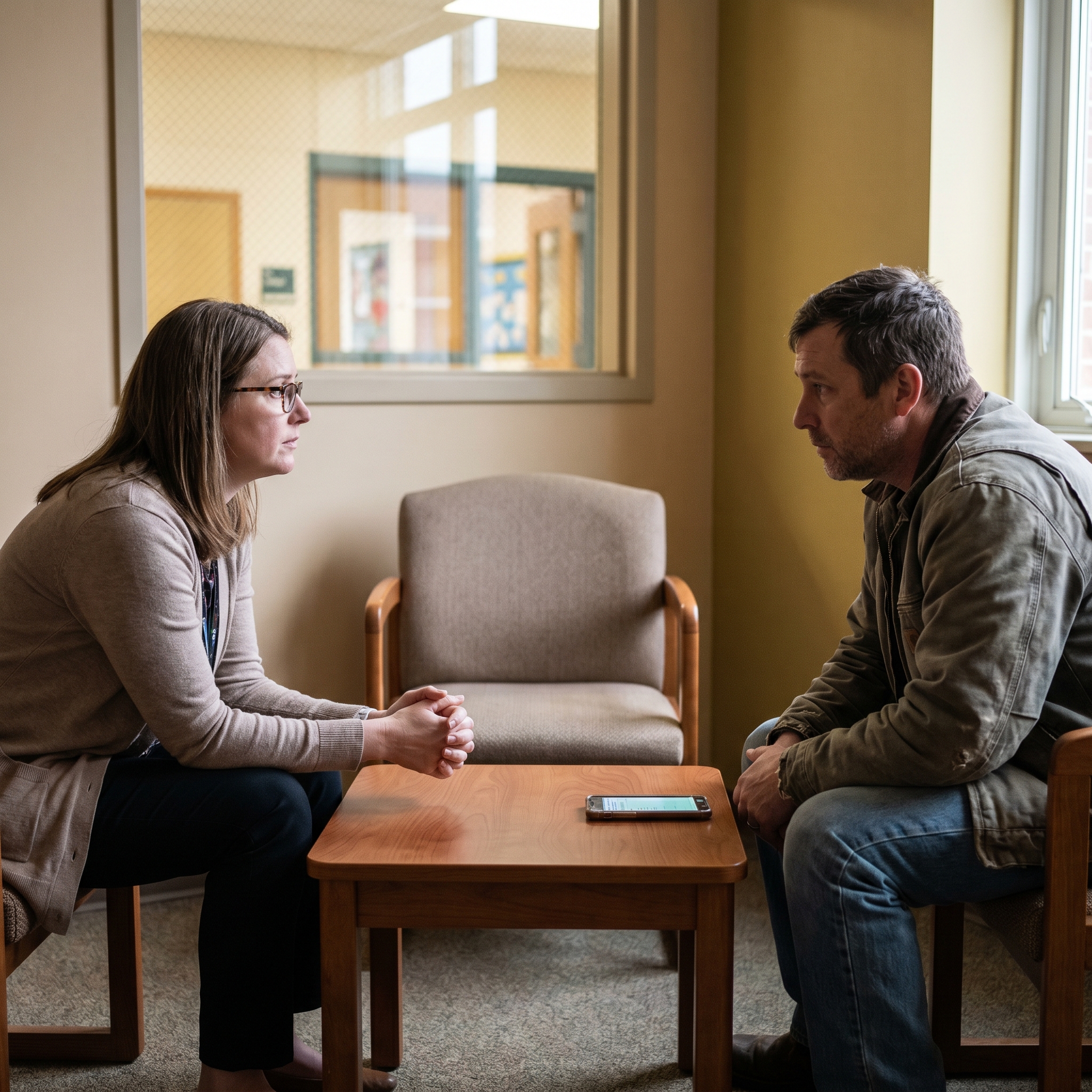
One in five children and young people experience a mental health challenge. Yet, as of 2021, only 25% receive the support they need — and Supporting Child and Student Social, Emotional, Behavioral, and Mental Health Needs (2021), a joint report from the U.S. Departments of Education and Health and Human Services, documented an average delay of 11 years between the onset of symptoms and a child receiving treatment.
Eleven years. Across that entire span — from first signs to first intervention — most children are in school.
That figure should reframe how school administrators think about mental health infrastructure. The question is not only whether you have enough counsellors. It is whether your school has a functioning early-warning system. And the research consistently points to the same structural break: the parent communication layer.
What School Counsellors Are Actually Built to Do
The American School Counselor Association’s 2025 position statement is precise about the counsellor’s role. Counsellors are short-term intervention and crisis specialists — not long-term therapists. They are built to respond to students who self-present or who are flagged through school-visible signals: the student who breaks down in class, the teacher who notices a withdrawal, the peer who reports a concerning conversation.
The position statement calls for collaboration with families as part of a whole-child approach. When a student is in session with a counsellor, that counsellor is seeing perhaps 45 minutes per week of that student’s life. Parents are seeing the rest of it. They observe the shift in sleep patterns, the loss of appetite, the social withdrawal that began three weeks before anyone at school noticed anything.
The position statement calls on counsellors to “provide families with resources and information about student mental health concerns.” What it cannot solve is the reverse flow: getting parents to share what they are seeing at home in time to matter. That requires a different kind of infrastructure entirely.
The Confidentiality Constraint That Closes the Loop
There is a structural reason why information does not flow freely between counsellors and parents, and school administrators need to understand it clearly.
The ASCA’s 2024 position statement on confidentiality establishes that counsellors are ethically bound to protect the content of student sessions unless a mandatory disclosure threshold is met — danger to self or others, a court order, or similar legal requirement. Sub-threshold concerns — early-stage anxiety, social withdrawal, a behavioural shift that has not yet crossed into crisis — cannot be proactively shared with parents without student consent.
This is not a policy failure. It is an ethical requirement that exists to protect young people. But it has a structural consequence: the counsellor may be aware of something the parent is not, while the parent is simultaneously observing things the counsellor is not — and no formal channel exists for parents to relay those home-based observations to school in a structured way.
The communication must flow from parents to school, not only from school to parents. The counsellor’s blindspot is not a clinical failure. It is a communication design gap.
The Parent-Communication Layer Is Where Early Warning Breaks Down
A 2024 qualitative study published in SAGE Journals’ School Counselling and Wellbeing by Collins, Kovac, Rigney, Benveniste, Gerace, Dittman and Vincent found that every parent in their study identified a lack of transparency regarding the school counsellor’s role as the central barrier to collaboration. As the authors concluded: “All participants identified a lack of transparency regarding the school counsellor role as impacting their ability to collaborate with counsellors to improve the mental health and wellbeing of their child.”
Parents want to be partners. They are not passive bystanders. But they are structurally excluded — because no channel exists for proactive, bidirectional information exchange about what they are observing at home.
A separate but related finding comes from a 2025 peer-reviewed study in Frontiers in Education by Proff, Musalam and Matar, surveying 479 parents across pre-, during, and post-pandemic periods. The study identified a central paradox: post-pandemic, parents found it significantly easier to access information and contact school leaders (Z = −6.757, p < 0.001) and became more attentive to academic progress. Yet parental participation in school events declined (Z = −1.987, p = 0.047), and communication clarity showed no significant improvement.
More access to information does not equal better bidirectional early-warning communication. Parents can receive more messages from school and still have no structured way to send observations back. These are different problems, and schools that conflate them will invest in the wrong solution.
The Double Failure Mode When Parent Communication Quality Is Low
The communication gap at the school end is compounded by a second problem: many parents struggle to accurately read their own child’s emotional state — and to know what to do with what they observe.
A 2024 longitudinal study in BMC Psychology by Gao, Xu, Lv, Zhao and Han, tracking 495 families over two waves one year apart using structural equation modelling, found that higher quality parent-child communication was significantly associated with lower parental educational anxiety (β = −0.31, p < 0.001), mediated through stronger parent-child trust. Parents with lower communication quality were less likely to act constructively on what they observe — and more anxious when they do detect problems. As the authors summarise: “Fostering high-quality parent-child communication with a proactive attitude reduces parental stress by strengthening trust relationships, creating beneficial family dynamics and reducing educational anxiety.”
The practical implication is a double failure mode: parents who do not have strong communication with their child miss the early signals. Parents who do detect something are often too anxious and uncertain to know whether and how to report it. Both outcomes mean the school’s support system receives no input until the situation has escalated to a school-visible event.
This is why a structured inbound channel for parent-reported observations is not optional infrastructure — it is a structural gap that, when addressed, allows proactive signals to reach the support system earlier.
Other Factors Matter Too
The research literature on student mental health identifies several barriers alongside the communication gap, and intellectual honesty requires acknowledging them.
Counsellor shortages are real. NCES data from 2024 shows that only 48% of public schools report being able to effectively provide mental health services to all students who need them — a roughly 10-percentage-point decline from 2021–2022. KFF’s updated 2025 landscape report documents the recommended counsellor-to-student ratio as 250:1, with most schools significantly exceeding it.
Stigma exists, but is smaller than assumed. A 2023 mixed-methods study in the Journal of Adolescent Health by Mora Ringle, Sung, Roulston and Schleider found that only 5% of their sample identified stigma as a barrier — while 32% of all reported barriers related to parents directly: communication difficulties, parental resistance, and related obstacles. Parents are not merely uninformed; they can be an active obstacle, which argues for communication design that helps parents understand when their own attitudes may delay intervention.
Teacher mental health affects the whole system. A 2024 study in Frontiers in Education by Dabrowski, Hsien, Van Der Zant and Ahmed found that 52% of school educators report moderate to severe depression symptoms, versus 12.1% in the general population. Even if a parent sends a warning signal through the right channel, the teacher or staff member receiving it may be too overwhelmed to act on it promptly.
These are real structural problems. Addressing the communication layer alone does not solve them. But none of these factors explains away the communication gap — and the communication gap is the one that is most directly addressable through design.
The Training Gap That Proves the Point
One study in this body of research stands out for what it reveals about where the most trainable skill gaps actually are.
A 2024 mixed-methods study published in the Journal of Medical Internet Research by Soneson, Howarth, Weir, Jones and Fazel evaluated a brief, web-based training programme — the At-Risk for Elementary School Educators simulation — with 108 educators. After a one-hour training, the single domain showing “the largest changes observed” was “discussing concerns with parents and applying key communication strategies.” Communication with mental health leads rose from 66.7% to 95.5%. Documentation of concerns rose from 50% to 75.7%.
Of all the skills the programme could have improved — identifying student distress, understanding mental health conditions, knowing referral pathways — the domain that showed the largest training gains was teacher-parent communication about mental health concerns. Not identification. Not knowledge of conditions. Communication.
The gap is not at the clinical end. It is at the communication end. And it responds to structured intervention.
What Schools That Address This Gap Would Need to Build
Translating this research into school practice requires making the abstract operational. Schools that choose to address the parent communication gap would need to design along three dimensions.
One action counsellors can take without any new tool: acknowledge that a session has occurred — “your child has spoken to someone, and the school is providing some level of support” — without disclosing session content. Nothing in the ASCA confidentiality guidance prevents this. The Collins et al. findings suggest that even this basic acknowledgement is precisely what parents expect and do not currently receive. That insight is zero-cost and immediately deployable.
A structured inbound channel for parent-reported observations
This is the component that is almost entirely absent in current practice. Counsellors and school staff need a channel through which parents can report specific observations — not a general “anything concerning,” but structured prompts: changes in sleep, eating, social withdrawal, talk of hopelessness, changes in friendship patterns, reluctance to attend school. The channel needs to be low-friction enough that a parent can act on a worry at 10 pm without feeling like they are raising an alarm. In practice, this might look like a brief weekly secure prompt sent to parents: three questions, a simple response mechanism, and a clear indication of who receives and reviews the responses.
The goal is not to generate paperwork. It is to catch the signal before it disappears into the noise.
Clear guidance on what to look for — and what to do when you see it
The study’s findings suggest parents lacked not just channels but also the guidance to know whether what they were observing was worth reporting. Schools that address this gap would provide parents with simple, non-clinical guidance: what are the early signs worth flagging, what does a normal adolescent low period look like versus something more persistent, and — critically — how specifically to submit a concern without feeling they are overreacting. For example: a short monthly message from the school wellbeing lead listing two or three specific behavioural patterns to watch for in that age group, with a one-tap way to flag a concern if they have noticed something.
A reciprocal transparency structure within confidentiality constraints
As established above, acknowledging that a session has occurred — without disclosing its content — closes a significant portion of the collaboration gap without breaching any ethical requirement. A school that designs this communication explicitly, and trains counsellors in delivering it consistently, makes visible to parents that the school is actively working with their child’s situation.
Schools that close the parent-communication gap in mental health will need structured, bidirectional channels — separate from the general parent communication flow, purpose-built for wellbeing-related observation and reporting. This is a design requirement, not a cultural one. It does not depend on hiring additional counsellors or changing clinical protocols. It requires choosing the right communication tools and using them with intent.
BeeNet is one such platform — built for structured, bidirectional school-family communication, with purpose-built inbound channels for parent-reported wellbeing concerns, role-based routing to designated school staff, and multilingual support for the diverse parent communities that make this kind of communication practically achievable.
The Decision Schools Are Facing
The research across multiple countries and contexts — from Australia to the United States, the United Kingdom to the UAE — converges on a consistent picture. School mental health systems are built around a reactive model: wait for the student to self-present, or wait for a school-visible signal. The home observation layer — where behavioural shifts first appear, often weeks or months before anyone at school notices — is structurally disconnected.
The 11-year average treatment delay documented in the 2021 federal guidance is not a mystery. A system with no structured mechanism for the first observer (the parent at home) to communicate with the first responder (the school wellbeing team) is one in which such delays become predictable.
This is a design problem with a design solution. The counsellor capacity debate, the funding debate, and the stigma debate will all continue — and all matter. But the communication layer does not require resolution of any of them. It requires a decision from school leadership to build it in.
Schools that build this infrastructure catch signals they are currently missing. The ones that don’t will continue to see students arrive in crisis who showed signs weeks earlier.
References
-
Collins, G., Kovac, K., Rigney, G., Benveniste, T., Gerace, A., Dittman, C.K. & Vincent, G.E. (2024). Parental Expectations of School Counsellors and Their Role in Supporting Student Mental Health and Wellbeing: A Qualitative Study. SAGE Journals — School Counselling and Wellbeing. https://journals.sagepub.com/doi/10.1177/20556365241298071
-
Proff, A., Musalam, R. & Matar, F. (2025). Lessons Learned for Leaders: Implications for Parent-School Communication in Post-Pandemic Learning Environments. Frontiers in Education. https://www.frontiersin.org/journals/education/articles/10.3389/feduc.2025.1496319/full
-
American School Counselor Association (ASCA). (2025). The School Counselor and Student Mental Health (position statement). https://www.schoolcounselor.org/Standards-Positions/Position-Statements/ASCA-Position-Statements/The-School-Counselor-and-Student-Mental-Health
-
National Center for Education Statistics (NCES), IES. (2024). Over Half of Public Schools Report Staffing and Funding Limit Their Efforts to Effectively Provide Mental Health Services to Students in Need. https://ies.ed.gov/learn/press-release/over-half-public-schools-report-staffing-and-funding-limit-their-efforts-effectively-provide-mental
-
Gao, F., Xu, C., Lv, Q., Zhao, Y. & Han, L. (2024). Parent-Child Communication and Educational Anxiety: A Longitudinal Analysis Based on the Common Fate Model. BMC Psychology. https://pmc.ncbi.nlm.nih.gov/articles/PMC11514826/
-
KFF (Kaiser Family Foundation). (2025). The Landscape of School-Based Mental Health Services. https://www.kff.org/mental-health/issue-brief/the-landscape-of-school-based-mental-health-services/
-
Mora Ringle, V., Sung, J., Roulston, C. & Schleider, J.L. (2023). Mixed-Methods Examination of Adolescent-Reported Barriers to Accessing Mental Health Services. Journal of Adolescent Health. https://pmc.ncbi.nlm.nih.gov/articles/PMC10842491/
-
American School Counselor Association (ASCA). (2024). The School Counselor and Confidentiality (position statement). https://www.schoolcounselor.org/Standards-Positions/Position-Statements/ASCA-Position-Statements/The-School-Counselor-and-Confidentiality
-
Dabrowski, A., Hsien, M., Van Der Zant, T. & Ahmed, S.K. (2024). “We Are Left to Fend for Ourselves”: Understanding Why Teachers Struggle to Support Students’ Mental Health. Frontiers in Education. https://www.frontiersin.org/journals/education/articles/10.3389/feduc.2024.1505077/full
-
Soneson, E., Howarth, E., Weir, A., Jones, P.B. & Fazel, M. (2024). Empowering School Staff to Support Pupil Mental Health Through a Brief, Interactive Web-Based Training Program: Mixed Methods Study. Journal of Medical Internet Research. https://www.jmir.org/2024/1/e46764
-
U.S. Department of Education & U.S. Department of Health and Human Services. (2021). Supporting Child and Student Social, Emotional, Behavioral, and Mental Health Needs. https://www2.ed.gov/documents/coronavirus/recovery-guide.pdf
Ready to Transform Your School Communication?
Start saving time and increasing parent engagement with BeeNet.
Request Demo