Noor System: What Saudi Schools Must Add for Parents
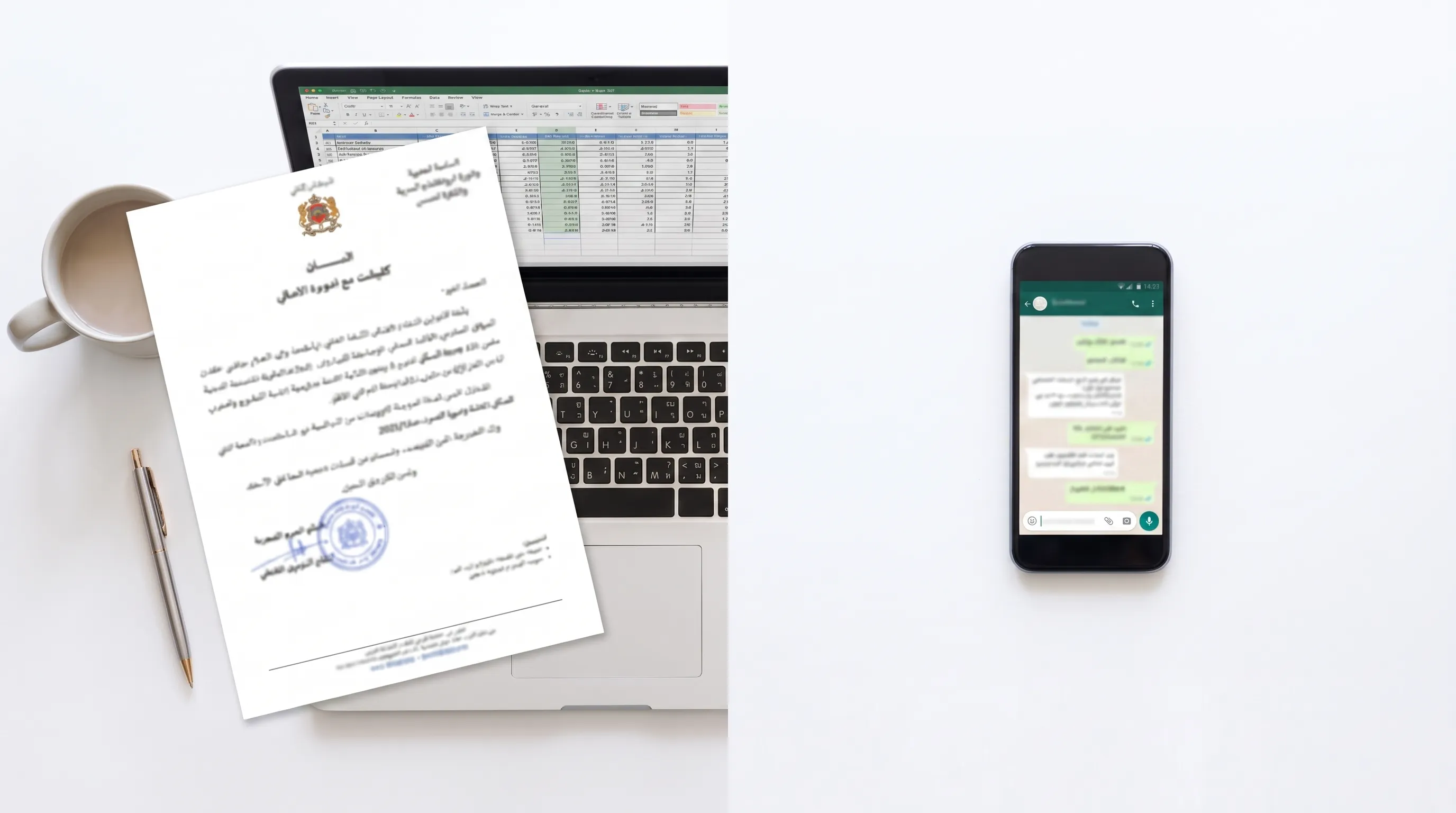
Every school administrator in Saudi Arabia knows how to log into Noor. Fewer can point to a single, governed channel through which parents reliably receive behavioral updates, ask questions, or stay informed between report card cycles. That absence is not an oversight in the system — it is built into Noor’s original mandate, and it is creating a gap that unofficial tools are filling in ways schools have not fully accounted for.
This article examines what the Noor system was designed to do, where its communication architecture ends, why WhatsApp has become the default workaround, and what the risks of that workaround look like under Saudi Arabia’s Personal Data Protection Law (PDPL).
What Noor Was Built to Do — And Where Parent Communication Ends
Noor launched in 2010, implemented by ITG (Integrated Technology Group) and Deloitte on behalf of the Saudi Ministry of Education. According to ITG’s own documentation, it reaches more than 10 million users — including 6 million students and over 500,000 teachers — across more than 40,000 public and private schools. The ITU’s documentation of the system records 2,763 electronic services delivered to 55 stakeholder categories.
The ITU framing is telling: the language is administrative throughout. Centralized databases. Automated reports. E-services for enrollment, grade records, attendance tracking, and credential verification. Noor functions, by every authoritative account, as a national data-governance platform that happens to have communication-adjacent features — not a communication platform that happens to hold administrative records.
This distinction matters. A system designed to answer “what are this student’s grades?” is built around different assumptions than one designed to answer “how do I reach this parent reliably tonight?” The database architecture, the user interface, the permission model, and the notification logic are all shaped by the primary use case.
The January 2026 Update — And What It Confirms
In January 2026, the Saudi Ministry of Education announced a new Noor service adding “remote school visits” and the ability to “track student daily details directly.” Both were positioned as new capabilities.
That framing is important. When a system adds the ability to track daily student details as a new feature in 2026, it confirms that this capability did not exist before — that the system has been operating for over fifteen years without it. The Ministry’s own update is the clearest available evidence that Noor was not, until now, designed for real-time parent visibility into daily school life.
The update signals Ministry recognition of the communication gap. What it does not yet address is moderation, privacy governance, two-way dialogue, or the community dynamics that arise when thousands of parents interact around a school’s communications. Those are product design problems, not database problems — and they require different tools.
How WhatsApp Became the Default Infrastructure
The vacuum created by Noor’s communication scope did not stay empty. Saudi Arabia has a smartphone penetration rate of 94.32%, projected to reach 97.1% in 2025, and WhatsApp adoption among Saudi adults reached 83.7% in 2023. When every parent is reachable via a messaging app that every teacher already uses personally, the path of least resistance is clear: create a class group, add everyone, and start sending messages.
In practice, a common setup might look like a Grade 4 class group with around 30 parents, two teachers, and a shared mobile number for the school coordinator. Homework reminders go to the group. Exam dates go to the group. Behavioral incidents — when staff are willing to raise them — go to the group. The school has no administrative access to the group, no record of what was said, and no mechanism to remove a participant who posts something inappropriate.
This is not a Saudi-specific problem. Research from the UK — where the structural dynamic is identical — found that 33% of classroom teachers had avoided raising student behavior issues because of fear of parent backlash (online or in-person, including in parent messaging groups), and 15% of head teachers reported the same behavior. The chilling effect is measurable: when the communication channel is unmoderated and outside institutional control, staff self-censor.
For Saudi schools, the PDPL adds a compliance dimension to this structural risk. Saudi Arabia enacted its Personal Data Protection Law in 2021, with enforcement beginning in 2023. Any channel through which personal information about students — attendance, behavior, academic performance — is transmitted becomes a regulated data-processing activity. A parent WhatsApp group where a teacher posts “Khalid was absent again and falling behind in math” is not a compliant channel. It is an unmanaged data exposure.
What Third-Party Tools Reveal About the Gap
The clearest evidence that Noor’s communication scope is insufficient is commercial, not anecdotal. Saudi telecommunications providers like Taqnyat explicitly market their WhatsApp Business API and SMS services to schools as a communication layer built on top of Noor — meaning they are selling, and schools are buying, products designed to fill the gap the system itself does not fill.
SMS achieves open rates of up to 98% and response rates of up to 45% for school communications, according to Taqnyat’s own published data. These are compelling numbers — and they reflect a real demand for reaching parents through mobile channels. But SMS and WhatsApp API services address one half of the problem: outbound reach. They do not address inbound moderation, structured two-way dialogue, behavioral reporting with privacy controls, or the community governance challenges that arise when a school has 300 families who all need to communicate with a single institution through a single governed channel.
The third-party market confirms that demand exists. It also defines the shape of what is still missing.
Why Parent Communication in Saudi Schools Requires a Dedicated Platform
The framing here matters: Noor is not broken. It does what it was designed to do — maintaining student records, tracking attendance, generating administrative reports — at national scale across 40,000 schools. The communication gap is not a Noor failure. It is a scope boundary.
What lies outside that scope is a specific set of requirements: two-way dialogue between teachers and individual families, behavioral updates that do not expose sensitive information to a group chat, a moderation layer that protects staff from public backlash, and an audit trail that documents what was communicated and when. These are the requirements of a parent communication platform, not a school management system.
A platform purpose-built for school-parent communication addresses each of these. Messages go to individual families or defined groups, not to unmanaged public chats. Teachers post behavioral updates through a system that logs the communication and limits visibility to the relevant family. Administrators can see, moderate, and archive all institutional communications. Parents receive notifications through a channel the school controls — not through a consumer app that routes through a third party’s servers under that third party’s data terms.
For Saudi private and international schools operating under both Ministry oversight and PDPL obligations, this architecture is not optional infrastructure. It is the difference between a communication process that can be audited and one that cannot.
How BeeNet Addresses the Communication Layer Noor Leaves Open
BeeNet is built on exactly this architecture. Its channels and messaging feature is designed specifically for the structured communication that school management systems do not provide. Schools can create separate channels for classes, grade levels, or specific parent groups — each with defined membership, moderation controls, and message history accessible to school administrators.
For schools operating in Arabic-speaking contexts, BeeNet supports full right-to-left layout and Arabic-language interfaces, so the platform works natively for parents who are more comfortable communicating in Arabic than in a second language. Communication records are maintained in a school-controlled environment, not on a consumer messaging platform with external data terms.
The platform does not replace Noor — it works alongside it, filling the communication layer that Noor’s administrative architecture was never built to provide. Schools that have standardized on Noor for records and reporting can add a governed parent communication channel without changing their administrative workflows. For schools looking to move away from WhatsApp groups while maintaining the reach that mobile messaging provides, that is the practical starting point. You can see how BeeNet works in practice by requesting a demo.
For a feature-by-feature breakdown against Noor specifically — pricing, data residency, and the workflows each platform actually covers — see the BeeNet vs Noor comparison.



Related BeeNet Features
Ready to Transform Your School Communication?
Start saving time and increasing parent engagement with BeeNet.
Request Demo