The Transition Trap: How Communication Collapse Shapes the Next Six Years of School
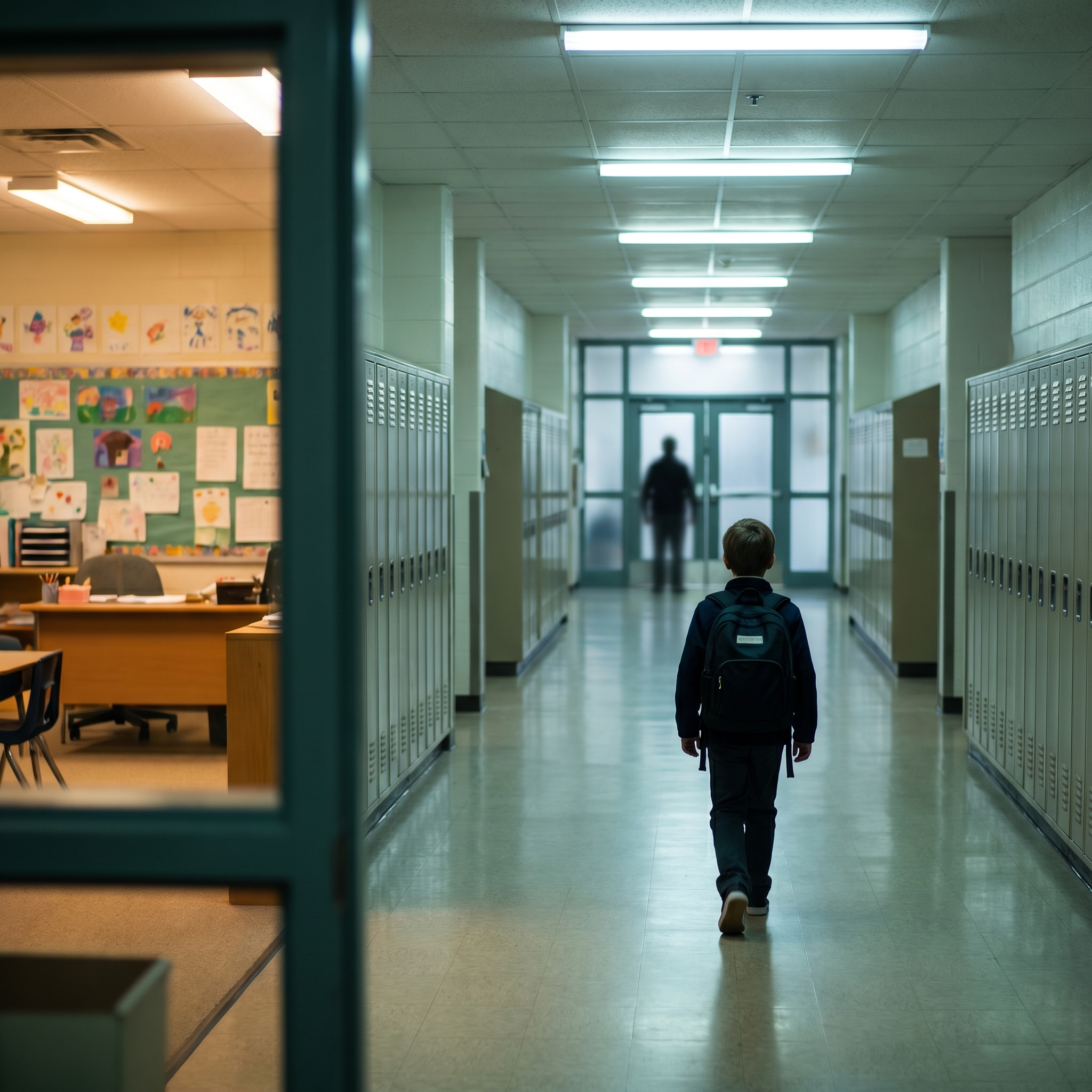
A student who was engaged in primary school walks into secondary school and begins to drift — not because the work got harder, but because nobody told their parents what was happening. The school stopped communicating. The family stopped knowing. And what had been a partnership became a gap. Across dozens of countries, the same pattern repeats: students who were on track in primary school begin to disengage in the first year of secondary education, and the evidence increasingly points to communication collapse — not academic difficulty — as the cause.
The Numbers That Should Alarm Every School Leader
The scale of the problem is not subtle. In Morocco, primary school dropout decreased from 5% in 2000 to just 1.1% in 2020 — a hard-won achievement of two decades of investment. Yet middle school dropout (collège) remained at 10.3% in 2023. According to Ibourk and Raoui (2024), that represents 156,998 students abandoning education at collège level in the 2022/2023 school year alone, compared to 58,819 from primary — nearly three times as many, in a shorter cycle.
This is not a Moroccan anomaly. The OECD Education Policy Outlook 2025, covering 38+ countries, states directly: “Transitions create vulnerability for students to disengage and perhaps even leave education early.” Ages 10 to 16 represent the highest window of both learning openness and vulnerability simultaneously. What happens in those first two years of secondary school tends to determine the trajectory of the next four.
What the Data Says About Who Survives the Transition
Not every student struggles equally. The Growing Up in Scotland longitudinal study — tracking 2,559 children through the primary-to-secondary transition — found that 44% of children in the top income quintile reported a positive transition experience, compared to only 26% in the bottom income quintile. That is not a gap produced by academic readiness. Children from lower-income households are not cognitively less prepared for secondary school. They are socially and institutionally less supported through it.
The same study found that parents across all income groups reported feeling less informed and less welcomed after the transition. Secondary schools’ communication practices differed markedly from primary schools. This shift is rarely intentional — it is structural. Secondary schools are larger, departmentalised, and designed around subject specialists rather than pastoral continuity. The result is that the school-family relationship that primary schools spent six years building resets on day one of secondary school.
The Institutional Failure No One Calls by Its Name
A 2025 systematic review of 38 studies by Mocho et al. concluded that teacher invitation and school culture prove to be stronger predictors of sustained parent engagement than parent demographics — and that parental school involvement (PSI) declines at secondary level because schools stop inviting and structuring parent involvement, not because parents choose to disengage. Here is what that means for how administrators should think: the decline is not caused by parents stepping back. It is caused by schools stopping the invitation.
This matters because it changes the conversation. Administrators who frame declining parental involvement as a culture problem — parents of secondary-age children are less interested, busier, more deferential — are misidentifying the variable they actually control. The institution is the lever.
The Perception Gap That Grows Every Year After Transition
One of the most striking findings in recent research comes from a scale that is harder to ignore: 65,000+ students and 2,000 parents surveyed by the Brookings Institution in 2025.
Only 26% of 10th graders report loving school. Yet 65% of their parents believe they do. That is a 39-point perception gap — and it does not appear overnight. It accumulates across the secondary years as schools reduce substantive communication with families to two data points: attendance and grades. This study draws on US data, but the same dynamic — parents receiving only grades and attendance signals, while engagement and wellbeing go unreported — is documented in European contexts, including the OECD’s multi-country findings on family-school communication at secondary level.
Grades tell parents whether their child is performing. They do not tell parents whether their child is engaged, struggling socially, disconnected from their learning, or on a trajectory toward dropout. Attendance flags a crisis after it has already developed. Neither metric gives parents what they need to intervene early, at the moment when parental involvement actually changes outcomes.
What Effective Intervention Looks Like
A 2023 systematic review from Cardiff University — Donaldson, Moore, and Hawkins — analysed 34 papers covering 24 transition interventions. The finding on parent involvement was unambiguous: studies consistently showed that when parent involvement was embedded in the intervention design — not as an optional add-on — outcomes improved.
This is the operational distinction that separates effective transition programmes from ineffective ones. Optional parent evenings, end-of-term reports, and one-way newsletters are not parent involvement. They are information broadcasting. Embedded involvement means parents receive structured, actionable communication at regular intervals, are given clear entry points to contact the school, and are treated as partners in the monitoring of their child’s wellbeing and academic engagement — not as an audience.
The OECD’s 2025 analysis of high-performing countries found that structured parent-school communication systems consistently appear as a feature that bridges transitions. “Closer connections with families, communities and employers can ease transitions to future stages.” The countries that maintain student engagement through secondary school are not doing so by accident. They have institutionalised the communication practices that other systems leave to chance.
Three Structural Changes That Make a Measurable Difference
Based on the converging evidence, three specific changes produce the clearest impact:
1. Transition-specific communication protocols. The communication cadence between school and family should increase, not decrease, in the first term of secondary school. This is counterintuitive for secondary administrators used to operating at greater distance from families than primary schools. But the first 12 weeks are when trajectories are set.
2. Proactive outreach on wellbeing, not just performance. Grades and attendance are lag indicators — they tell you what already happened. Early-warning communication that flags disengagement signals before they become grade problems gives families and pastoral teams the opportunity to act when intervention is still low-cost.
3. Structured channels, not ad hoc contact. When families have a clear, consistent channel to reach the school — and when they hear from the school through that channel regularly — they remain engaged. In practice, this means something concrete: a named pastoral contact with a direct parent messaging route, a weekly automated wellbeing check-in that reaches families before problems become visible in grades, or a shared platform where parents can see updates without having to navigate a bureaucratic system. When contact is ad hoc and asymmetric, the institutional invitation disappears and so does the engagement.
What COVID-19 Revealed
The pandemic provided an unintentional natural experiment. When standard communication channels collapsed, transition outcomes worsened measurably. Research by Tsegay et al. (2023) at Anglia Ruskin University found that interschool staff visits between primary and secondary teachers — identified as critical for aligning communication practices — are “rarely prioritised in normal circumstances.” When COVID eliminated even those rare moments of inter-institutional coordination, schools lost the thin threads of continuity that existed.
The lesson is not that schools need pandemic-level disruption to notice the problem. It is that the ordinary functioning of the system already relies on communication scaffolding that is fragile, underprioritised, and invisible until it breaks.
The Six-Year Consequence
Family and school environments are central to shaping students’ motivation and learning behaviours across early to mid-adolescence — and when those environments stop talking to each other, the effects compound year by year. A student who enters secondary school and experiences a communication vacuum — where parents are not informed, where the school does not signal that parent involvement is valued, where feedback arrives only in the form of poor grades — does not simply have a difficult first year. They develop a relationship with education that is characterised by low engagement, low belonging, and low expectation.
Six years later, that student is a very different adult from the one who received the same academic instruction in a school that maintained the family-school partnership through transition.
The Morocco data makes the cost of inaction concrete: nearly 157,000 students left middle school without completing it in a single year. Across France, Belgium, the Gulf states, and every MENA system with a tracked transition point, the pattern is structurally similar even if the magnitude differs. The transition trap is not unique to any one country. It is built into how secondary schools are designed.
School administrators cannot change adolescent development. They can change the institutional practices that determine whether families remain partners or become bystanders.
BeeNet gives secondary schools the communication infrastructure to maintain structured, proactive parent engagement from the first week of term — so that the transition does not become the trap the research warns it will be.
References
- Jindal-Snape et al. (2023). Primary–secondary school transition experiences. BERA Review of Education. https://bera-journals.onlinelibrary.wiley.com/doi/10.1002/rev3.3444
- Tsegay et al. (2023). Teacher Perspectives on Primary-Secondary Transition During COVID-19. Sage Open / PMC. https://pmc.ncbi.nlm.nih.gov/articles/PMC10285136/
- Donaldson, Moore & Hawkins (2023). Systematic Review of School Transition Interventions. School Mental Health, Springer / ERIC. https://eric.ed.gov/?id=EJ1371011
- Mocho et al. (2025). Measuring Parental School Involvement: A Systematic Review. MDPI / PMC. https://pmc.ncbi.nlm.nih.gov/articles/PMC12191724/
- Winthrop, Shoukry & Nitkin (2025). The Disengagement Gap. Brookings Institution. https://www.brookings.edu/articles/the-disengagement-gap/
- Ibourk & Raoui (2024). Territorial Obstacles Causing Early School Dropout in Morocco. Heliyon, Elsevier / PMC. https://pmc.ncbi.nlm.nih.gov/articles/PMC11729635/
- OECD (2025). Education Policy Outlook 2025 — Early to Mid-Adolescence. https://www.oecd.org/en/publications/education-policy-outlook-2025_c3f402ba-en/full-report/early-to-mid-adolescence_71fd1f44.html
Ready to Transform Your School Communication?
Start saving time and increasing parent engagement with BeeNet.
Request Demo