Is Seesaw Free in 2026? What the Starter Limits Cost
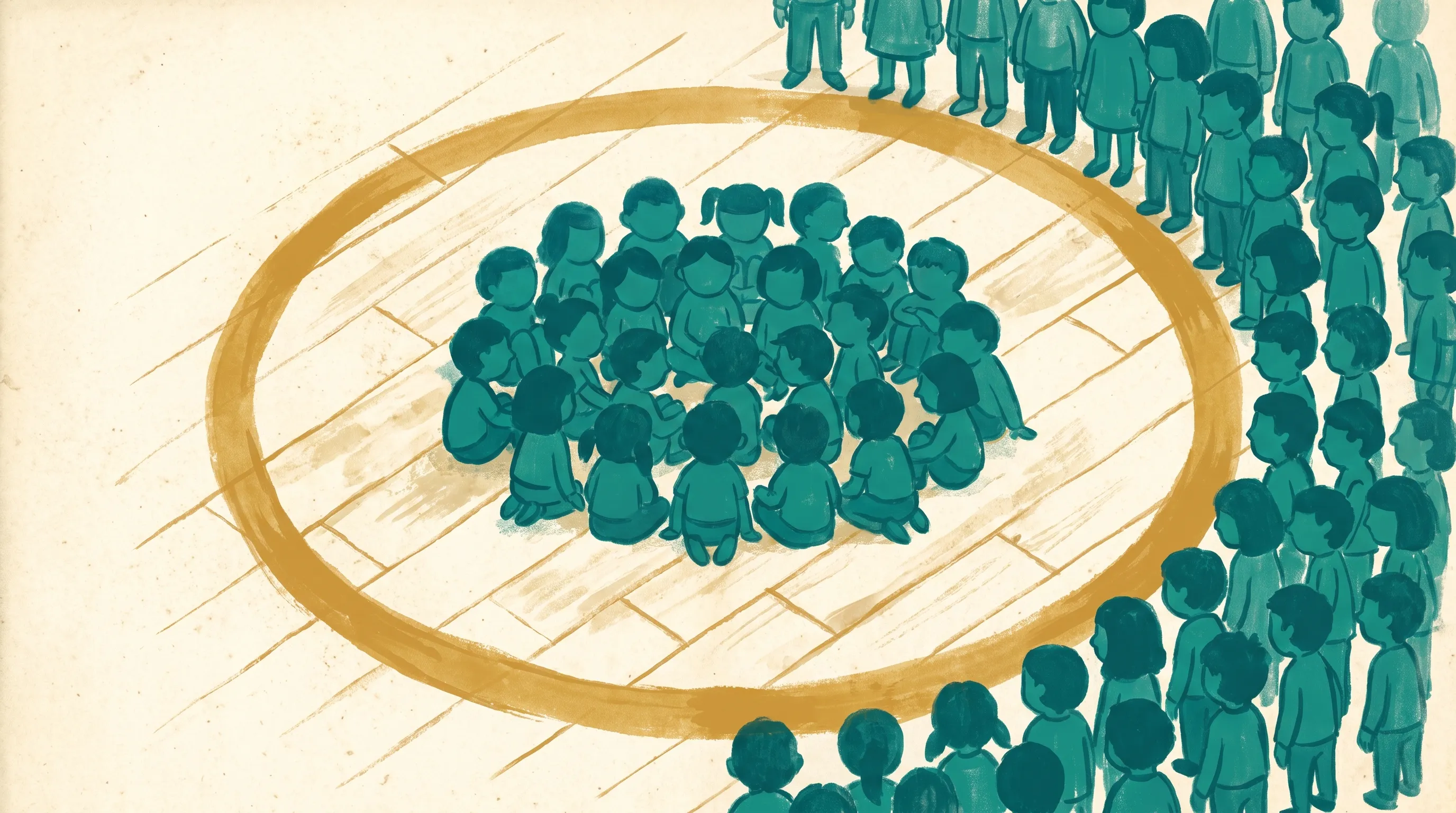
Seesaw is still free in 2026, but since 30 June 2026 the free Starter plan has been a bounded preview rather than a working classroom tool. One active class. Thirty-five students. One teacher. Thirty-five saved activities. Five media items per post. And no way for a teacher to pay their way out on their own: Seesaw sells only schoolwide subscriptions, starting at a figure it puts at $2,500 (Seesaw). If teachers in your school are running parent-facing portfolios on personal Seesaw accounts, that is now a procurement decision sitting on your desk, not theirs.
Is Seesaw free after 30 June 2026? The Starter limits
| Starter (free) allowance | Cap |
|---|---|
| Active classes per teacher account | 1 |
| Students per class | 35 |
| Teachers per class | 1 |
| Saved activities in My Library | 35 |
| Multimedia items per post | 5 |
| Individual paid upgrade | Not offered |
All six lines come from Seesaw’s own announcement of the change (Seesaw), and the 35-student cap is repeated in live product documentation last updated on 31 July 2026: “Seesaw Starter classes support up to 35 students” (Seesaw Help Center). Those are the two pages to budget against.
Two things did not happen. Existing material was not wiped — “Your existing content remains available. It is not deleted or hidden,” Seesaw states, though teachers over the caps must now delete something to add something (Seesaw). And Starter did not lose features across the board: AI-assisted instruction and messaging with included credits, Student Highlights Folders and post visibility settings were added to the free tier at the same moment the caps arrived.
Seesaw pricing 2026: what a school actually pays
Seesaw’s pricing page lists three paid tiers — Seesaw LMS, Seesaw Instruction & Insights, and Seesaw AI, the last marked “Recommended” — and no monetary figure anywhere on the page. Every route ends at a sales contact (Seesaw). The same page carries the sentence that closes off the individual route entirely: “Seesaw licenses are only available for schools or districts. We currently do not offer paid teacher licenses.”
The published numbers come from buyers, not from the vendor. Two named US state consortia — Vita-Learn in Vermont and ACTEM in Maine, joint purchasers alongside NHSTE in New Hampshire — publish their negotiated rates, and Vita-Learn also publishes Seesaw’s list price.
Seesaw cost per student, 2026-27
| Line item | Per student, per year |
|---|---|
| Seesaw K-12 list price | $11.95 (Vita-Learn) |
| Instruction & Insights, consortium standard | $7.75 (ACTEM) |
| Instruction & Insights, two-year commitment | $7.50 |
| Seesaw AI, standard | $8.60 |
| Seesaw AI, two-year | $8.25 |
| Early Literacy or ELD package | $3.30 each, $4.00 for both |
| Schoolwide entry point | from $2,500 total (Seesaw’s own published floor) (Seesaw) |
ACTEM’s figures also show the direction of travel: the consortium standard rate rose from $7.50 per student in 2025-26 to $7.75 in 2026-27, the 2025-26 three-year rate of $7.00 disappeared, and the Seesaw AI tier did not exist a year ago (ACTEM). That is a price increase the consortium documents do not tie to the free-tier change. The licence term runs 1 August 2026 to 31 July 2027, and both consortia state that late orders cannot be pro-rated.
Run the arithmetic on a single capped class and the trap is visible. Thirty-five students at the $11.95 list rate is $418.25 a year; at the $7.75 consortium rate, $271.25. Both sit far below the $2,500 floor Seesaw publishes for itself, and since Seesaw offers no individual licence at any price, a single teacher has no route out of the caps.
For schools outside the United States the picture is thinner still. Seesaw says it is used by “25 million educators, students, and families in over 150 countries” (Seesaw Help Center), but every public price is USD-denominated: Seesaw’s K-12 list price as published by Vita-Learn, and the rates negotiated by the US state consortia. No equivalent benchmark is published outside the US, so a school in Casablanca, Brussels, Tunis or Dubai negotiating in 2026 has no reference point except the one it asks for. Ask for it in the form you will pay it: a per-student rate quoted in EUR, MAD or AED, with the renewal uplift and any FX-adjustment clause named in the same document. Seesaw also states it does not license schools in thirteen named countries, among them Iran, Yemen, Sudan, South Sudan, Russia and Belarus — so for part of the region the pricing question does not arise at all.
Seesaw free vs premium: what the paywall actually gates
The gap is less about features than about scale and continuity. Starter is, in Seesaw’s own words, a plan that “allows teachers to explore Seesaw’s core features” (Seesaw Help Center), with a 60-day trial of Premium Features and no self-serve checkout of any kind. The class, roster, co-teacher, library and media caps are ones Seesaw applies to Starter specifically (Seesaw), and the paid tiers are where the LMS and insights layers sit (Seesaw).
There is a second cost that no price list shows. Literacy Stations, a classroom-resource publisher, documented what happened to its Seesaw-linked catalogue after individual teacher plans were withdrawn: direct activity links in already-purchased products may no longer work and unsubscribed teachers lost the ability to assign or edit those activities, so the publisher reports it is migrating its catalogue to Google Slides, Boom Cards and printable PDFs assignable through Google Classroom or Schoology (Literacy Stations). One publisher’s migration is not evidence of a market-wide pattern, but it does show the shape of the risk. The switching cost lands on material your staff already bought.
Seesaw alternatives for schools hitting the Starter caps
If the caps are what brought you here, three platforms are worth putting side by side before you take any sales call — and the pricing model matters as much as the feature list.
- ClassDojo — classroom-first and teacher-adopted, strongest on behaviour and everyday parent contact rather than institutional record-keeping. Free for teachers with paid family-facing extras, which means it spreads through a school without a procurement decision — the same shadow-IT pattern Seesaw has just made expensive.
- ParentSquare — school- and district-level communication built for mass notification and unified messaging rather than portfolios. Sold at institution level and quote-only, so you meet the same “contact sales” wall you met on Seesaw’s pricing page.
- BeeNet — organisation-level school communication with pricing published openly instead of quoted, and no per-class or per-co-teacher cap deciding which teachers may use it.
The dividing line is not portfolios versus messaging. It is whether the price is readable before the call, and whether the licence counts classes or counts the school.
Seesaw Starter changes are part of a wider licensing shift
Two moves in the same direction: individual teacher plans withdrawn, then Starter capped. The licensing model is pointing away from teacher-purchased and towards institution-purchased, and the 30 June 2026 caps are the second half of that shift rather than the whole of it.
A teacher losing Seesaw this year is probably facing more than one pressure at once. LearnPlatform by Instructure, sampling 12.7 million individuals across US K-12 between September 2025 and April 2026, found districts hold access to roughly 3,001 unique digital tools while students and educators actually use about four a year, with procurement shifting toward tools that can show ESSA-aligned evidence and privacy certification (Instructure). Budgets were tight through the ESSER cliff, which reporting on the end of federal pandemic aid in April 2024 forecast would ease somewhat from 2025-26 onwards (K-12 Dive). Vendor decision, consolidation and budget contraction are co-occurring, not proven cause and effect.
What to do before the term settles
Find out who is actually running on a personal account. Shadow tools only become visible when you ask.
In practice, this looks like a one-question form pushed to all teaching staff in the first week of term — a single field reading “which parent-facing or portfolio app do you use with your class, and who pays for it?” — closed after five working days and read by the head of school before any renewal is signed.
Then apply a threshold to the answer. If more than two teachers are on personal accounts, treat it as a system choice rather than a licence renewal, and put it on the next SLT agenda with the export question attached.
Price the exit, not just the licence. The licence fee is the visible number; rebuilt activities and stranded third-party content are the invisible one.
In practice, this looks like a half-page per-tool note taken at the same staff meeting: how many hours of activities a teacher would need to rebuild elsewhere, which purchased packs break, and whether parent-facing history and media sharing can be exported before a contract ends.
Insist on a written per-student figure in your own currency. Quote-only pricing is negotiable pricing, and the consortium rates above give you a reference point Seesaw does not publish.
In practice, this looks like a single email to the vendor before you take any call, asking for four figures in writing — per-student rate, minimum school commitment, renewal uplift and the price of the AI tier — and a note of the date you asked.
Is Seesaw free enough to run a school on?
Seesaw remains free, and for one teacher trialling portfolios with a single class of 35 it is still a reasonable free tool. As the communication backbone for a school, it is not: the free tier cannot hold a second class or a co-teacher, and the paid tier is a quote-only, USD-denominated schoolwide commitment with a rising per-student rate and no published price outside three US consortia.
That leaves a concrete operational requirement: every family in the school reachable through one system, on a price you can read before you call, without the number of classes or co-teachers deciding whether a teacher can use it. Several purpose-built school communication platforms now meet that bar, including the three named above. BeeNet is one implementation path — organisation-level pricing published openly on our pricing page, and a schools use case that shows how it fits a primary setting.
If you want to see how it maps onto yours, book a demo.
The 2026-27 licence term is already running and consortium orders closed on 31 July. This is happening; the only question left is whether you decide before your teachers hit the caps or after.
References
- Seesaw Learning, Inc. “Changes Coming to Seesaw Starter.” 2026. https://seesaw.com/pricing-packages/free-changes/
- Seesaw Learning, Inc. “Seesaw Pricing & Packages.” 2026. https://seesaw.com/pricing-packages/
- Vita-Learn. “Seesaw — 2026-27 consortium licensing and pricing.” 2026. https://vita-learn.org/seesaw/
- ACTEM (Association of Computer Technology Educators of Maine). “Seesaw — ACTEM consortium pricing 2026-27.” 2026. https://actem.org/seesaw
- Literacy Stations. “Important Seesaw Account Changes and Literacy Stations: What You Need to Know.” https://literacystations.com/seesaw-account-changes/
- LearnPlatform by Instructure. “New Instructure Data Shows K-12 Districts Are Demanding Evidence, Not Just Access to Edtech Tools” (2026 EdTech Top 40). 6 June 2026. https://www.instructure.com/press-release/new-instructure-data-shows-k-12-districts-are-demanding-evidence-not-just-access
- K-12 Dive. “How will ESSER fiscal cliffs drive school district budget cuts?” 8 April 2024. https://www.k12dive.com/news/esser-budget-cuts-begin-2024-2025-2026-federal-aid/712534/
- Seesaw Help Center. “Subscribe to Seesaw.” Updated 19 March 2026. https://help.seesaw.me/hc/en-us/articles/35336214537997-Subscribe-to-Seesaw
- Seesaw Help Center. “Class creation and setup for Seesaw Starter teachers.” Updated 31 July 2026. https://help.seesaw.me/hc/en-us/articles/115003713206-Class-creation-and-setup-for-Seesaw-Starter-teachers
- Seesaw Help Center. “Seesaw availability outside of the United States.” Updated 16 June 2026. https://help.seesaw.me/hc/en-us/articles/26727349548557-Seesaw-availability-outside-of-the-United-States



Ready to Transform Your School Communication?
Start saving time and increasing parent engagement with BeeNet.
Request Demo