Morocco's Riada Label: What the New School Accountability Audit Means for Parent Trust

For school leaders anywhere in the MENA region watching how Morocco builds accountability into a fast-scaling reform, the Riada rollout is worth studying closely — not just for what it measures, but for what it doesn’t yet do: tell parents why their school landed where it did.
Between June 22 and July 10, 2026, two-researcher teams fanned out across Morocco to audit the country’s 4,626 Pioneer Schools — the flagship program that has scaled from 626 schools in its 2023–2024 pilot to over 54% of the public primary system in just two years, reaching more than 2 million students (Morocco World News, World Bank). The audit feeds a new national quality label called Riada, and its output determines which schools are publicly recognized as meeting ministerial standards (L’Observateur du Jour).
What the Riada Audit Actually Measures
The Riada label, created by ministerial decree n°2.24.144 on July 8, 2024, rates schools across roughly twenty quality criteria organized into three axes: the student, the teacher, and the educational establishment (Ministère de l’Éducation nationale, du Préscolaire et des Sports). Data collection is deliberately internal — questionnaires completed by school directors, inspectors, guidance counselors, and teachers, with the June–July window followed by a second round in September (L’Observateur du Jour; Le Matin).
The results feed a three-tier ladder — Conformité (Compliance), Amélioration (Improvement), and Pérennisation (Sustainability) — designed, according to the ministry’s framing, “to encourage positive competition and continuous educational improvement” (Le Matin). A central labeling commission reviews the questionnaire data and issues the final designation. Regional and provincial education officials mobilize the research teams that physically visit each school (Le Matin).
In the first labeling round, published December 4, 2025, 2,415 public schools received the label — 2,214 primary schools and 201 collèges. Every single one landed at the entry-level Conformité tier; none reached Amélioration or Pérennisation (Médias24). The published output was a list of school names and codes — no scorecard, no breakdown of which of the twenty criteria a school met or missed, no accompanying explanation.
The One-Way Flow: From Ministry to List, With No Stop at the Family
Read the four primary sources describing how Riada works, and a pattern emerges: every step of the process runs from the ministry to inspectors to the central commission to a published list. None of them describes a channel that runs back to parents.
The audit itself is staff-facing by design — directors, inspectors, counselors, and teachers fill out the questionnaires (L’Observateur du Jour). The labeling decision is made by a central commission reviewing that internal data (Médias24). And the public output — the December 2025 list — is administrative: names and codes, with no rationale attached.
That matters because the label is explicitly framed as public-facing. The ministry describes it as “a mark of excellence valuing establishments engaged in quality pedagogical, administrative, and managerial practices” (Médias24) — language aimed at public perception, not just internal ministry bookkeeping. Yet nothing in the process obliges an individual school to explain to its own parent body what “Conformité” means, why the school didn’t reach “Amélioration,” or what specific criteria among the twenty axes it satisfied. A parent who sees their child’s school on — or absent from — the published list has no ministry-provided way to understand what that placement actually reflects.
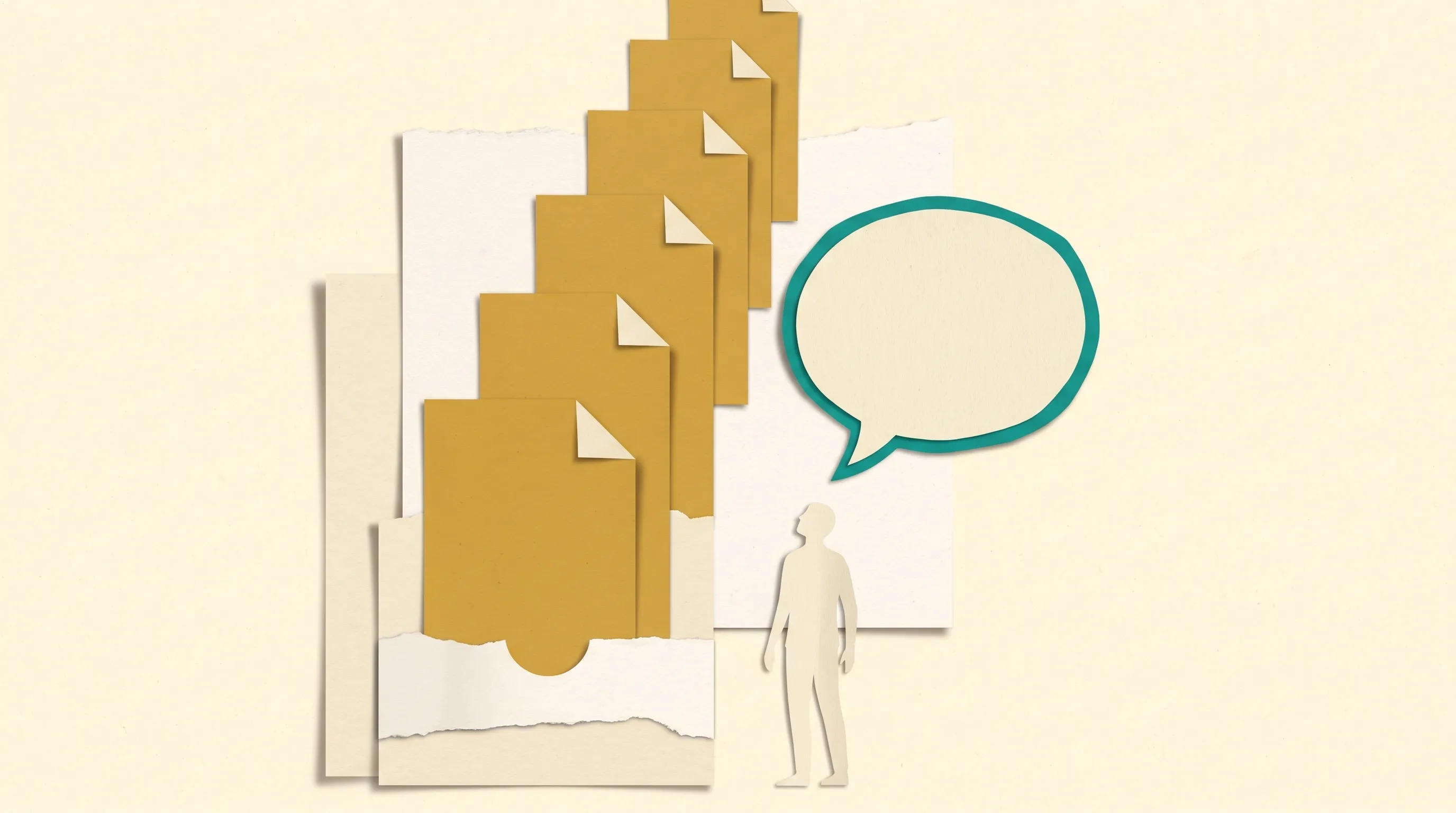
It is an observation about a structural gap: a national accountability mechanism was built with staff-facing data collection and a public results list, but nothing in between that translates the result for the audience most invested in it.
Learning Gains Are Real — But the Label Doesn’t Measure Them
It would be easy to assume Riada’s label reflects the strong learning outcomes Pioneer Schools have posted. It doesn’t, at least not directly — and conflating the two risks giving parents the wrong impression of what a label change would mean.
The evidence for the program’s academic impact is genuinely strong. A pre-registered, difference-in-differences evaluation of the pilot phase — 276 matched public primary schools, 22,846 students at baseline — found the program improved student learning by 0.90 standard deviations after one year, an effect the authors describe as “larger than any impact ever estimated for a program implemented by a government” and within the top 1% of education interventions studied in low- and middle-income countries (J-PAL working paper, Ibrahim, de Barros, Deschênes & Glewwe, September 2024). That baseline context matters: in the 2021 PIRLS reading assessment, Morocco’s fourth-graders ranked second-to-last out of 57 countries, with 59% failing to reach the minimum proficiency benchmark — the starting point the program was built to address.
A separate analysis from the Morocco Innovation and Evaluation Lab, reported by Community Jameel, found learning gains of 0.52 standard deviations, a 31.4% reduction in dropout, and an 8.5 percentage-point reduction in grade repetition across Pioneer Schools (Community Jameel). That 2024 evaluation predates the 2026 audit, and its endline data collection overlapped with — rather than followed — the July 2024 decree that created the label, so treat it as evidence for the pedagogical program’s impact, not as a measurement of what the label itself does.
Learning gains are not driven by the label. The Community Jameel findings attribute the improvement to four specific drivers: Teaching at the Right Level (TaRL) remediation, structured pedagogy (aligned textbooks, scripted lessons, classroom technology), inspector-led teacher coaching, and targeted small-group tutoring of two to four hours per week (Community Jameel). The underlying J-PAL evaluation independently identifies the first two of those — TaRL remediation and structured pedagogy with aligned teacher training — as the program’s core components (J-PAL working paper). The Riada compliance audit was introduced later, as a recognition layer on top of these pedagogical reforms, not as one of the interventions that produced the test-score gains. A parent who reads a school’s Conformité label as a direct proxy for classroom results would be overreading it — the twenty criteria span pedagogical, administrative, and managerial practice broadly, but they measure compliance with that broader standard, not the specific TaRL remediation, coaching, and tutoring interventions the J-PAL and Community Jameel evaluations link to the test-score gains.
The One Parental Mechanism That Already Exists — and Its Limits
There is one place where Pioneer Schools policy touches parents directly: the ministry’s own program page describes “Parental Engagement” as one of its design elements, defined as regular family conferences and parent involvement in developing the school project and participating in institutional management (Ministère de l’Éducation nationale, du Préscolaire et des Sports). That’s a meaningful commitment on paper — family conferences and a seat in institutional decisions go beyond a newsletter.
But this mechanism describes general involvement in how a Pioneer School runs, not a channel for explaining Riada audit results specifically. Nothing in the ministry’s own description ties those family conferences to communicating why a school received Conformité rather than Amélioration, or what the twenty underlying criteria showed. A parent could sit on every family conference the program envisions and still have no more insight into their school’s actual label rationale than what appeared on the December 2025 published list.
What Closing the Gap Could Look Like
The audit measures compliance; it doesn’t require anyone to translate that compliance into something a parent can act on. Where a school chooses to close that gap, three concrete formats illustrate what it could look like in practice — none prescribed by the ministry, but each consistent with what the “Parental Engagement” clause already envisions:
- A one-page label explainer, sent once, triggered by publication of the annual list. When a school’s Riada status is confirmed, an administrator sends parents a short document — in French and Arabic — laying out which of the twenty criteria the school met, which it’s working toward for the next tier, and what changes (if any) that means for the coming year.
- A termly three-bullet update tied to the family-conference cycle. Ahead of each ministry-envisioned family conference, the school sends a short WhatsApp or SMS message — three bullet points, under 100 words — summarizing one concrete step taken since the last conference toward Amélioration or Pérennisation status.
- A standing FAQ page, updated after each audit round, answering the questions a label list can’t: what Conformité means in plain language, how it differs from Amélioration, and where a parent can ask a question directly rather than guess from a published name-and-code list.
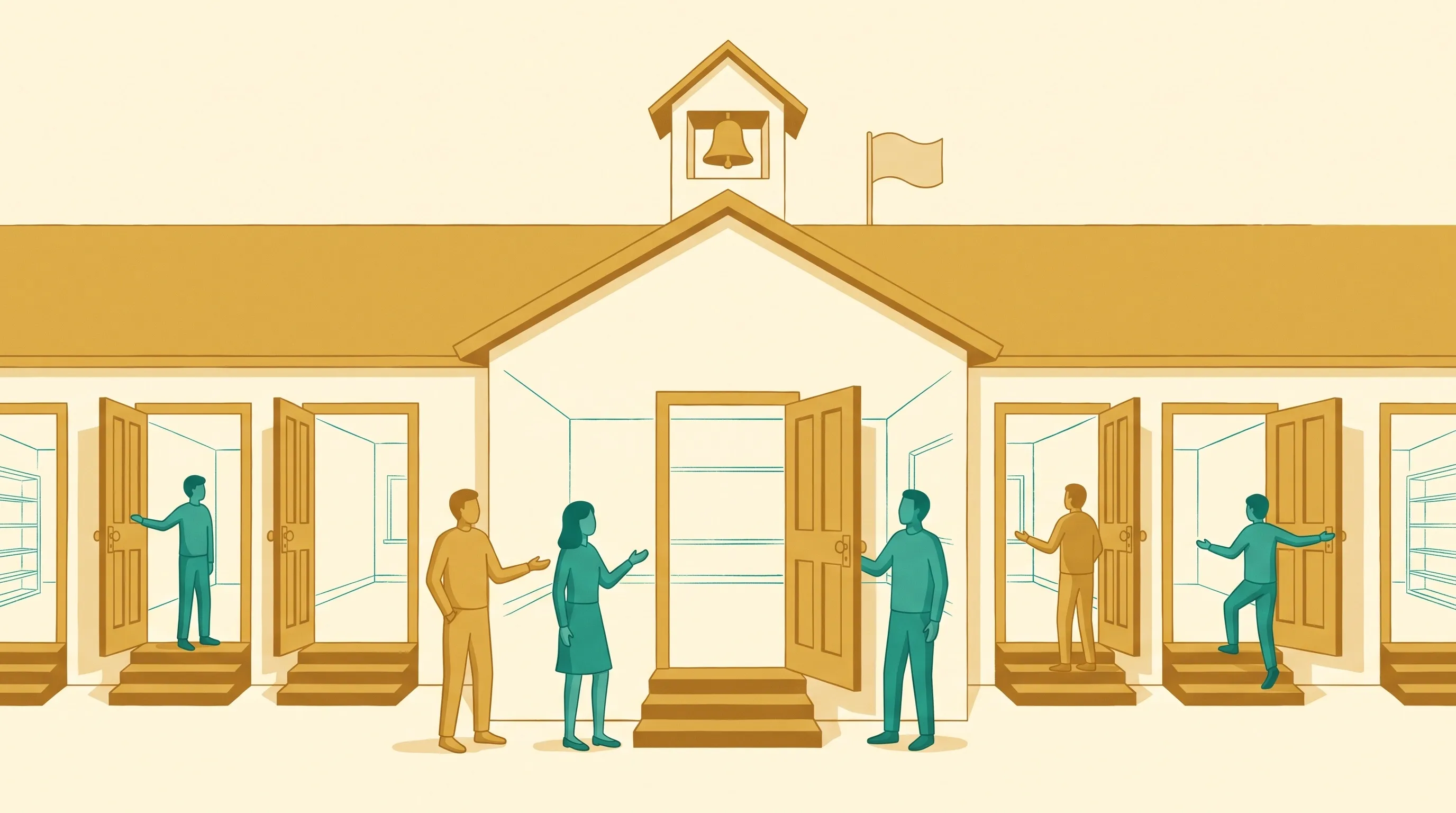
None of these require new ministry infrastructure. They require a school to decide that a compliance audit designed for inspectors is worth translating for the people whose trust it’s meant to build.
What Else Shapes Parent Trust in Pioneer Schools
It’s worth being clear that a missing label-explanation channel is not the sole determinant of family confidence in Pioneer Schools. Trust is also shaped by the pedagogical changes parents can observe directly — smaller remediation groups, visible teacher coaching, new classroom technology — and by the family conferences and institutional-management involvement the program already builds in. The learning gains documented by J-PAL and the Morocco Innovation and Evaluation Lab give parents independent, observable reasons for confidence that have nothing to do with whether a school received Conformité or Amélioration. The transparency gap identified here compounds those existing trust factors; it does not replace them.
What This Means for School Leaders Now
Morocco’s Riada framework is still young — the first full label list is barely seven months old, with a second round of evaluations set for September before any further labels are issued. That makes this a rare window: schools and ministries elsewhere in the region introducing their own quality-label or accountability systems can build the parent-facing translation layer in from the start, rather than retrofitting it after a first list goes out with no explanation attached.
The operational requirement is simple: when a compliance result becomes public, someone in the school needs to turn it into a message a parent can actually read before the parent forms their own conclusion from a bare list. A regular, predictable communication channel — one that already reaches families for attendance, grades, or event updates — is one implementation path for that translation layer; a platform like BeeNet that centralizes parent messaging across SMS, app, and web means the label explainer or termly update doesn’t require building new infrastructure, just using what’s already reaching families for everything else. It is not the only way to do it, but for schools scaling under the same public-scrutiny pressure Morocco’s Pioneer Schools now face, the question is when they build that channel, not if.
References
- Patricia Gombo Boki, L’Observateur du Jour, “Éducation : Coup d’envoi de l’audit des écoles pionnières” (2026). https://www.lodj.ma/Education-Coup-d-envoi-de-l-audit-des-ecoles-pionnieres_a176581.html
- World Bank, “Morocco’s Pioneer Schools: Advancing Improved Student Learning” (2026). https://www.worldbank.org/en/news/feature/2026/05/21/morocco-s-pioneer-schools-advancing-improved-student-learning
- Ministère de l’Éducation nationale, du Préscolaire et des Sports, “Établissements pionniers” (2026). https://www.men.gov.ma/fr/%C3%A9tablissements-pionniers
- Le Matin, “Vaste audit des « Établissements pionniers » avant l’attribution du label de qualité” (2026). https://lematin.ma/enseignement/vaste-audit-des-etablissements-pionniers-pour-le-label-de-qualite/351859
- H.B., Médias24, “Écoles pionnières : 2.415 établissements publics labellisés pour l’année 2025-2026 (liste)” (2025). https://medias24.com/2025/12/04/ecoles-pionnieres-2-415-etablissements-publics-labellises-pour-lannee-2025-2026-liste-1589295
- Adil Faouzi, Morocco World News, “World Bank Heralds Morocco’s Pioneer Schools as Scalable Education Model” (2026). https://www.moroccoworldnews.com/2026/05/306042/world-bank-heralds-moroccos-pioneer-schools-as-scalable-education-model/
- Community Jameel, “200,000 Morocco students benefit from Pioneer Schools — learning rates trebled, dropouts reduced by nearly one third” (2026). https://www.communityjameel.org/news/200000-students-in-moroccos-pioneer-schools-saw-learning-rates-treble-and-dropouts-reduced-by-nearly-one-third-morocco-innovation-and-evaluation-lab-finds
- Hosam Ibrahim, Andreas de Barros, Sarah Deschênes, Paul Glewwe, J-PAL working paper, “The best buy? Prospective evidence on successful remediation in Morocco’s public primary schools” (September 24, 2024). https://www.povertyactionlab.org/sites/default/files/Prospective%20evidence%20on%20successful%20remediation%20in%20Morocco%20(Working%20Paper)_0.pdf
Ready to Transform Your School Communication?
Start saving time and increasing parent engagement with BeeNet.
Request Demo