Belgium's School Equity Gap: What EU Data Says About Parent Engagement
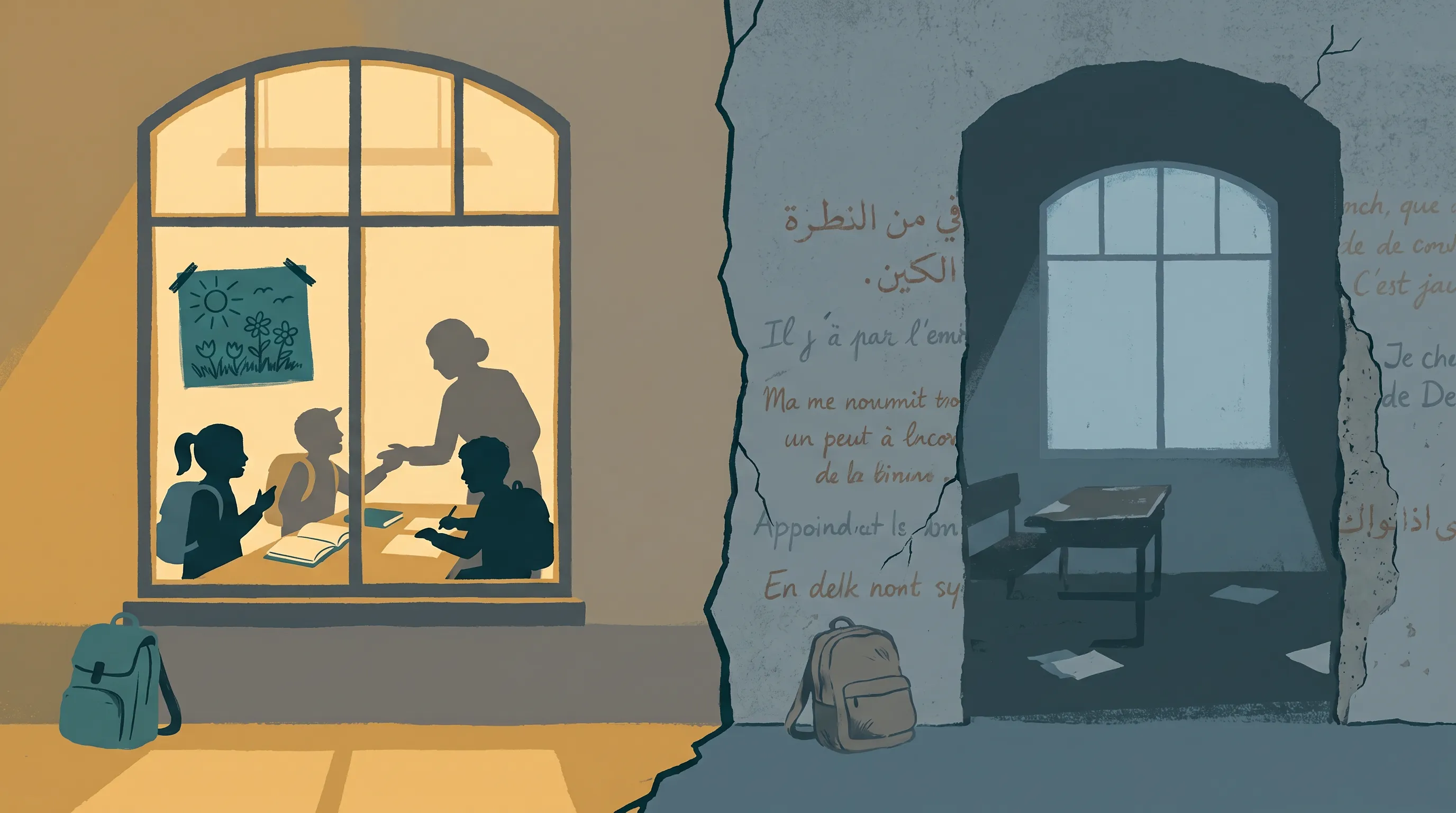
The number is stark: in 2015, 22.7% of Belgium’s most disadvantaged 15-year-olds performed well in at least one PISA domain — reading, mathematics, or science. By 2022, that figure had fallen to 16.6%. That six-point drop, documented in the European Commission’s Education and Training Monitor 2025 Belgium report, represents thousands of young people losing ground relative to their peers — and relative to a European average that is also declining. For school administrators in Belgium’s French Community especially, the data describe a system under measurable stress.
The evidence reviewed here does not identify a single cause, and the research is correlational rather than causal. But one structural lever — family-school communication — is consistently flagged across multiple European Commission datasets as both underdeveloped in Belgium and actionable at the school level. This article explains what the numbers say, where the research points, and what that means in practical terms for school leadership.
How Far Behind Are Belgium’s Most Disadvantaged Students?
The Education and Training Monitor 2025 places Belgium’s performance gap between advantaged and disadvantaged students at 49.6 percentage points — already above the EU average of 42.7 points (EU averages use a different baseline year, so trend comparisons across systems require caution). Within the French Community, the figure climbs to 52.6 points.
Our free parent-engagement maturity scorecard turns the same question into a score you can act on.
These aren’t abstract statistics. In the French Community, 42% of fourth-graders were underachievers in mathematics and 41% in science, according to TIMSS 2023 data cited in the Monitor. The tertiary pipeline reflects the same pattern: only 23% of French Community bachelor’s students complete their studies within the theoretical timeframe, compared to the EU-25 average of 43%.
The EU comparative report adds another dimension: grade repetition is strongly skewed by socioeconomic status, with 20.5% of disadvantaged students repeating grades versus 5.0% of advantaged peers. Grade repetition correlates strongly with dropout risk. The pattern that emerges is not a single bottleneck but a cascade — early underachievement, reduced progression, lower on-time completion — that researchers and the EC alike link to conditions established well before secondary school.
The One Lever Belgian Schools Can Actually Control
The 2025 Monitor is explicit: “Inequalities in basic skills are correlated with pupils’ socio-economic and migration characteristics but are also linked with home educational activities as well as quality early childhood education and care.” Belgium has the EU’s second-largest gap in formal childcare use by poverty risk status: 20.1% of children at poverty risk use formal childcare, compared to 59.3% of non-disadvantaged peers.
This is where family-school communication enters — not as a magical fix, but as one of the structural connectors between households and institutions that EU policy frameworks consistently flag as underdeveloped in Belgium.
A COFACE Families Europe analysis summarising the Monitor’s findings puts it directly: “Disadvantaged and marginalised families can be harder to reach due to potential negative past experiences with school, with challenges including linguistic and cultural differences, as well as low confidence in interacting with educators. Time constraints and parental stress also need to be acknowledged as barriers to parental involvement.”
The French Community government appears to have registered this signal: it has adopted a draft decree increasing parenting support funding from €682,000 in 2023 to €1.16 million per year in 2025. That shift in public investment is a policy indicator, not a solution. The operational work still falls to schools.
What the TALIS Data Reveals About Teacher-Family Contact in Belgium
How much communication actually happens between Belgian teachers and families? OECD TALIS 2024 data, summarised by Education International, provides a baseline that should anchor any honest conversation about reform: in the French Community of Belgium, fewer than 10% of teachers collaborate with parents and guardians on a monthly basis.
Full-time teachers in Belgium report spending 1.8 hours per week communicating and co-operating with parents — and this contact carries measurable professional cost. TALIS data from Belgium show that an additional hour spent communicating with parents is associated with a decrease in teacher well-being. Seventy percent of Belgian teachers cite excessive administrative work as a top stressor. Support personnel shortages exceed 50% in the French Community.
These figures explain why communication remains thin. Teachers are not choosing indifference — they are operating in a system where each additional hour of engagement competes with an already stretched workload. Any approach to improving family communication that ignores this structural constraint will fail in implementation.
Family Communication Is Not Belgium’s Only Challenge
This point deserves honest acknowledgment: family communication is one factor among several, and nothing in the research reviewed here establishes a direct causal chain from better parent messaging to higher PISA scores.
The Monitor documents a 98-point PISA gap between students in general and vocational programmes — equivalent to more than 2.5 years of schooling and substantially larger than the OECD average of 1.5 years. Early childcare access, socioeconomic concentration, migration status, and intergenerational educational attainment (76% tertiary completion among those with tertiary-educated parents versus 35% among those without) are all documented correlates of the equity gap. TALIS 2024 identifies teacher working conditions and support personnel shortages as system-level constraints no single school can solve.
The argument for addressing family communication is not that it trumps these factors. It is that it is the lever most directly under a school’s operational control, and that European evidence consistently identifies it as underdeveloped where equity outcomes are worst.
What European Evidence Identifies as Effective Practice
Quality over frequency
A peer-reviewed study of 944 students across seven schools in both low- and high-SES neighbourhoods in Germany found that, among the low-SES schools in the sample, the quality of home-school contact — not its frequency — was the strongest positive predictor of school belonging. The same study found that teachers and parents reported significantly more frequent contact with only-German-speaking families (effect size η² = 0.15), meaning multilingual families received less frequent contact. Researchers recommended flexible meeting schedules, translated materials, and professional teacher training on awareness and action regarding diverse families.
In practice, this distinction matters. A single well-structured, culturally legible message sent at a relevant moment — the day after a missed assignment, ahead of a parent-teacher meeting, when a student’s attendance pattern changes — tends to be received differently than routine broadcast communications. Consider: a brief SMS in Moroccan Darija sent within 24 hours of a missed homework deadline, acknowledging the situation and inviting a quick call rather than demanding an explanation. Or a two-sentence message in Turkish before a school report is sent home, explaining what the report contains and who the parent can speak with. These are low-frequency, high-relevance contacts of the kind the German study identifies as predictive of belonging.
What does not work on its own
A randomised controlled trial across 109 UK schools tested a structured intervention — three types of weekly text messages sent to parents of 4–5-year-olds — and produced no significant improvements in early literacy or socioemotional outcomes (g = 0.020, p = .730). The researchers attributed this null result primarily to COVID-19 attrition of approximately 70%, which substantially reduced the study’s statistical power, rather than treating it as a clean negative finding about the communication approach. The study nonetheless serves as a reminder that digital communication design — who receives what message, when, and in what context — requires ongoing attention and evaluation.
Diversified channels and cultural accessibility
The European School Education Platform describes the effective approach as using diversified channels — formal meetings, informal welcome sessions, ICT tools, and classroom observations — ensuring “clear language” adapted to cultural backgrounds. It notes that many parents from disadvantaged backgrounds, “while having high expectations for their children’s schooling, may not engage as they feel unfamiliar with the current school system and distant from the school culture.” Teachers, meanwhile, may resist engagement partly out of concern that “involving parents will take their time” — a concern the TALIS data confirm is grounded in real workload pressure.
In practice, diversification means treating the annual parent-teacher evening as one touchpoint among many rather than the primary one. It might look like: a five-minute informal walk-in slot once a month for parents who cannot schedule formal appointments; a translated one-page document sent home at the start of each term explaining what topics the class is covering and how parents can support learning at home; a digital channel where parents can flag concerns without having to call the school during office hours. The COFACE analysis points to Ireland’s Home School Community Liaison coordinator programme as a model: dedicated staff whose role is bridging home-school gaps — a structural investment, not an add-on to a teacher’s existing workload.
European comparators Belgian schools can reference
The Monitor and COFACE documentation identify several EU member state programmes worth examining as comparators.
Finland’s NEUVOLA programme integrates family literacy support into early childhood services before school enrollment, building parental trust and capacity. Belgian schools cannot replicate a government-run early childhood programme, but they can apply the same underlying principle — introducing families to how the school works before the first term begins, through a welcome pack or orientation session conducted in the family’s language.
France’s Pôles d’Appui à la Scolarité position schools as community hubs by providing pedagogical, psychological, and health support in a single coordinated point of contact for families navigating difficulty. Belgian schools can work with existing welfare or support staff to create a similar single-entry point — without needing to stand up a new programme.
Malta’s Institute for Education has embedded parental engagement modules into teacher training. Belgian schools can adapt this at the team level: one staff development session per year focused specifically on communicating with multilingual or disadvantaged families is within the reach of any school, regardless of budget.
Ireland’s Home School Community Liaison programme deploys dedicated coordinators whose role is bridging home-school gaps. For schools without dedicated liaison staff, the actionable parallel is identifying one existing staff member — a social worker, welfare coordinator, or senior teacher — who takes explicit ownership of hard-to-reach family relationships.
None of these are ready-made solutions for Belgium, but they indicate that the EC is tracking peer countries that have moved from identifying the communication gap to institutionalising responses.
What This Means for School Administrators in Practice
The EU Monitor frames Belgium’s situation as a trend, not a snapshot: disadvantaged student performance has declined across two full PISA cycles. The EC is tracking this data year over year and publishing country-level results publicly. Schools that wait for system-level reform before acting on communication will be operating in a worsening equity environment for the duration.
The operational challenge is real. Belgian teachers are already stretched. Any communication improvement that adds unstructured workload will not survive implementation. The question is whether schools can design communication workflows that are structured, language-accessible, and low-friction for staff — workflows where the right message reaches the right family at the right moment without requiring a teacher to manually identify, compose, and send each contact.
Schools that want to close the communication gap without burning out their staff need systems that handle the mechanics of reach — multilingual delivery, timing triggers, attendance flags, channel selection — while leaving professional judgment where it belongs: in the hands of the teacher deciding what the message should say. For administrators actually shortlisting which system to build that workflow on, our comparison of parent engagement platforms weighs six vendors on multilingual messaging, GDPR hosting, and pricing.
BeeNet is built for multilingual school environments with the Belgian and Francophone European context in mind. It does not replace the teacher’s relationship with the family — it makes that relationship easier to initiate and sustain without adding administrative overhead. Schools in Belgium’s French Community can request a free demo to see how BeeNet handles multilingual delivery in practice.
The Window Is Now
The Education and Training Monitor 2025 is not a warning about a possible future. It is a measurement of a deterioration already in progress. Belgium’s disadvantaged students were better served by the system in 2015 than they are today. The EC’s comparative report notes that twenty education systems are already engaging families and communities through multi-targeted interventions — a contrast that underscores how much ground Belgium’s most marginalised families stand to lose with each year of delayed action.
The next Education and Training Monitor is expected in autumn 2026 — reporting on 2024 data — giving Belgian schools a defined window to document concrete changes before the EC publishes its next public measurement.
The question for school administrators in the French Community and Flanders is not whether family communication is worth improving — the data answer that. It is whether the improvement happens now, with deliberate structure, or continues to be deferred while the gap on the EU’s published scorecard widens further.
References
-
European Commission / DG Education, Youth, Sport and Culture. Education and Training Monitor 2025 — Belgium Country Report. 2025. https://op.europa.eu/webpub/eac/education-and-training-monitor/en/country-reports/belgium.html
-
European Commission / DG Education, Youth, Sport and Culture. Education and Training Monitor 2025 — Comparative Report Executive Summary. 2025. https://op.europa.eu/webpub/eac/education-and-training-monitor/en/comparative-report/executive-summary.html
-
COFACE Families Europe. European Commission Highlights Parental Engagement as Key to School Success. 2024. https://coface-eu.org/european-commission-highlights-parental-engagement-as-key-to-school-success/
-
PMC/NCBI. Supporting Parents to Support Children: A U.K. Randomized Controlled Trial Testing a Text Message Intervention. 2025. https://pmc.ncbi.nlm.nih.gov/articles/PMC12680085/
-
PMC/NCBI. Home-to-School Contact and Its Impact on Students’ School Belonging: A Triadic, Mixed-Methods Approach. 2025. https://pmc.ncbi.nlm.nih.gov/articles/PMC12671996/
-
Education International (summarising OECD TALIS 2024). New TALIS Data Report Confirms Need to Act on Global Teacher Shortage and Working Conditions. 2025. https://www.ei-ie.org/en/item/31459:new-talis-data-report-confirms-need-to-act-on-global-teacher-shortage-and-working-conditions
-
European Commission / European School Education Platform. Parental Involvement — School Success for All. 2025. https://school-education.ec.europa.eu/en/discover/school-success-for-all/4-parental-involvement


Ready to Transform Your School Communication?
Start saving time and increasing parent engagement with BeeNet.
Request Demo