One in Seven: What WHO Europe's Child Mental Health Data Tells Schools About Parent Partnership
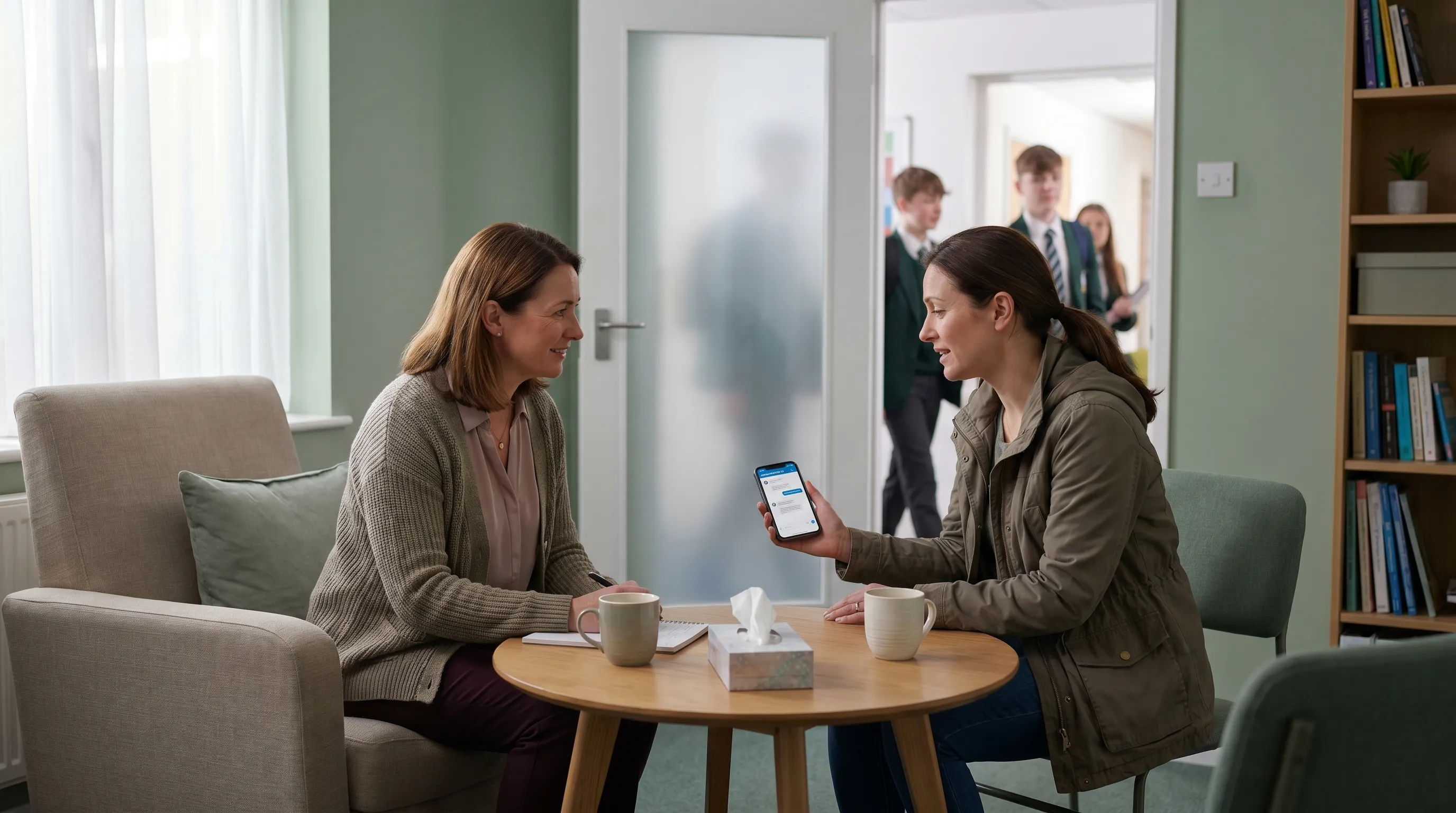
In 2025, WHO Europe released updated prevalence data on childhood mental health distress across member states. The finding that demands immediate institutional attention is not new in spirit — child mental health is a recognized challenge — but it is new in scale and in its implications for how schools communicate with families.
Approximately 1 in 7 school-age children (14%) across Europe experience symptoms consistent with a diagnosed mental health condition or significant psychological distress. The number is higher in some countries: in Germany, 1 in 5 adolescents report depressive symptoms; in Italy, anxiety disorders affect 1 in 6 children; in Belgium and France, behavioral and emotional disturbances affect similar proportions. These are not rare conditions. They are common enough that most schools have multiple children in this cohort in every cohort. And yet, the average child in Europe waits 7-11 years between symptom onset and first diagnosis.
That delay is not primarily a clinical failure. It is an information failure. Parents do not have reliable channels through which school observations reach them in time to seek help. Schools observe the child for six hours a day but do not have systematic ways to communicate what they see to families who can then act. The result is a child who is struggling — visibly, to adults around them — but whose struggle is not named and addressed until years later.
The pathway from observation to action runs through communication. And that is where schools have direct institutional leverage today.
What WHO Europe Actually Found
The WHO Europe mental health prevalence data (released 2025, covering surveys through 2024) documents mental health conditions across children and young people in the region. The aggregated data shows:
- Approximately 14% of school-age children report symptoms meeting criteria for a mental health diagnosis
- Higher prevalence in certain conditions: anxiety disorders (approximately 8-10% of children), depressive symptoms (approximately 3-5%, higher in adolescents), ADHD (approximately 5-7% across the region, with wide country variation), behavioral/conduct disorders (approximately 2-4%)
- Gender variation: girls report higher rates of anxiety and depression; boys report higher rates of behavioral and conduct disorders across most surveyed countries
- Onset typically begins in childhood: most conditions emerge between ages 5-14, with more severe presentations in adolescence
- Treatment gap is vast: approximately 75% of children with identified mental health conditions do not receive treatment
This treatment gap is not because effective treatment is unavailable. It is because identification lags treatment capacity. A child cannot access services they have not been identified as needing. And identification — in most contexts — depends on observation from adults who spend significant time with the child.
The Observation-Communication-Action Chain
Schools observe this cohort for approximately 1,000 hours per year. Teachers see mood patterns, social withdrawal, sudden academic decline, anxiety around specific triggers, physical complaints without medical origin, unusual absences, and changes in peer relationships. These observations are among the most reliable early signals of emerging mental health distress — and they are often more visible to teachers than to parents, who see the child in a narrower context (evenings, weekends, home stress).
But observation without communication means nothing clinically. A teacher who notices a child becoming increasingly withdrawn must reach parents that week, not at the scheduled parent-teacher conference three months away. A teacher who observes sudden academic collapse paired with social withdrawal should flag it to parents immediately, not wait for the next report card. A child who expresses suicidal ideation to a peer — overheard by a teacher — needs to reach parents and then a clinician that day.
The current communication model in most European schools is insufficient for this timeline:
- Parent-teacher conferences (typically 1-2 per year) are structured, but too infrequent for flagging emerging concerns
- Report cards (typically 2-4 per year) capture academic trends but are retrospective and not real-time
- Incident-based communication (phone calls for behavioral crises) happens, but only for acute problems — not for the subtle shifts that precede crisis
- Newsletters and mass communication (class announcements, school news) are one-way and not designed for sensitive concerns
The gap is in proactive, timely, two-way communication about behavioral and emotional observations that don’t yet constitute a crisis but warrant parental attention and potentially professional evaluation.
What the Evidence Says About Early Detection and Parent Partnership
The Lancet Commission on adolescent health and wellbeing (2023) identifies early identification of mental health conditions in childhood as a high-impact intervention with robust evidence for effectiveness. Early identification paired with parental engagement produces better outcomes than identification in adolescence or adulthood.
A 2024 systematic review in the Journal of School Psychology (examining 18 studies, primarily from North America and Northern Europe) finds that schools with structured pathways for communicating behavioral and emotional concerns to families experience:
- Earlier identification of children with mental health symptoms (average 2-3 years earlier than in comparison schools)
- Higher rates of family-initiated professional evaluation (families are more likely to seek assessment when schools provide specific observations)
- Improved student outcomes including reduced behavioral escalation and improved academic engagement (in schools where communication was paired with parent support resources)
The mechanism is straightforward: when schools communicate early observations in real time, families can act sooner. Earlier action leads to earlier diagnosis and treatment. Earlier treatment produces better outcomes.
Barriers to Effective Communication on Mental Health Concerns
Schools wanting to implement this practice face several barriers:
1. Training and confidence: Teachers are trained to teach, not to identify mental health conditions or communicate about emotional concerns. Many report low confidence in distinguishing between age-typical behavior and clinically significant distress. Without training, teachers either over-report (flagging every upset child, causing parent anxiety) or under-report (assuming the child will grow out of it, missing genuine concerns).
2. Liability concerns: Schools worry about both over-medicalization (parents seeking unnecessary diagnosis) and liability (missing a sign that escalates into crisis). These fears often lead to avoidance — staying silent rather than risking either error.
3. Lack of structured guidance: Teachers lack a clear format for these conversations. What exactly should they communicate? How do they avoid sounding like diagnosticians (which they are not)? How do they document concerns without creating a false clinical record?
4. Language and cultural differences: A behavior that signals distress in one cultural context may be normative in another. A quiet, withdrawn child may be experiencing depression or may be expressing respect and attentiveness according to family norms. Without family context, observations can be misinterpreted.
5. Parent receptiveness: Parents may interpret school concerns defensively (“You’re saying my child is broken”), may lack resources to act on them, or may not understand what action looks like.
What Effective Models Look Like
Several countries have implemented structured approaches to this problem:
Ireland’s school mental health support programmes include training for teachers to recognize and communicate mental health concerns, paired with a standardized template for parent communication. Teachers learn a framework for observation (what to look for, what is clinically significant, what is developmental), communication (how to initiate the conversation, what language to use), and next steps (how to connect families with school counselors or external services).
Switzerland’s school health services integrate regular mental health screening (typically administered by school health nurses) with structured parent communication when concerns arise. The model includes a written report to parents that names specific observations, explains what they might indicate, offers school-based support, and recommends professional evaluation if appropriate.
The Netherlands’ school-based mental health programmes (implemented through the GGD — municipal health services) embed mental health professionals in schools. These professionals train teachers, conduct group screening, and facilitate parent communication when individual concerns arise. The model makes professional mental health expertise part of the school’s regular infrastructure, not a referral-only afterthought.
Spain’s coordinated school-family mental health framework establishes a clear protocol: teachers observe and document; school counselors synthesize observations; counselors communicate to parents; families decide next steps (school-based support, external referral, or no action). The process is transparent to families, with clear decision points.
What Schools Can Implement Now, Without Waiting for Policy Change
The barriers above are real, but several of them are addressable immediately:
1. Establish a structured observation and communication protocol. Define in writing: what observations constitute a concern worth communicating? When should communication happen (immediately, weekly, monthly)? Who on staff initiates the communication, and who else is looped in? What channel (phone, in-person, written note)? What language? What are the next steps after the initial communication?
A simple written guide — for teachers, not for parents — might look like:
“When to reach out to parents this week: sudden academic decline (>20% drop in assignment quality or engagement), new social withdrawal or isolation, expressed hopelessness or self-harm statements, significant behavior change, physical complaints with no medical explanation, repeated absences or school avoidance.”
“How: phone call or in-person, same week. Opening: ‘I’ve noticed [specific observation] and wanted to share it with you so we can work together.’ Close with: ‘What’s happening at home that might be relevant?’ and ‘Would you like support from our school counselor?’”
2. Build parent communication into mental health training for teachers. Train teachers not as mental health diagnosticians, but as observers. The training should cover: what does developmentally typical anxiety/sadness/behavior look like, and when does it shift into a clinical range? How do you describe observations to parents without pathologizing normal childhood? How do you frame the conversation as partnership, not judgment?
3. Designate a point person for parent mental health communication. Most schools already have a counselor, psychologist, or wellbeing coordinator. Make that person explicitly responsible for the communication protocol — training staff, documenting concerns, initiating parent outreach, following up. This prevents the protocol from being unevenly applied or forgotten.
4. Translate the communication into languages spoken by enrolled families. If a school serves Arabic-speaking families and communication about a child’s mental health concern arrives only in French, parents whose first language is Arabic may miss it or misunderstand it. Mental health communication is high-stakes — it needs to arrive in a language parents can act on, not just read.
Why 2026 Is the Moment for Schools to Act
The WHO Europe data is new. Institutional attention to childhood mental health is rising — in policy, in research, and in media coverage. Schools that build structured communication infrastructure around mental health in the next 12 months will be ahead of the curve, and will position themselves as partners in children’s wellbeing, not just academic institutions.
Early detection saves lives and improves outcomes — but only if the observations made by schools reach parents in time for parents to act. That communication is not a clinical responsibility. It is an institutional responsibility, and it is one schools can take on immediately.
For school leaders looking for one implementation path that consolidates mental health communication with broader family partnership, BeeNet’s structured communication framework includes templates for sensitive concerns, multilingual support, and parent response tracking. See how BeeNet supports family partnership on student wellbeing →
If you want to see where your own school stands, our free family-school partnership check gives you a benchmark in a few minutes.
References
-
WHO Europe. Mental Health and Wellbeing Profile: Europe 2025. https://www.euro.who.int/en/publications/mental-health-wellbeing-profile-europe-2025
-
The Lancet Commission on Adolescent Health and Wellbeing. (2023). A future for the world’s adolescents. The Lancet, 398(10305), 861-862. https://www.thelancet.com/article/S0140-6736(21)01550-3
-
Journal of School Psychology. (2024). Early identification of mental health conditions in school settings: A systematic review. Vol. 104. https://doi.org/10.1016/j.jsp.2024.01.002
-
Irish Department of Education. School Mental Health and Wellbeing Framework. 2023. https://www.education.ie/en/
-
Swiss Federal Office of Public Health. School Health Services and Mental Health Support. 2024. https://www.bag.admin.ch/bag/en/home.html
-
GGD Nederland. School-Based Mental Health Services in Dutch Schools. 2024. https://www.ggdnederland.nl/
-
Spanish Ministry of Education and Vocational Training. Coordinated School-Family Mental Health Framework. 2023. https://www.mefp.gob.es/
-
WHO. (2021). Mental Health of Adolescents and Young Adults: Fact Sheet. https://www.who.int/news-room/fact-sheets/detail/mental-health

Related BeeNet Features
Ready to Transform Your School Communication?
Start saving time and increasing parent engagement with BeeNet.
Request Demo