UNESCO GEM 2026: Enrollment Is Up, But Family Participation Is Not
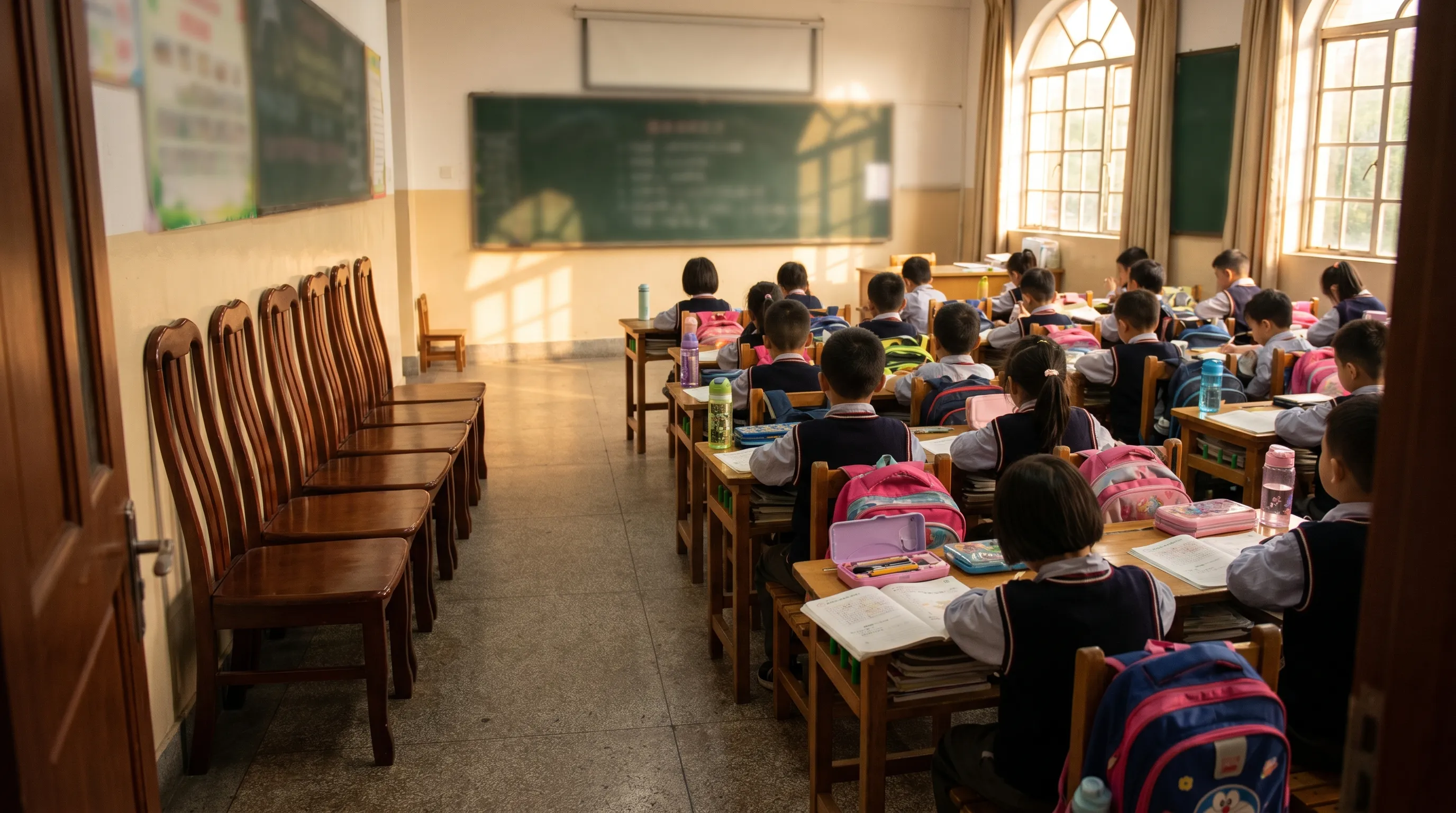
On March 25, 2026, UNESCO released the first edition of its “Countdown to 2030” Global Education Monitoring (GEM) series — a three-part report tracking progress toward SDG 4 in the years before the deadline. The headline statistic made global news: 273 million children, adolescents, and youth are still out of school worldwide, representing one in six young people globally (UNESCO GEM Blog, 2026). But the finding most relevant to school administrators — and the least reported — is not about access at all. It is about what happens to children after they enroll.
This article unpacks that finding, explains what it means specifically for MENA and Francophone Africa, and draws out what school leaders can do about the part of the participation gap they actually control.
Enrollment Rose. Participation Did Not Keep Up.
The 2026 GEM Report opens with what should be a story of triumph. Since 2000, 327 million more children have enrolled in school globally. Pre-primary enrollment grew 45 percent. Post-secondary expanded 161 percent. Primary and secondary enrollment grew by 30 percent (UNESCO GEM Portal, 2026).
Schools auditing this for the first time can start with our free childcare occupancy and revenue calculator.
Yet the out-of-school rate has stagnated at 17 percent since 2015. Worse, 2026 marks the seventh consecutive year of rising out-of-school numbers — a trend running directly against the enrollment headline (UNESCO GEM Blog, 2026). The report’s architects introduced a new metric to explain the divergence: the Equitable Financing Index, which measures whether countries are investing in the quality and equity infrastructure needed to convert enrollment into genuine participation. Only 1 in 10 countries score as having sufficiently strong equity-focused finance policies (UNESCO GEM Portal, 2026).
The GEM Report is explicit on a point school administrators rarely see stated so bluntly: “enrolment measures substantially overstate how many people end up with a degree.” The tertiary-level gap illustrates this starkly — 44 percent of the relevant age cohort are enrolled in higher education globally, but only 27 percent graduate (UNESCO, 2026 Access and Equity findings). Dropout, the report notes, is “a process rather than a discrete event,” with absenteeism functioning as the early warning signal that precedes formal disengagement — often by months or years.
For school administrators, this reframes the core management challenge. Being able to report enrollment figures is not the same as being able to report participation.
What the MENA Picture Actually Shows
UNESCO commissioned a background study on Morocco for the Arab States regional edition of the 2026 GEM Report, scoped to examine “trends in participation since 2000” and “key policy and non-policy drivers of change,” alongside socio-cultural, economic, and institutional barriers (UNESCO/UNGM, 2025). The MENA and Francophone African context is among the most prominently documented regional cases in the 2026 cycle.
The regional data from the UN SDG Report 2025 is unambiguous: Northern Africa and Western Asia pre-primary enrollment stands at just 30 percent, compared to a 40 percent global average — a structural gap that means large numbers of children in the region enter primary school without early childhood education preparation (UN Statistics Division, 2025). In sub-Saharan Africa, fewer than 25 percent of children of pre-primary age are enrolled at all, against a European benchmark that rose from 73 percent to 90 percent between 2000 and 2024 (UNESCO GEM, 2026 Access and Equity findings).
Conflict settings compound the participation gap in ways that enrollment statistics cannot capture. In the State of Palestine, Syria, Lebanon, Sudan, and Somalia alone, an estimated 13 million learners go uncounted in standard enrollment reporting — present in neither the “enrolled” column nor the “out of school” column, but simply missing from the data (UNESCO GEM, 2026). Pakistan alone accounts for 25.15 million children aged 5–16 not enrolled in school, with education spending at approximately 0.8 percent of GDP (UNESCO, 2026).
Among the success cases the GEM Report highlights in the Francophone African context is Côte d’Ivoire, which halved out-of-school rates across all three age groups — a result the report attributes to “patience, context-specific policy bundles, and a clear commitment to equity” rather than any single intervention (UNESCO GEM Blog, 2026).
Honest Reckoning: What Else Is Driving the Gap
The participation deficit is not caused by family disengagement alone, and school administrators should be cautious about any narrative that lays the problem at families’ feet.
The 2026 GEM Report documents a parallel teacher qualification crisis in sub-Saharan Africa that directly undermines participation quality regardless of family engagement. The share of primary teachers with minimum required qualifications fell from 84 percent in 2000 to 65 percent in 2019 — a structural deterioration over the same two decades that produced the enrollment gains (UNESCO, 2024; note: this data extends only to 2019). Sub-Saharan Africa needs to recruit 15 million teachers by 2030 to meet SDG 4 targets. Burkina Faso alone faces a funding gap of US$97 million for teacher training between 2021 and 2025 (UNESCO, 2024).
Progress on enrollment has also decelerated. Upper secondary completion rates grew at 1.3 percentage points annually between 2010 and 2015, slowing to 0.8 points per year from 2015 to 2024 (UN Statistics Division, 2025). At current rates, universal secondary completion will not occur until the 22nd century (UNESCO GEM Blog, 2026).
School administrators are not responsible for teacher training funding gaps or national policy trajectories. But they are responsible for everything within the school perimeter — and that is where the parental participation piece becomes actionable.
The Participation Gap Within Schools
The GEM Report names institutional barriers but does not specify what schools should change. A 2025 research synthesis on parental involvement closes that gap.
A 2025 research synthesis published by the National Institute for Direct Instruction documents the structural barriers that prevent families from participating in their enrolled children’s education even when attendance is regular. The barriers are systemic, not incidental: parents feeling unwelcome at schools, communication gaps between institutions and families, inadequate digital access, and financial limitations that make daytime school involvement impossible (Hempenstall/NIFDI, 2025).
The synthesis also identifies a quality dimension that administrators sometimes overlook: the quality and type of parental involvement matters differently than the quantity. Homework assistance perceived as intrusive has negative effects on outcomes, while structured forms of engagement correlate with additional months of academic progress over a year (Hempenstall/NIFDI, 2025). Research associates this pattern with sustained engagement over time — the causal pathway is not fully established, but the directional evidence across multiple studies is consistent.
For MENA school leaders, the GEM 2026 Morocco study’s language is pointed: it examines not just whether children are enrolled but whether “socio-cultural, economic, and institutional” factors are sustaining or blocking participation (UNESCO/UNGM, 2025). The institution — the school itself — is named as one of the barrier categories.
What School Leaders Can Do
The GEM Report’s policy recommendations are addressed to governments. But each has an operational parallel for school administrators.
Make absenteeism visible early. The GEM Report’s framing of dropout as “a process rather than a discrete event” means early absenteeism is the signal. In practice: configure your attendance system to flag any student who misses three or more days in a single month, and route that flag to the homeroom teacher with a script for a first-contact call — not an email, a call — within 48 hours. The contact is informational, not disciplinary. Its purpose is to make the family feel seen before disengagement accelerates.
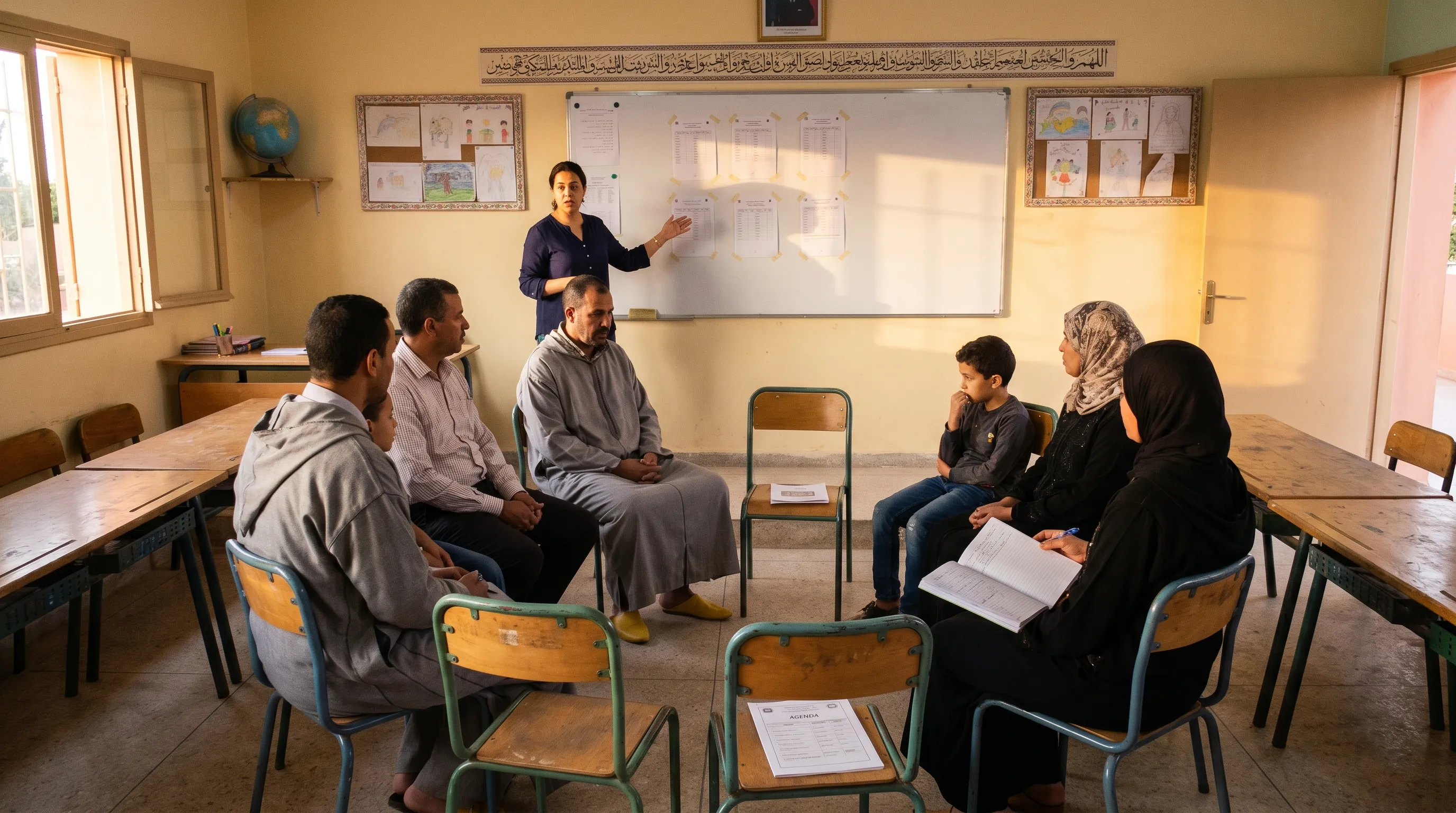
Close the communication gap structurally. The NIFDI synthesis is explicit that communication gaps between institutions and families are a primary barrier (Hempenstall/NIFDI, 2025). In practice: establish a weekly school-wide communication rhythm — one structured message per week per class, sent via a channel families actually use (WhatsApp groups, SMS, or an app with offline tolerance), covering the week’s learning focus, one upcoming event, and one specific action families can support at home. Frequency and specificity are both load-bearing; occasional newsletters do not close a structural gap.
Example: “This week in Grade 4 we are learning to multiply fractions. You can support at home by asking your child to show you one problem they solved today. Upcoming: parent-teacher conferences on June 20.”
Remove the “unwelcome” signal. The research is consistent that parents feeling unwelcome at school is a primary barrier — more fundamental than logistics (Hempenstall/NIFDI, 2025). In practice: audit every first-contact touchpoint a family encounters — the school gate, the front office, the first SMS after an absence. If any of them leads with rules enforcement before relationship, redesign it. The first message a family receives about an absence should acknowledge the family, not accuse the child. The difference in practice: “We noticed [Name] was absent today — hope everything is okay, please let us know if we can help” versus “Absence noted for [Name] on [date]. Please provide documentation.”
Use wealth and geography data you already have. Over half of countries in the GEM Report dataset don’t report wealth-based participation disparities — but most schools already have socioeconomic proxies in their enrollment files (scholarship eligibility, transportation requirements, meal support). In practice: run a quarterly analysis of absenteeism rates segmented by those proxies, and bring that data to your next staff meeting. Patterns invisible in aggregate become intervention-ready when disaggregated. If any proxy group shows absenteeism three or more percentage points above the school average, treat that cluster as the pilot group for the structured weekly communication rhythm described above.
2030 Is Four Years Away — and the MENA Gap Is Structural
The 2026 GEM Report is the first in a three-part Countdown to 2030 series. The 2027 edition will focus on learning quality; the 2028 edition on relevance. By the time the 2028 report publishes, the SDG 4 deadline will be two years away. The report’s own projections show nations are “off-track by approximately four percentage points for primary/lower secondary learners and six percentage points for upper secondary students” (UNESCO GEM Portal, 2026). That gap does not close by enrollment alone.
School administrators operating in MENA and Francophone Africa are working in two of the most prominently documented regional contexts in GEM 2026. That is not a coincidence — it reflects where the enrollment-participation divergence is sharpest and where the structural barriers are most explicitly institutional.
The question is not whether the participation gap will require active institutional response. The GEM data makes that settled. The question is when your school decides to act on it.
BeeNet is built for exactly this kind of structured family communication — weekly messages, attendance triggers, and multichannel delivery that reaches families where they are. If the actions in this article are ones your school is ready to take, it is worth seeing how a purpose-built platform compares to the tools most schools are currently using — and whether a structured communication system is already available rather than something to build.
References
- UNESCO (2026). UNESCO Launches 2026 Global Education Monitoring (GEM) Report on Access and Equity. https://www.unesco.org/en/articles/unesco-launches-2026-global-education-monitoring-gem-report-access-and-equity
- InterAcademy Partnership (2026). New UNESCO report calls for urgent action on equity and access in education. https://www.interacademies.org/news/new-unesco-report-calls-urgent-action-equity-and-access-education
- UNESCO GEM Report (2026). 2026 GEM Report: Access and Equity — Full Findings Page. https://www.unesco.org/reports/gem-report/en/2026-access-equity
- UNESCO GEM Report (2026). High-level launch of the 2026 GEM Report Countdown to 2030: Access and equity. https://www.unesco.org/gem-report/en/articles/high-level-launch-2026-gem-report-countdown-2030-access-and-equity
- UNESCO GEM Blog (2026). The 2026 GEM Report calls for a focus on equity to improve access to education. https://world-education-blog.org/2026/03/25/the-2026-gem-report-calls-for-a-focus-on-equity-to-improve-access-to-education/
- UN Statistics Division (2025). SDG Goal 4: Quality Education Progress Report 2025. https://unstats.un.org/sdgs/report/2025/goal-04/
- Hempenstall, K. / NIFDI (2025). The impact of parental involvement on the education outcomes of their children. https://www.nifdi.org/resources/hempenstall-blog/972-the-impact-of-parental-involvement-on-the-education-outcomes-of-their-children-2025.html
- UNESCO (2024). The persistent teacher gap in sub-Saharan Africa is jeopardizing education recovery. https://www.unesco.org/en/articles/persistent-teacher-gap-sub-saharan-africa-jeopardizing-education-recovery
- UNESCO / UNGM (2025). Research background study on Morocco for 2026 GEM Report regional edition on the Arab States. https://www.ungm.org/Public/Notice/280438
- UNESCO GEM Portal (2026). 2026 GEM Report — Main Portal: Key Statistics and Equity Financing Data. https://www.unesco.org/gem-report/en/node/1


Related BeeNet Features
Ready to Transform Your School Communication?
Start saving time and increasing parent engagement with BeeNet.
Request Demo