Behavior Chart for Classroom: Formats That Work
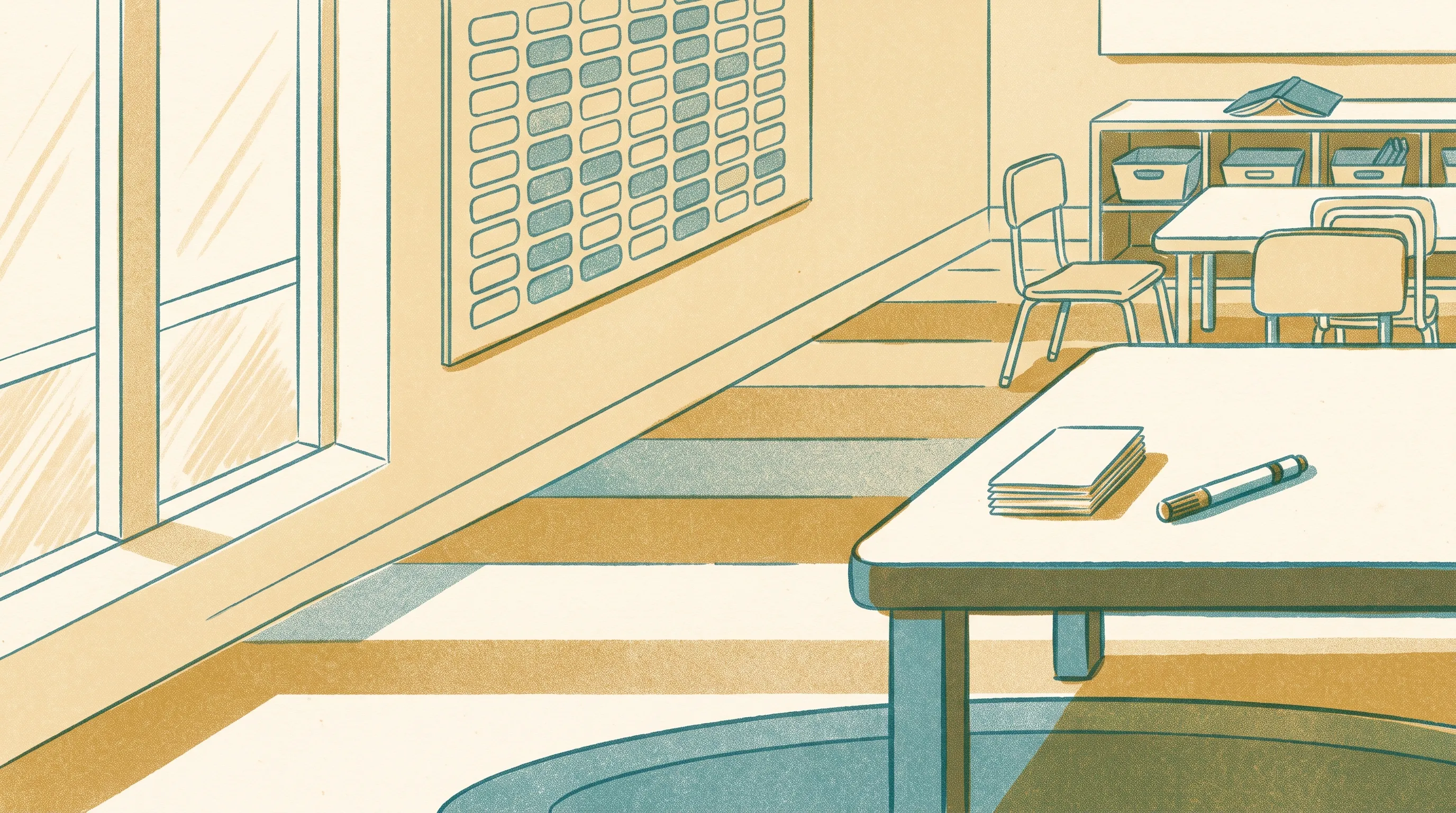
Search for a behavior chart for classroom use and you’ll find three genuinely different tools wearing the same name: a wall poster that moves a clothespin between green, yellow, and red in front of the whole room; a team scoreboard where points count against misbehavior, not for it; and a private sheet that only a teacher, a student, and their family ever see. They are not variations on one idea — they run on different mechanics, and the research record for each is not the same. The public version is the one most teachers picture, and it’s also the one a growing number of schools have started quietly retiring.
This isn’t a verdict on tracking behavior itself. It’s a breakdown of which format does what, why the public clip-and-color version draws the sharpest criticism, and what a classroom keeps if it drops the wall poster but keeps the underlying idea.
What Counts as a Behavior Chart for Classroom Use
Three formats get called a classroom behavior chart, and the difference between them is exactly the difference that matters:
- The clip or color chart. A poster with named zones — usually green, yellow, red, sometimes more — where every student’s clip, card, or name magnet sits in view of the room and moves during the day based on behavior. Status is public and continuous; anyone glancing at the wall can read where every child stands right now.
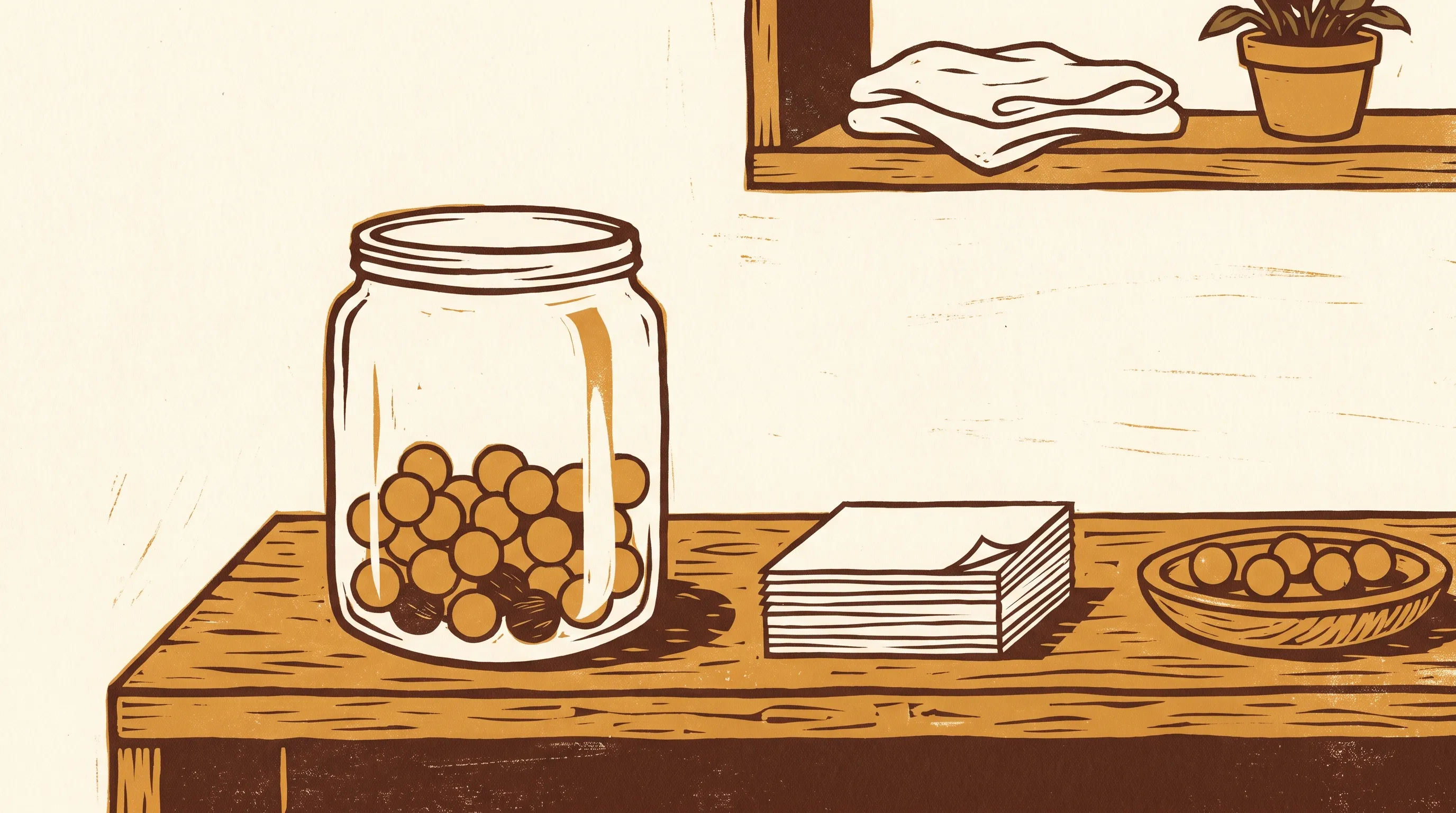
- The team or whole-class system. Points accrue for or against a group, not one named child — a shared jar of marbles, a scoreboard split by table, or a formal structure like the Good Behavior Game (below). The unit being tracked is the team, which changes what’s on display even when the mechanic — points earned or lost — looks similar to a clip chart.
- The individual, private chart. A personal tracking sheet — a card in a folder, a half-page stapled inside a binder — checked with one student at a time and shared with their family, never displayed to the class. Nothing about a student’s status is visible to peers.
A classroom behavior chart and a token or point system aren’t the same thing either, though they overlap: a token economy is the underlying mechanic (earn a token for a behavior, redeem it later for a reward), and a chart is one way of displaying that mechanic — publicly, as a team, or privately. “Class points” — the running-score version of this without the wall display — is its own separate topic; this article is about the visual chart layered on top of the points mechanic, and what changes depending on who can see it.
The Logic Every Chart Runs On
Every format above is an application of the same underlying idea: positive reinforcement, one quadrant of B.F. Skinner’s operant-conditioning framework, where presenting something immediately after a behavior increases how often that behavior happens again. That’s standard psychology, not a classroom-specific invention, and it’s why a behavior chart — in any of its three forms — can genuinely change what a class does day to day. The disagreement isn’t over whether reinforcement works. It’s over what happens when the reinforcement is delivered in front of an audience, and what happens to a student’s own motivation once the chart is the reason they’re behaving.
Why Schools Are Retiring the Public Clip Chart
The clearest institutional break with the public clip chart comes from the Center on PBIS — the federally funded technical-assistance network behind Positive Behavioral Interventions and Supports, used across a large share of US public schools. In a 2020 practice brief titled “Ditch the Clip! Why Clip Charts Are Not a PBIS Practice and What to Do Instead” (McIntosh, Sugai, & Simonsen), the network states plainly that clip charts are “inconsistent with a PBIS approach and, more importantly, can be harmful,” and that PBIS instead promotes “alternative strategies that are evidence based and more likely to improve student behavior while promoting a safe, positive classroom.” That’s a formal, federally backed framework naming the public chart as a practice to stop, not a single teacher-blogger’s opinion.
The companion PBIS classroom guidance names what it wants instead: acknowledgment systems, not public status tracking. “Acknowledging students for showing positive behaviors is a powerful core practice of PBIS” — catching and naming a specific behavior in the moment, rather than displaying a running status score for the whole room to read. PBIS pairs that shift with an explicit equity question schools are told to ask of any behavior-tracking system: “do we do it equitably across student groups, and are our systems culturally responsive?” The public-chart critique isn’t only about one child’s embarrassment in the moment — it’s about whether a system that makes every student’s standing visible to every other student, every day, lands the same way for every group of kids it’s applied to. PBIS frames the overall direction plainly: away from “reactive, punitive practices” and toward approaches that are “safer, more instructive, and inclusive.”
That’s the institutionally recognized version of the shaming critique. The mechanism most people already sense intuitively — that public ranking in front of peers produces anxiety rather than improvement, especially for the handful of students who land in the bottom zone most often — is the standard argument in this space, and it’s the reason a federally funded framework is telling schools to retire the tool rather than tweak it.
Does the Reward Undermine the Behavior It’s Meant to Reinforce?
There’s a second, separate critique that has nothing to do with public display — it applies just as much to a private chart or an individual reward as a wall poster. Education writer Alfie Kohn has argued for decades that external rewards, chart-based or otherwise, don’t build lasting commitment to good behavior: “A child promised a treat for learning or acting responsibly has been given every reason to stop doing so when there is no longer a reward to be gained.” His broader claim is that rewards can make people lose interest in the very activity they were rewarded for — the phenomenon researchers call the overjustification effect.
The evidence behind it is real but genuinely contested, not settled in either direction. Deci’s 1971 puzzle-solving experiment found that paying people for a task they’d previously enjoyed reduced how much they engaged with it afterward, for free, once the pay stopped. Lepper, Greene, and Nisbett’s 1973 study found the same pattern in children given a reward for drawing with markers — an activity they already liked. But Eisenberger and Cameron’s 1996 review challenged whether lab studies like those actually captured lost motivation, versus a normal reaction to having a reward taken away, and Cameron’s later meta-analyses found rewards can increase motivation for tasks kids don’t already find interesting, or when the reward signals competence rather than control.
What the research actually supports is more specific than either “rewards work” or “rewards backfire”: the effect depends on how interested a student already was in the behavior, whether the reward is tied to simply doing the task or to doing it well, and whether the student reads the reward as controlling them or informing them they did something right. Verbal praise that reads as informational tends to hold up better than a tangible prize, and the effect shows up more strongly in children than adults — which matters directly for a K-12 chart. None of that settles whether a specific classroom’s chart is helping or hurting; it does mean “the chart increased compliance this week” and “the chart is building durable good behavior” are two different claims, and only the evidence backs the first one automatically.
What Actually Works: Team-Based and Private Formats
The best-evidenced alternative that keeps the visible, whole-class structure — without singling out one child — is the Good Behavior Game, first published in 1969 by a 4th-grade teacher and two behavior-analysis researchers. Teams accumulate points against them for specific disruptive behaviors during an activity; a team under the threshold wins something the class already wants to do, built on the same logic (the Premack Principle) that using a preferred activity as the reward is more durable than a prize disconnected from the classroom. Johns Hopkins researchers followed thousands of students from first grade into their twenties and reported reductions in aggression and disruptive behavior alongside academic gains. It’s one of the longest-running evidence trails behind any single classroom-behavior intervention — worth naming directly, since no chart search result mentions it by name. That evidence base doesn’t mean the Game has no downsides; it means none were documented in the sources checked for this article, which is a gap in what’s been studied, not proof there isn’t one.
Token economies — the general mechanic behind points, stickers, and check marks redeemable for a later reward — have their own separate, well-studied evidence base, including a 2022 meta-analysis of 24 K-5 classroom studies finding large effect sizes in both general- and special-education settings. But token systems carry three specific, named failure modes worth knowing before building one: improvements documented under a token system often extinguish once the system stops, rather than sticking as a durable change; 5 to 20% of students simply don’t respond to a token economy even when it’s run well; and effectiveness depends heavily on staff applying the rules consistently — many real-world programs failed for that reason alone, not because the underlying mechanic was flawed.
The individual, private chart sidesteps the public-display critique entirely by construction — nothing about it is visible to peers — while keeping the same in-the-moment feedback loop a clip chart offers. It doesn’t inherit a large, dedicated evidence base of its own the way token economies or the Good Behavior Game do, but it also doesn’t carry the specific, named harms (labeling, disproportionate impact by group) that a public chart does.
How to Build a Classroom Behavior Chart That Doesn’t Backfire
If a classroom is keeping some version of a chart, four questions separate a design likely to help from one likely to repeat the clip-chart problem:
Who can see it? This is the single highest-leverage change. Swapping a wall-mounted clip chart for a small card kept inside each student’s own folder — checked privately, during independent work, never announced to the room — keeps the daily-tracking structure while removing the audience.
Is the unit a team or a named individual? A whole-class or team system where the group absorbs the outcome, Good Behavior Game-style, avoids putting any single child on permanent public display. An individual chart avoids it a different way — by staying private in the first place.
Does it track what to aim for, or only what to avoid? A chart with named positive categories — “voice level,” “on-task,” “hands and feet to self” — gives students a target. A chart that only moves for infractions gives them nothing to aim for except staying still.
Does the same handful of students land in the same spot every week? If the honest answer is yes — a classroom behavior chart that reliably identifies the same kids isn’t correcting behavior, it’s re-labeling it, and it’s a signal that particular student needs an individualized plan and a private conversation, not another round of the group-wide system.
Where This Fits: Charts, Points, and Younger Classrooms
A behavior chart for classroom use, class points, and the reinforcement techniques a daycare uses with children under five are related but not interchangeable. Class points are the mechanic without the visual movement — a running score, not a wall display. Reinforcement with under-fives works differently again: toddlers and preschoolers can’t defer gratification the way an 8-year-old can, so the tools that work at that age are immediate — specific praise, attention, in-the-moment redirection — not anything accumulated over a day or a week. For what that looks like in a real program — and how to tell a daycare that actually practices it well from one that just uses the label — see our guide on choosing a daycare that uses positive reinforcement techniques. None of the point-, token-, or team-based systems in this article are described anywhere as appropriate for children that young; they start appearing in the research at elementary age and up. A different structural tool sits alongside all of these without tracking behavior at all: rotating classroom jobs — line leader, calendar keeper, greeter — assign every student a recurring role built around contribution and belonging rather than compliance, and they work at ages a points or token system doesn’t reach.
For a fuller breakdown of the public-shaming evidence specifically — including the equity research behind who ends up disproportionately affected by a visible clip chart — see Behavior Chart: What Works, What Backfires.
Behavior Data That Reaches Families Without the Public Display
None of the design changes above require software — a card in a folder and a marker cover most of it. What a card in a folder doesn’t solve is getting that private record home reliably, rather than living in a backpack until it’s lost or a Friday folder that some families never see.
That’s a narrower need than a general messaging app is built for, and it’s one that purpose-built school platforms are starting to handle as part of the same system that already carries grades and attendance. BeeNet is one option: instructors can log typed behavior notes and track behavior points per student, visible to that student’s own parents alongside their grades — a private, per-child record rather than anything displayed to the class. It’s one implementation path among several, worth weighing against whatever a school already uses for grades and attendance rather than treated as a separate purchase.
Whatever a school lands on, the same test applies regardless of format: would this chart survive being read over the child’s shoulder, in front of their classmates? If the honest answer is no, that’s an argument for changing who gets to see it — not for abandoning the idea of tracking behavior in the first place.
References
- McIntosh, K., Sugai, G., & Simonsen, B. (February 2020). Ditch the Clip! Why Clip Charts Are Not a PBIS Practice and What to Do Instead. Center on PBIS. https://www.pbis.org/resource/ditch-the-clip-why-clip-charts-are-not-a-pbis-practice-and-what-to-do-instead
- Center on PBIS. Classroom PBIS. https://www.pbis.org/topics/classroom-pbis
- Kohn, A. The Risks of Rewards. alfiekohn.org. https://www.alfiekohn.org/article/risks-rewards/
- Wikipedia. Overjustification Effect — covering Deci (1971), Lepper, Greene & Nisbett (1973), and Eisenberger & Cameron (1996). https://en.wikipedia.org/wiki/Overjustification_effect
- Wikipedia. Good Behavior Game — origin (Saunders, Barrish, & Wolf, 1969) and Johns Hopkins longitudinal findings. https://en.wikipedia.org/wiki/Good_Behavior_Game
- Wikipedia. Token Economy — mechanism, Ayllon & Azrin (1961), and Maggin (2011) systematic review. https://en.wikipedia.org/wiki/Token_Economy


Ready to Transform Your School Communication?
Start saving time and increasing parent engagement with BeeNet.
Request Demo