Dubai Schools PISA Ranking 2025: What to Tell Parents
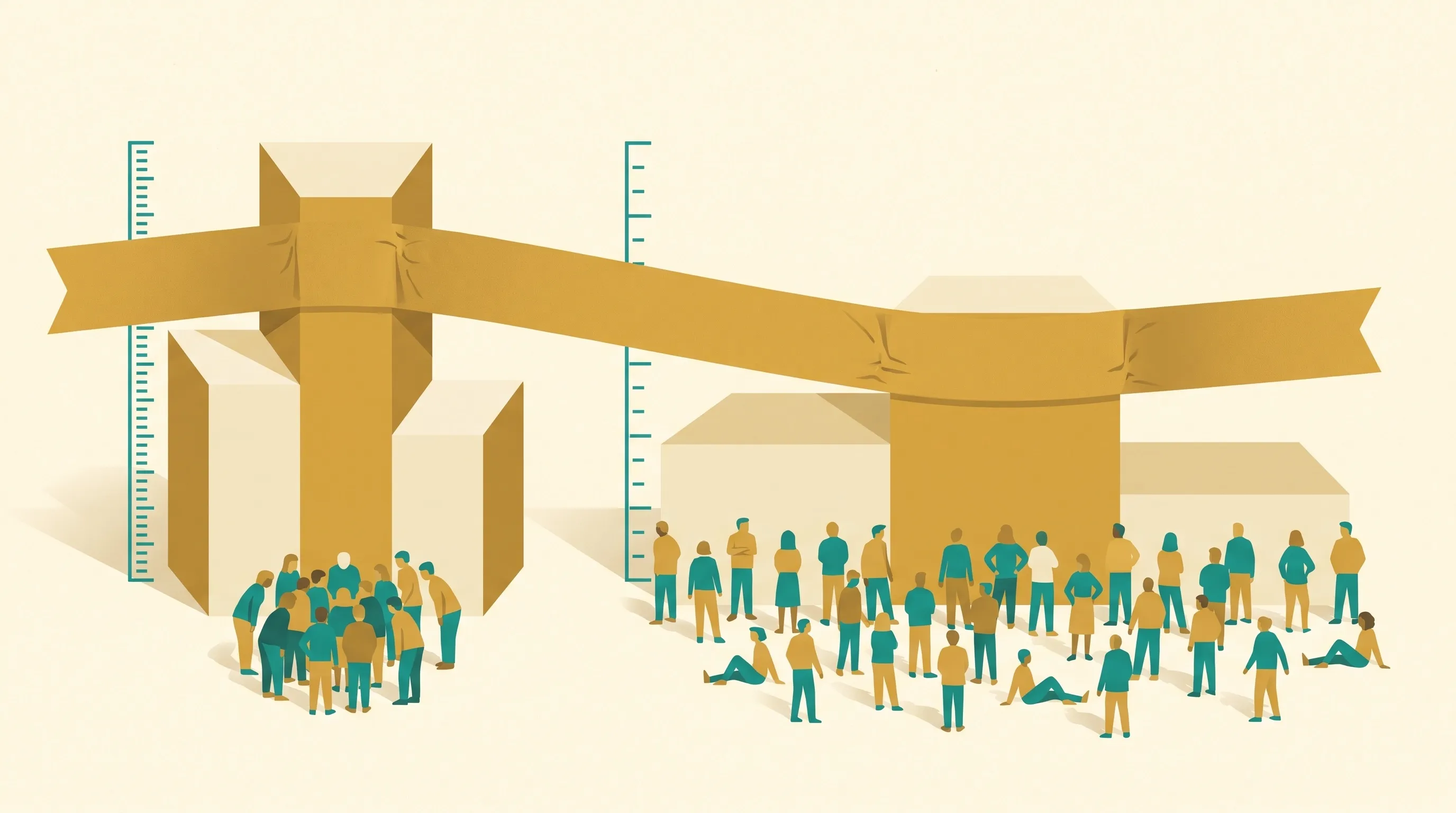
A parent who has seen this month’s “Dubai schools break into the world’s top 10” headline is going to assume it describes their child’s school — and this enrolment season, an administrator needs a straight answer ready before that assumption gets voiced out loud. Dubai schools’ PISA ranking 2025 result is real, and it’s strong: in KHDA’s own sample of 168 Dubai private schools (9,600 students), those schools placed 6th in reading (501 points), 8th in maths (511) and 8th in science (522) among all PISA 2025 participants — up from 9th–14th in 2022 (Gulf News). Look at the UAE’s national result instead — the Ministry of Education’s countrywide sample of 1,070 schools and 34,639 students, covering every emirate and both public and private schools — and the number is different: 433 reading, 453 maths, 458 science, each 12 to 30 points below the OECD average (Khaleej Times; The National). Both figures are correct; they describe different groups of students, not the same school system read two ways.
Dubai Schools PISA Ranking 2025: Two Different Samples
Here is what each figure actually measures, side by side.
| Dubai private schools (KHDA sample) | UAE national (MOE sample) | OECD average | |
|---|---|---|---|
| Reading | 501 — 6th globally | 433 | 463 |
| Mathematics | 511 — 8th globally | 453 | 465 |
| Science | 522 — 8th globally | 458 | 484 |
| Who’s counted | 168 private schools, 9,600 students | 1,070 schools, 34,639 students, all emirates, public + private | 91 participating countries/economies |
The KHDA figure and the national figure are not two readings of the same population, so comparing them directly does not prove anything about how Dubai’s private schools perform relative to the rest of the country — only that the two samples are different, and treating them as one number is the mistake to avoid in any parent-facing message.
A note on a third figure: some coverage also cites a lower, mixed public-and-private subset of the national sample and calls it “Dubai” too. This article uses the KHDA figure (501/511/522) for the “Dubai private schools” claim specifically because that is the sample the top-10 headlines are actually built on; the mixed subset measures a different, broader group and isn’t used here.
What the KHDA PISA 2025 Results Actually Cover
The PISA 2025 Dubai Private Schools Sample: 168 Schools, 9,600 Students
KHDA’s PISA 2025 results cover its own inspected private-school population only — not Dubai’s public schools, and not schools in the other six emirates. The rise itself is genuine and comparable across cycles: the same KHDA sample went from 9th (maths), 13th (reading) and 14th (science) in PISA 2022 to 6th, 8th and 8th in PISA 2025. That is the number worth leading with when a parent asks about this school’s standing — it is the one built from schools like theirs.
Which Curriculum Scored Highest
Within that sample, schools using the IB curriculum scored highest of any curriculum group: 557 in science, 542 in maths and 538 in reading (Gulf News). That’s a curriculum-group average across every IB school in the KHDA sample, not a score attributable to any single institution — useful context for a school weighing how its own curriculum choice sits within the wider Dubai picture, not a claim about one named school’s result.
The UAE PISA 2025 Score Against the OECD Average
The UAE’s national PISA 2025 score — 433 reading, 453 maths, 458 science — sits below the OECD averages of 463, 465 and 484 respectively, a gap of 12 to 30 points depending on subject (The National). Read in isolation, that looks like the opposite story to the Dubai private-school headline. Read alongside the trend, it looks better: every one of those three national scores rose 15 to 26 points since PISA 2022, and the UAE was one of only 8 of the 91 participating countries and economies to improve across all three subjects in that period (Khaleej Times). The OECD’s own release names the UAE among the systems that have, over the past decade, simultaneously reduced their share of low-performing students while increasing their share of top performers (OECD Education and Skills Today).
That improvement is happening against a harder global baseline. Across the OECD, roughly 29% of 15-year-olds now struggle across all three subjects, up from 25% in 2022, and the number of “hasty readers” — students who read quickly but answer incorrectly — has nearly doubled since 2018 (OECD Education and Skills Today; The National). The UAE’s national trend line is moving against that current, even while it still sits below the OECD average in absolute terms. Both things are true at once, and a parent-facing message that only picks one is incomplete.
Why the Two Numbers Diverge: School Type, Not School Quality
Part of the gap between the KHDA private-school figure and the UAE national figure has a structural explanation unrelated to how well any school teaches. Emirati nationals are disproportionately enrolled in public schools; expatriates disproportionately in private ones. A peer-reviewed analysis of UAE PISA 2018 data found 33%-47% of the national/expatriate gap is explained by school type alone — a gap the authors call “equivalent to almost three years of schooling” (Journal of Research in International Education). That’s a statistical decomposition, not an experiment: correlational, not causal, and it does not isolate what happens inside any one classroom.
What to Tell Parents This Enrolment Season
Lead with your school’s own sample
If your school is a Dubai private school, the KHDA figure — not the national one — is the one that actually describes it. A parent asking “is my child’s school one of the top ones globally?” is asking a question the KHDA sample can answer; the national figure can’t, because it also contains public schools your school has no connection to.
In practice, this looks like a one-paragraph line added to your existing enrolment FAQ or admissions page, stating your KHDA inspection rating alongside a plain-language note that Dubai’s KHDA-inspected private schools placed in the global top 10 for reading, maths and science in PISA 2025 — published once, ahead of open-house season, so it’s already answered before a tour guide is asked.
Name the two populations explicitly, in writing
Silence on the gap between the two numbers is what lets a parent (or a competing school, or a review site) pick whichever number suits their argument. Naming both, and what each one covers, closes that gap before someone else fills it with a guess.
In practice, this looks like a single announcement — roughly 150 words, in whichever language a family has set as their preference — sent to every enrolled family within a week of a PISA news cycle reaching local press, structured as two short sentences: what the KHDA figure covers, what the national figure covers, and which one describes their own school — one clear channel, not a scramble each time a new figure lands.
Have an answer ready for the school-type question
Some parents will ask directly why the UAE’s national score sits below Dubai’s private-school figure at all. A school that wants to answer honestly would need to say that composition — who attends public versus private schools — accounts for a documented share of that specific gap (correlational, pre-2025 data).
In practice, this looks like a short, pre-written talking point handed to front-office and admissions staff — three sentences, reusable at parent information evenings and one-to-one enquiries — so the answer doesn’t get improvised differently by whoever happens to take the call.
The verdict for enrolment season: quote the KHDA figure when the conversation is about your own school, quote the national figure only when a parent is asking about the country as a whole, and never let the two blur into one number in anything your school publishes.
Getting that distinction into every family’s hands — correctly, in their own language, before a parent WhatsApp group settles on its own version — is an operational problem as much as a messaging one. It means one announcement, reaching every enrolled family regardless of which language they read in, sent once and not re-explained a dozen different ways by a dozen different staff members. Purpose-built school communication platforms exist for exactly that workflow: a single announcement pushed to every parent channel, in each family’s own language preference, with a record of who received it. BeeNet is one option built for that — organisation-wide announcements with per-family language preferences across English and Arabic, sent through the channels parents already use. See how announcements work or explore BeeNet for schools.
This PISA cycle’s numbers are already circulating among parents and in local press. That part isn’t a decision your school gets to make. The only open question is timing — whether your school explains the gap between the two figures now, on its own terms, or answers for it later, on a parent’s.
References
-
Husain, Zainab. “Dubai Private Schools Rank in World’s Top 10 in PISA 2025, Boosting Emirate’s Global Education Standing.” Gulf News, September 8, 2026. https://gulfnews.com/uae/education/dubai-private-schools-break-into-worlds-top-10-in-latest-global-education-rankings-1.500667156
-
Sircar, Nandini. “UAE students top Arab rankings in PISA 2025 as scores rise in science, maths and reading.” Khaleej Times, September 8, 2026. https://www.khaleejtimes.com/uae/education/uae-students-pisa-2025-scores-rise-science-maths-reading
-
Bardsley, Daniel. “Maths, reading and science skills among young people fall again in global assessment.” The National, September 8, 2026. https://www.thenationalnews.com/news/uae/2026/09/08/maths-reading-and-science-skills-among-young-people-fall-again-in-global-assessment/
-
Schleicher, Andreas. “The State of Global Education, according to PISA.” OECD Education and Skills Today, September 8, 2026. https://oecdedutoday.com/the-state-of-global-education-according-to-pisa/
-
Marquez, Jose; Lambert, Louise; Ridge, Natasha Y.; Walker, Stuart. “The PISA performance gap between national and expatriate students in the United Arab Emirates.” Journal of Research in International Education, 21(1), pp. 22–45, 2022. https://research.uaeu.ac.ae/en/publications/the-pisa-performance-gap-between-national-and-expatriate-students/

Ready to Transform Your School Communication?
Start saving time and increasing parent engagement with BeeNet.
Request Demo