Reggio Emilia Classroom: What It Looks Like

A Reggio Emilia classroom is designed around one idea: the physical space itself should do part of the teaching. Walk into a genuine one and you won’t find rows of desks facing a teacher. You’ll find an open central “piazza” for the whole group to gather, natural light falling across low shelves stocked with real, open-ended materials, small tables arranged for two or three children working on a shared project, and a dedicated art studio — the atelier — either built into the room or shared across the whole school. The walls carry documentation panels instead of posters: photographs, transcribed quotes from the children, and work samples arranged to show how a piece of thinking developed, not just what it produced at the end.
None of that is decoration. Every element traces back to a specific educational philosophy, built in a specific place, by a specific person — and that history matters for a fact most “Reggio-inspired” marketing leaves out entirely: there is no accreditation behind the label at all. This guide covers what a Reggio Emilia classroom physically looks like and why, how the atelier and documentation panels actually function day to day, how a Reggio classroom compares point by point to a Montessori one, and what the missing accreditation means for anyone evaluating a program that uses the name.
What a Reggio Emilia Classroom Looks Like
Reggio Emilia classrooms — the plural matters, because the approach was built as a network of municipal schools rather than a single model exported wholesale — share a recognisable set of physical features, in the original network in Italy and in Reggio-inspired rooms anywhere else:
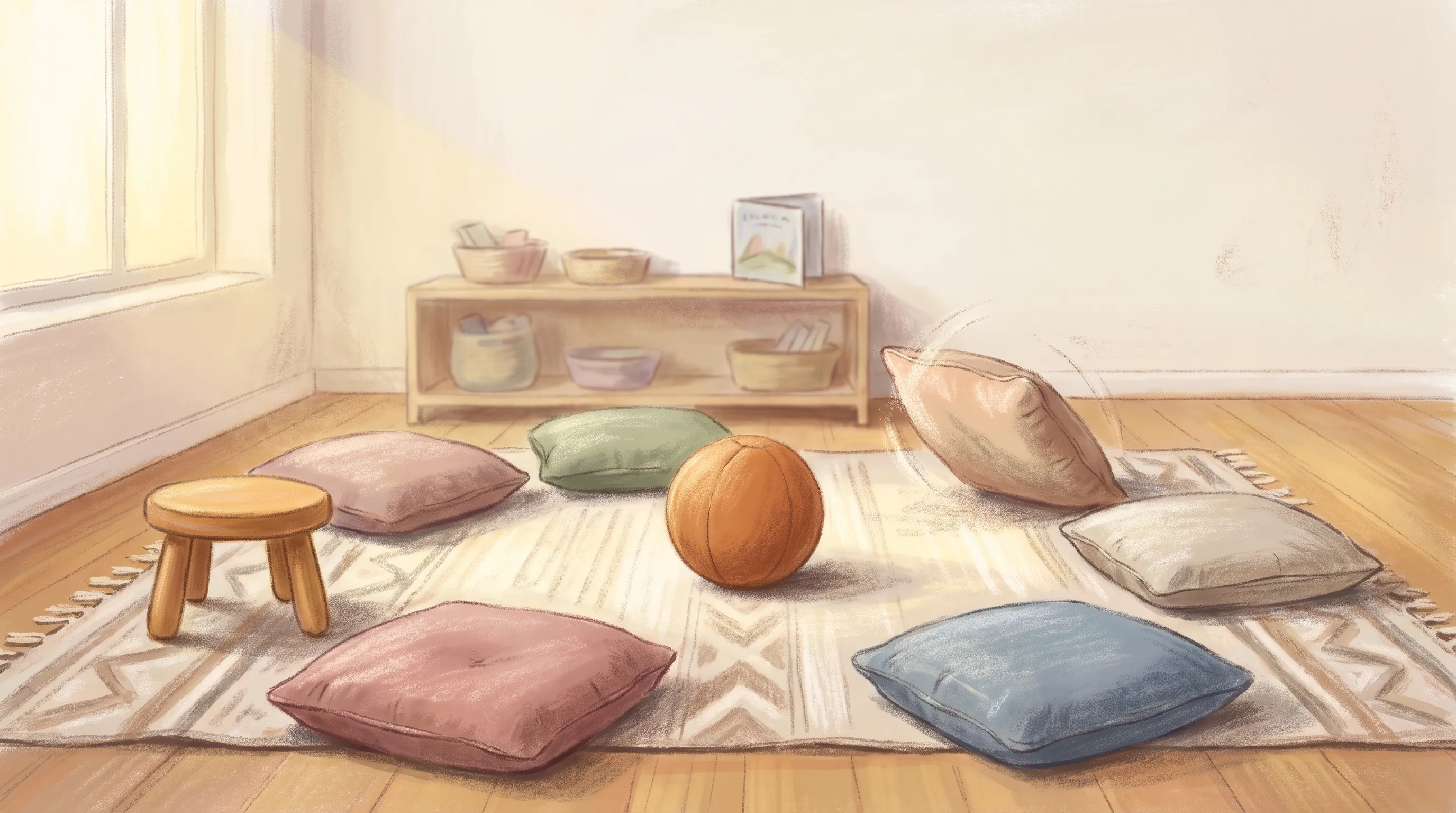
- A central piazza. An open gathering space, often at the heart of the school, where different age groups and classrooms can mix.
- Natural light and outdoor access, treated as design requirements rather than amenities — large windows, and direct or near-direct access to an outdoor area.
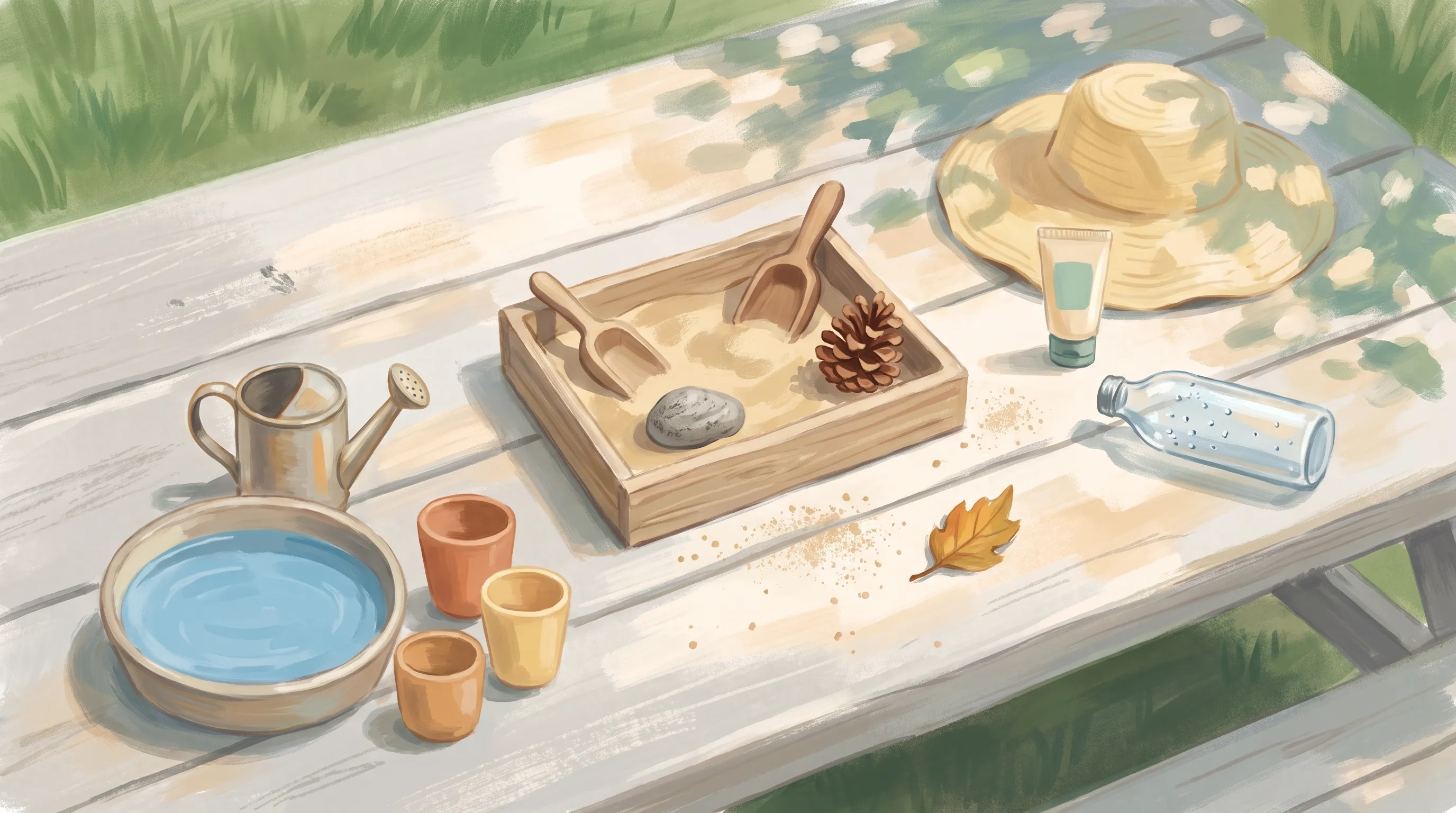
- Low, open shelving holding real, often natural or found materials — wood, shells, fabric, mirrors, loose parts — arranged for children to select and return on their own. It looks similar in spirit to a Montessori shelf, but it’s stocked very differently (more on that below).
- Small-group tables in place of individual desks in rows, because the unit of work is a small group pursuing a shared question over days or weeks, not a whole class moving through one lesson together.
- Documentation panels on the walls, at child height, showing the process behind a piece of work rather than only the finished result.
Wikipedia’s entry on the Reggio Emilia approach describes this cluster of features — piazzas, natural light, outdoor access, dedicated studio space — as the physical expression of the approach’s founding claim: that the room itself teaches.
The Atelier and the Atelierista
Every municipal Reggio Emilia school includes an atelier — literally “studio” in Italian — a dedicated space for materials-based exploration: paint, clay, wire, light tables, and natural materials a standard classroom doesn’t stock. Many individual classrooms also keep a smaller “mini-atelier” of their own, alongside the shared studio.
Running it is a distinct staff role: the atelierista, an educator with formal training in the visual arts who works alongside the classroom teachers as a creative partner in children’s inquiry — not a once-a-week specialist who drops in for an art lesson. Reggio Children, the organisation that grew out of the original municipal network, names “the atelier (studio space) and atelierista (art specialist)” explicitly among the approach’s foundational elements, alongside collegial staffing, in-school kitchens, and family participation.
Documentation Panels — And Why a Wall of Photos Isn’t the Point
Pedagogical documentation is photographs, transcribed children’s words, drawings, and a teacher’s own commentary, assembled to show a child’s process of thinking — not just the finished drawing or model. It does two jobs at once: it gives teachers something concrete to reflect on and plan from, and it gives families a genuine window into what their child actually did that day, beyond “good day, ate lunch.”
It’s also the part most likely to be faked. A documentation display assembled after the fact, without the observation and reflection meant to sit behind it, is called out directly in practitioner commentary from Reggio-trained educators as hollow — a painting on a wall with no context for how it came to be tells only part of the story. A wall of pretty photos with captions is decoration. Documentation is a practice; the panel is only its visible trace — which matters when you’re judging whether a self-described Reggio Emilia classroom is doing the real work (see the accreditation section below).
Why It’s Called the “Third Teacher”
The phrase comes from Loris Malaguzzi, the educator who built the Reggio Emilia network with parents and local citizens in the villages around Reggio Emilia, Italy, in the years after World War II. Reggio Children’s own account of its history credits “the Municipality and several local administrators and citizens, especially women” with building the network of municipal infant-toddler centres and preschools that became the approach. Malaguzzi held that the physical environment itself functions as a teacher, alongside the two more obvious ones — parents and educators. That’s the origin of “the environment as the third teacher,” the idea behind every design choice described above.
Malaguzzi is also the author of the philosophy’s central metaphor, expressed in a poem: children have, in his words, “a hundred, hundred, hundred more” ways of thinking, expressing, and understanding — through drawing, sculpture, movement, talk, and construction — and conventional schooling recognises only a narrow few of them, mostly verbal and logical. Reggio Children’s own definition of the approach puts it this way: it is “based on the image of a child with strong potentialities for development and a subject with rights, who learns through the hundred languages belonging to all human beings, and grows in relations with others.” Every atelier, every documentation panel, and every open-ended material on the shelf exists to give more of those hundred languages somewhere to happen.
International recognition followed later. By the early 1990s, Newsweek had listed the Reggio Emilia municipal schools among the best in the world, and a touring exhibition of children’s work — eventually known as “The Hundred Languages of Children” — helped carry the approach beyond Italy, according to Wikipedia’s account. Two institutional landmarks came much later still: the Loris Malaguzzi International Centre opened in Reggio Emilia in February 2006 as a research and training hub, and the nonprofit Reggio Children – Loris Malaguzzi Centre Foundation was established in September 2011.
How the Curriculum Actually Works
There is no fixed scope-and-sequence controlling what happens in a Reggio Emilia classroom on a given week. The curriculum is emergent — teachers observe what children are actually curious about, and the group’s work grows from that observation rather than a plan written months in advance. In practice, this takes the form of long-term, small-group project work — Reggio educators call it progettazione — where a handful of children of mixed ability investigate one topic together over an extended period, weeks or sometimes a full term, rather than moving through a fixed unit on a set schedule with the rest of the class. That is the sharpest practical break from the structured frameworks most preschools run on: where a creative curriculum lesson plan template fixes each week’s objectives, materials and assessment points before term begins, a Reggio room commits to none of them in advance.
The adult’s role shifts accordingly. Reggio Emilia teachers are consistently described as co-learners and collaborators, not directors: they observe, ask questions, and follow where a child’s inquiry goes, rather than delivering a predetermined lesson. Reggio classrooms are also staffed collegially — multiple educators typically work with each group of children daily, a deliberate contrast to the single-lead-teacher model most classrooms default to.
One detail worth flagging honestly: Reggio Children’s own list of foundational elements also names in-school kitchens as part of the original municipal system in Italy. That’s a documented feature of that specific network — it isn’t something every Reggio-inspired classroom abroad is expected to replicate, and its absence elsewhere doesn’t mean a program is skipping the actual work of the approach.
Reggio Emilia vs. Montessori: What’s Actually Different
Reggio Emilia and Montessori both start from the same premise — that children are competent, capable learners from birth, not passive recipients of instruction — which is exactly why the two get confused. Where they diverge is in how that belief gets built into a room:
| Dimension | Montessori | Reggio Emilia |
|---|---|---|
| Curriculum | A prepared, structured sequence of materials and lessons the child moves through at their own pace | Emergent — not written in advance, built from children’s observed interests through long-term project work |
| Materials | Purpose-built, self-correcting materials used in a specific, often prescribed way | Open-ended natural and found materials (“loose parts”), used however the child chooses |
| Teacher’s role | Prepares the environment, gives precise individual lessons, then deliberately steps back | Co-learner and collaborator; multiple educators, including an atelierista, actively inquire alongside children |
| Documentation | Not a defining feature of the method | A central, defining practice — pedagogical documentation panels made visible to families |
| Core orientation | Independence and self-mastery through ordered, individual work | Interdependence and community through collaborative, social project work |
| Governance | The name is legally unprotected, but recognised training bodies exist (AMI, AMS, MACTE) that a parent can check | No accreditation body exists for the approach at all; the origin is a specific place, not a training network |
Where the two converge matters as much as where they split: both treat the classroom environment itself as instructional, both reject a whole-class lecture format, and both would call a rigid, worksheet-driven room a failure of the approach rather than a variation on it. If you’re weighing the two for a specific child, BeeNet’s guide to Montessori education covers the Montessori side of this table in the same depth this guide covers Reggio Emilia.
That same interdependence-over-independence orientation shows up in less philosophically branded rooms too. A conventional classroom’s classroom jobs rotation, run as genuine contribution rather than a chore chart, borrows the same idea: children hold real responsibility for the room’s shared life, just without Reggio’s atelier or documentation practice built around it.
There’s No Official Reggio Emilia Accreditation
Here’s the fact that should shape how you read every “Reggio-inspired” sign, brochure, and enrolment page: there is no accreditation for the Reggio Emilia approach, anywhere, for anyone. The municipality of Reggio Emilia, Italy — the actual place, the actual public school system Malaguzzi helped build — does not authorise or certify programs elsewhere to use its name. The North American Reggio Emilia Alliance, the organisation closest to a governing body in the English-speaking world, runs study tours, resources, and professional development for Reggio-inspired educators — and is explicit that it does not accredit schools.
That means “Reggio-inspired,” “A Reggio School,” and “Reggio Emilia classroom” used as a program description are all self-declared. Nobody audits the claim before it goes on a sign. This is the direct parallel to Montessori’s own honesty problem, covered in BeeNet’s Montessori guide — except Reggio doesn’t even have Montessori’s fallback. There’s no AMI, no AMS, no MACTE-recognised diploma a parent can ask a Reggio-labelled program’s staff whether they hold. The word on the door guarantees nothing either way.
Outside the city of Reggio Emilia itself, every program is, by definition, “inspired by” the original network rather than part of it — there’s no institutional lineage to inherit, only a philosophy to adopt with more or less fidelity. So instead of trusting the label, ask what a specific classroom has actually built:
- Is there a real atelier and a staff member functioning as an atelierista — or is “creative space” just a corner with crayons?
- Is documentation genuinely tied to ongoing observation, or are the panels decorative — assembled once and left up all year?
- Is planning emergent and project-based, or does the “Reggio-inspired” room still run a fixed thematic calendar handed down from head office?
- Does more than one educator work with each group daily, in the collegial style described above?
None of these require a credential to check. They require walking into the room and looking.
The Common Thread
What ties the atelier, the documentation panels, and the emergent project work together is a single habit: making a child’s process of thinking visible to the adults who aren’t in the room — mainly, parents. That’s a genuinely demanding thing to sustain day to day. Writing up an observation, attaching photos, and getting it in front of the right specific family takes time a documentation-minded teacher doesn’t always have on an ordinary Tuesday.
That’s the kind of workflow purpose-built school platforms exist to support, not replace. BeeNet’s student portfolios feature, for instance, lets a teacher build exactly that kind of process-based record — entries with annotations that a specific child’s parents can view, comment on, and export — without a physical wall or a printer. It’s one way to operationalise the documentation habit a Reggio Emilia classroom depends on; it isn’t the only way, and it’s no substitute for the atelier itself. But for a school already built around the idea that a child’s thinking deserves to be seen, it’s one option for making that visibility reach past the hallway wall.
References
- Reggio Children. “The Reggio Emilia Approach.”
- Reggio Children. “The Hundred Languages of Children.”
- Wikipedia. “Reggio Emilia approach.”
- Wikipedia. “Loris Malaguzzi.”
- North American Reggio Emilia Alliance. “General FAQs.”
- BeeNet. “Montessori Education: The Complete Guide.”
Ready to Transform Your School Communication?
Start saving time and increasing parent engagement with BeeNet.
Request Demo